John Keats: Mr. Darcy

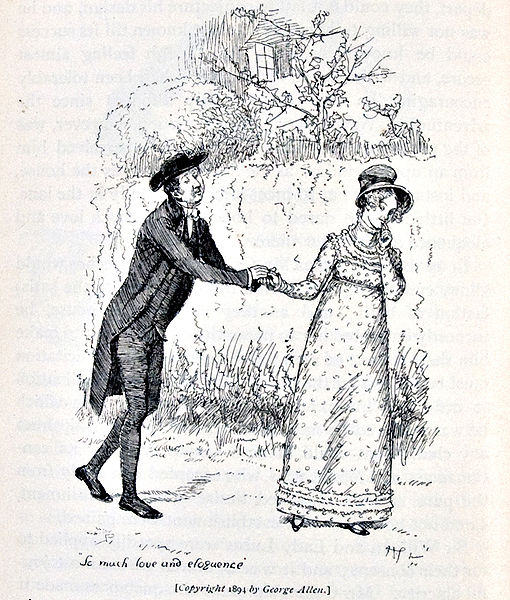
“I have been used to consider poetry as the food of love,” said Darcy.

“Of a fine, stout, healthy love it may. Everything nourishes what is strong already. But if it be only a slight, thin sort of inclination, I am convinced that one good sonnet will starve it entirely away.”

Pride and Prejudice by Jane Austen

One of a surfeit of sequels, I daresay.

One of a surfeit of sequels, I daresay.

A surfeit of anything, be it lampreys or love, can be a bad thing.

This notion was well-known to Austen heroines like darling Lizzie and beloved Anne. Indeed, during the Regency, the rise of Romanticism in art was viewed with some alarm because it unleashed longing, passionate love. If it could be confined to the landscape of nature and politics, then all should be well.

And then along came Keats.

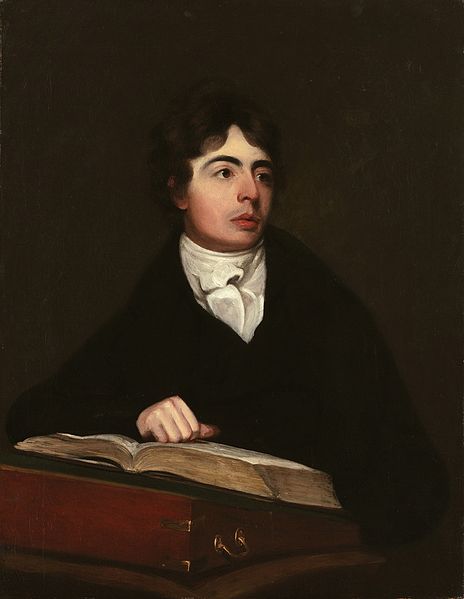
Despised “above all” by Byron, John Keats (1795 – 1821) remains the most enduring poet to inform us on Regency love. And, as Mr. Darcy pointed out in that discerning way of his, poetry is so necessary to love that the latter could not exist without it.

Keats felt the same way.

Long before he was known for his love poetry, his friends knew him as a man of love. Keats was, they said, a loveable as opposed to an amiable man. The painter Joseph Severn said “there was a strong bias of the beautiful side of humanity in every thing he did.”

However, Keats struggled to translate his sympathy for all things loving onto paper. When he managed to produce something, his work was subject to vicious criticism. Some said his verse was the vulgar product of a “Cockney poetaster,” that his writings shall have “our very footmen composing tragedies” and turn the heads of “farm-servants and unmarried ladies.”

He corresponded with Wordsworth and lived with Leigh Hunt, but the way these men wrote poetry seemed particularly unsuited to Keats’ desire for expression. His inspiration was Shakespeare, whose Twelfth Night mentioned death caused by a surfeit of music.  Like the Bard, Keats needed to explore love in its full expression, with all its “World of Pains.”

And then along came Fanny Brawne:

To feel for ever its soft fall and swell,
Awake for ever in a sweet unrest,
Still, still to hear her tender-taken breath,
And so live ever—or else swoon to death.
Bright Star by John Keats
Bright Star

The passionate Bright Star, considered to be his love verse to Fanny, burst forth like a comet, the glorious Hyperion and Ode to a Grecian Urn in its blazing wake. These works have risen above all other poems of the Regency and indeed, higher than any other, of the nineteenth century.

Keats died young, suffering from the great love he bore his bright muse. His poetry is still the food of love today, and is one of Regency love’s greatest legacies.

Robert Southey: General Tilney

“.. Though I don’t suppose he could be as villainous as Count Ugolino. No one could be.”

“Oh, no, he isn’t villainous at all–at least, I shouldn’t think he would be, but I’m not even acquainted with him! I only chose him for Ugolino because of the way his eyebrows slant, which makes him look just like a villain. And also, of course, because of his crested air–which made me long to give him a setdown!”

Sylvester, or, The Wicked Uncle by Georgette Heyer

Robert Hardy as General Tilney--this actor was a marvelous Leicester in Elizabeth R--image from Jane Austen Today

Robert Hardy as General Tilney–this actor was a marvelous Leicester in Elizabeth R–image from Jane Austen Today

In Northanger Abbey, the heroine, fresh from reading Radcliffe’s The Mysteries of Udolpho, didn’t immediately perceive General Tilney to be a “bad man.” Jane Austen had made him a handsome, vigorous man “of commanding aspect.”

Catherine’s opinion changed dramatically once she stayed at Northanger Abbey. Henry Tilney’s father became stern and menacing, scrupulously avoiding all mention of his dead wife. Catherine disliked him every bit as much as darling Phoebe did the Duke of Salford.

Moreover, the general was a busy man:

‘I have many pamphlets to finish,’ said he to Catherine, ‘before I can close my eyes, and perhaps may be poring over the affairs of the nation for hours after you are asleep. Can either of us be more meetly employed? My eyes will be blinding for the good of others, and yours preparing by rest for future mischief.’ — Northanger Abbey, Jane Austen

You and your “stupid” pamphlets.

Stupid or not, General Tilney’s reading was probably an obsessive affair:

“…we should also assume that the General is actually worried about how his country was doing in its war against France, at a time when Napoleon was emerging as the seemingly invincible military genius of the day.” Parents against children: General Tilney as Gothic Monster, John Dussinger, PhD for JASNA.ORG

Staying up all night, reading and watching for spies in the neighborhood, can make a fellow downright surly. And when one has seen war, it’s not impossible to imagine how its re-emergence might throw a character’s personality in disorder:

Where some wrecked army from the Conquerors might

Robert Southey -- the butt of Byron's jokes

Robert Southey — his critics detested his reversal in politics, that he would woo Liberty as his mistress and marry the disreputable Legitimacy

Speed their disastrous flight,

With thee fierce Genius! let me trace their way,

And hear at times the deep-heart groan

Of some poor sufferer left to die alone,

His sore wounds smarting with the winds of night;

And we will pause, where, on the wild,

The Mother to her frozen breast

On the heap’d snows reclining clasps her child

And with him sleeps, chill’d to eternal rest!

To Horror by Robert Southey


Wordsworth: Edward Ferrars

William Wordsworth (1770 – 1850) is the Romantic poet who once said he wrote to “shew that men who did not wear fine clothes can feel deeply.”

Austen must have known of his poetry when she wrote Sense and Sensibility. She does not mention the poet in her work, least of all in connection with the slightly awkward Edward Ferrars.

Nevertheless, I believe the screenwriter Andrew Davies was onto something when he included a passage from Wordsworth’s beloved Tintern Abbey in the 1995 film adaptation of Austen’s novel:edward ferrars

I have felt

A presence that disturbs me with the joy

Of elevated thoughts; a sense sublime

Of something far more deeply interfused,

Whose dwelling is the light of setting suns,

And the round ocean and the living air…

What connection can one possibly fathom between pedestrian Ferrars and the highflown language of Wordsworth? Besides, it was Willoughby who recited that passage.

Well, I’ll tell you…

A strong theme in Sense and Sensibility is the promotion of honesty, particularly in Christian marriage. Austen was the daughter of a cleric and strongly invested with the ideals of the good old C of E:

He, too, was awkward like Edward Ferrars, with a shy demeanor and a good humour adored by Charles Lamb.

He, too, was awkward like Edward Ferrars, with a shy demeanor and a good humour Charles Lamb adored.

In particular, for Austen, the marriage of men and women who have been transformed through “naked self-disclosure”, who have acknowledged their mistakes and who are now “poised to be active forces for good in their spheres, from village to town to nation to world.” — The Marriage of Faith: Christianity in William Wordsworth and Jane Austen, by Laura Dabundo from a book review by Friar Paul Byrd, to be read in its full content here

Willoughby may have read Wordsworth’s words, but he was a dishonest character and we cannot suppose he felt “sense sublime” at all honestly. Edward Ferrars, on the other hand, was the honest character that Elinor Dashwood needed in a life-long companion. He revealed his mistake in engaging himself to Lucy Steele, yet remained faithful to it, without sentimentality attendant on thwarted love.

Once released, he turned his full devotion to the one he would best love, who was best suited to helping him be fully devoted to the ideal of Sense, versus Sensibility.

Recall how Edward read Cowper, and rather poorly in Marianne’s eyes. He did not fully engage in the feelings of overwrought nature:

“I do not like crooked, twisted, blasted trees…I have more pleasure in a farm-house than a watch-tower.”

He preferred the honesty of “nature put into practice” — a pleasure taken in nature, yet glorifying the utility it is put to. Any other “romanticizing” of nature is simply that–a useless ornament.

Like love that idles dormant.

Cowper: Fanny Price

Fanny, who was sitting on the other side of Edmund, exactly opposite Miss Crawford, and who had been attentively listening, now looked at him and said in a low voice– O Brother, where Art thou

“Cut down an avenue? What a pity! Does that not make you think of Cowper? ‘Ye fallen avenues, once more I mourn your fate unmerited.’ ”

Mansfield Park, Jane Austen

Fanny Price, like Austen, was very fond of William Cowper, a poet of the eighteenth century. He was not a Romantic poet, but his brooding, melancholy, emotional writing had great influence over poets of the Regency, such as Wordsworth and Coleridge. Cowper suffered bouts of insanity and deep depression–he wrote various hymns preserved today in the Sacred Harp (think O Brother, Where Art Thou?) but it was his poetry, encouraged by various women in his life, that gave him a much-needed outlet for his despair.

In Nature he sought solace:

Who loves a garden loves a greenhouse too.
Unconscious of a less propitious clime,
There blooms exotic beauty, warm and snug,
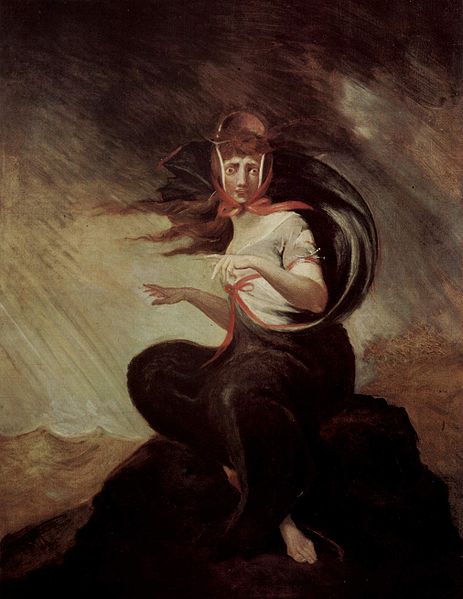
While the winds whistle and the snows descend.Crazy Kate from Cowper's "The Task" by Fussli - the depths of despair
The spiry myrtle with unwithering leaf
Shines there, and flourishes.

The Task, Book III, The Garden

But humanity, like nature, eventually dies:

I was a stricken deer, that left the herd
Long since: with many an arrow deep infix’d
My panting side was charged, when I withdrew,
To seek a tranquil death in distant shades.

What does it mean to have a Regency-era character who adores Cowper? He might be depressed and perhaps thinking of his own death. She might look upon the trees in the park,  and find comfort from the stress of every day living, as Fanny does in Mansfield Park:

“Here’s harmony! Here’s repose! Here’s what may leave all painting and all music behind, and what poetry only can attempt to describe. Here’s what may tranquilize every care, and lift the heart to rapture!”

Regency Poetry: Nuances of Sensibility

Speaking of Downton Abbey, Violet’s character is so very rich, is it not? Her remarks are cleverly acid and yet illuminating as well. Certainly we know what her ladyship thinks of Byron. We probably can guess what she thinks of Regency poetry in general, with its idealism and “sensibility:”

Edith: “..am I to be the maiden aunt? Isn’t this what they do? Arrange presents for their prettier relations?”

The Dowager Countess: “Don’t be defeatist, dear, it’s terribly middle-class.”

No pining about and no nonsense.

"Oh, Anne."

“Oh, Anne.”

I like to speculate what poets my favorite Regency-set characters favor. As dear Anne from Austen’s Persuasion famously says, “We are living through a great age for poetry, I think.” In the next few posts, this blog will consider some characters from Regency fiction and what poets they might find appealing.

Which of the following would Heyer’s Kitty Charing like?

“..Shelley’s ‘silver music,’ Coleridge’s ‘wings of healing,’ Wordsworth’s ‘wild unpeopled hills’ and above all..Keats.”

from  Byron in Love: A Short Daring Life by Edna O’Brien

Hang on–wasn’t it Anne who advised caution against too much poetry? Her companion, Captain Benwick, was:

“..intimately acquainted with all the tenderest songs of the one poet (Walter Scott), and all the impassioned descriptions of hopeless agony of the other [Lord Byron]; he repeated, with such tremulous feeling, the various lines which imaged a broken heart, or a mind destroyed by wretchedness, and looked so entirely as if he meant to be understood, that she ventured to hope he did not always read poetry.”

Persuasion by Jane Austen (as presented by Janet Aikens Yount in Eighteenth Century Life, Winter 2010)

It must be recalled, however, that Anne Elliot is a masterfully drawn character. She is so nuanced in her beloved, practical way that it is a beautiful serendipity to find in her a great capacity for the “sensibility” vital to Romantic poetry. That capacity was hidden, in a:

“..heart large and expansive, this seat of deep, kind, honest and benevolent feelings–a bosom capacious of universal love, but through which there flowed a deeper stream…” — The Retrospective Review, Vol. 7 Part 1 (1823)

Still waters run deep, as they say.

Regency Love: Happiness with Him

Pragma is one of four types of love in classical (Greek) philosophy. It is distinctive for its apparent lack of emotion. Love without love. It’s like zen. If you think you understand it, you really don’t. In the time period of the Regency, we have the example of Charlotte Lucas of Pride and Prejudice. The following is her explanation to dear Lizzy on the subject:

 I hope you will be satisfied with what I have done. I am not romantic, you know; I never was. I ask only a comfortable home; and considering Mr. Collins’s character, connection, and situation in life, I am convinced that my chance of happiness with him is as fair as most people can boast on entering the marriage state. Charlotte Lucas

“Happiness with him,” she says. Does this sound like love, or even an expectation of it? Indeed, there seemed to be little of it when Lizzy later discovers her friend has ordered her household so that her sitting room is on the opposite end of the house from her husband’s. Where is the love? To modern eyes, it seems nonexistent. To the ancient Greeks, it is there–and so, too, for those in the Regency.

“I believe most young women so circumstanced would have taken Mr. W. & trusted to love after marriage.” — Caroline Austen on her aunt’s rejection of her suitor, Harris Bigg-Wither

Trusting to love after marriage was more common in those days than entering that estate with it. As proposed in Ruth Perry’s essay, Sleeping with Mr. Collins, the notion of love during the Regency was poised between two eras, the sensibility of the prior century and the growing desirability of romantic love in the next. She couches this theory within the context of marriage, that in the seventeenth and eighteenth centuries romantic love was not required for marriage and indeed, sexual desire was not in any way a component thereof. A sensible marriage had a better chance for producing love than the notion of proceeding with the vows while clouded by emotional desire.

This had begun to fade in the nineteenth century. Thus, we have in Austen’s famous novel the two friends, one representing the old way and dear Lizzy the new. We don’t know if Charlotte eventually fell in love with Mr. Collins. It seems if Austen wanted to condemn her to eternal disgust she might have indicated that future for this character, but she did not, leaving us to speculate.

Austen’s niece went on to relate that her aunt’s rejected suitor later found great happiness with a woman who was “quite fond” of him. Caroline practically sighs with regret even as she admires her aunt for choosing love over the security of marriage.

Frankly, I agree with Ms. Perry that Jane Austen just couldn’t see herself being called Mrs. Bigg-Wither.

The Real Regency Reader: Jane Austen

“It is difficult to think of a novelist who makes reading a more animating part of her characters’ lives than Jane Austen.”

–John Mullan, What Matters in Jane Austen?: Twenty Crucial Puzzles Solved (2013)

We know how Northanger Abbey’s heroine, like Cotillion’s Kitty, was much guided by knowledge gleaned from novels and therefore committed foibles as a result of such reliance. Or Fanny of Mansfield Park who had rather more learning from books than those rich Bertram girls who supposed her ‘stupid at learning.’ Already mentioned is Sir Elliot of Kellynch Hall in Persuasion whose reading was limited to the Baronetage and so, too, was his conversation. Recall in Pride and Prejudice Miss Bingley’s spectacular attempts at diverting Mr. Darcy from his book when a day earlier she had attacked our darling Lizzie for not playing cards because she loved books.

1940's Pride and Prejudice, starring Greer Garson and Laurence Olivier

1940’s Pride and Prejudice, starring Greer Garson and Laurence Olivier

I did not understand the significance of reading in Jane Austen’s world until it was illuminated by Professor Mullan:  being literate during the Regency means reading books. In Sense and Sensibility, Lucy Steele is illiterate not because she can’t read, but because she does not read.

“Lucy’s ignorance of books will be as much a torment to poor Edward, her future husband, as her cunning and self-interestedness.”

This blog has mentioned the value of book collecting during the Regency, A library of any size was a mark of distinction because it conferred upon those who had access to it an erudition valued in those days. Professor Mullan points out that Austen had no more than two years’ formal schooling but yet had access to her father’s library which was vast for a country clergyman.

One must suspect that her admiration for books and reading must reflect what Regency readers must have thought:

“I only mean what I have read about.  It always puts me in mind of the country that Emily and her father travelled through, in The Mysteries of Udolpho (Penguin Classics). But you never read novels, I dare say?”

“Why not?”

“Because they are not clever enough for you — gentlemen read better books.”

“The person, be it gentleman or lady, who has not pleasure in a good novel, must be intolerably stupid.” — Mansfield Park

The Real Regency Reader

Reading was an important pastime in the Regency. With more leisure came more time. And more reading.

In Heyer’s Cotillion, the heroine has had more than enough leisure time at her guardian’s dreary country house, with nothing but her governess’s bookshelf to entertain–and educate her. She elicits the aid of the hero, who, if he can be persuaded to enter into a pretend engagement with her, will take her to London. There she might have the opportunity to bring the dilatory Mr. Westruther up to scratch.

This is the copy I have--from 1968--the hair is a little That Girl, don't you think?

This is the copy I have–from 1968–the hair is a little That Girl, don’t you think?

“No, dash it!” protested Mr. Standen. “Not if you’re engaged to me, Kit!”

She became intent on smoothing the wrinkles from her gloves. Her colour considerably heightened, she said: “No. Only–If there did happen to be some gentleman who–who wished to marry me, do you think he would be deterred by that, Freddy?”

“Be a curst rum touch if he wasn’t, ” replied Freddy unequivocally.

“Yes, but–If he had a partiality for me, and found I had become engaged to Another,” said Kitty, drawing on a knowledge of life culled from the pages of such novels as graced Miss Fishguard’s bookshelf, “he might be wrought upon by jealousy.”

“Who?” demanded Freddy, out of his depth.

“Anyone!” said Kitty.

“But there ain’t anyone!” argued Freddy.

“No,” agreed Kitty, damped. “It was just a passing thought, and not of the least consequence! I shall seek a situation.”

What you read during the Regency was generally held to be informative of your character. In the case of Jane Austen’s novels, you might recall the sensible Anne Elliott in Persuasion enjoys prose and views Mr. Benwick’s inordinate fondness for poetry with a little alarm. Her father, on the other hand, “never took up any book but the Baronetage.”

Then again, too much reliance shouldn’t be placed on a person’s reading selections as a guide to their makeup. This next series of posts is intended to illustrate how diverse a real Regency book can be, and its reader as well. For instance, a novel might deliver a moral tale better than a collection of the vicar’s sermons from Harrow-on-Gate. Also, females thought to be flighty because of their penchant for Gothic tales suddenly reveal themselves to have a will of iron.

Just ask the Honorable Frederick Standen.

The Real Regency Hoyden: according to Jane Austen

The word “hoyden” appears in none of Jane Austen’s writings. But we know one in her novels when we see her.

When Lydia Bennett was discovered to have been living in sin with Mr. Wickham, her uncle Mr. Gardiner wrote the following in a letter back to Longbourn in the most ominous tones:

‘She was sure they should be married some time or other, and it did not much signify when.’ — Pride and Prejudice

Sally Siddons, a hoyden in some books, by Thomas Lawrence

Sally Siddons, a hoyden in some books, by Thomas Lawrence

To make matters worse, Lydia remained entirely immune to Mr. Darcy’s remonstrations. Her behavior, and the reaction of others, make for some of the best commentary on the real Regency hoyden.

The Wickhams’ living together before marriage was not what inspired the most condemnation.  It was the way they, and most particularly Lydia, carried on with complete impunity. She was quite insensible to the notion she ought to be made into an honest woman (a euphemism that ironically denies the true state of affairs–Lydia Bennett is as honest a woman as one might find in the Regency.) And when she is made whole by a wedding brought about by a bribe, she returns to home full of self-satisfaction.

There is plenty of sermonizing. Mr. Collins seems most appalled over Lydia’s lack of humility and remorse. He reserves the worst condemnation for her:

“The death of your daughter would have been a blessing in comparison of this.”

A fitting end to hoydenish behavior.

Austen’s letters reveal still more about the real Regency hoyden. Naughty escapades almost always refer to members of the aristocracy. Her correspondence, like her novels, focus on the fact such characters manage to attend the most exclusive parties even after their debaucheries. Somehow they inveigle invitations to functions as if nothing bad had ever happened.

The notorious Mary-Cassandra Twistleton received special notice in Austen’s 1801 letter to her sister. Amazed that this divorcee should appear in the Upper Rooms at Bath, the author was astonished at how a woman generally acknowledged to have committed adultery might appear unconcerned in company at a select gathering:

“I am very proud to say that I have a very good eye at an Adultress, for tho’ repeatedly assured that another in the same party was the She, I fixed upon the right one from the first.”

In March 1817, she wrote to her niece Fanny, commenting acidly on a recent engagement of a daughter of Lord Paget, divorced from his lady wife some years before:

If I were the Duchess of Richmond, I should be very miserable about my son’s choice. What can be expected from a Paget, from and brought up in the centre of conjugal Infidelity and Divorces?–I will not be interested about Lady Caroline. I abhor all the race of Pagets.

Divorce was not at issue–it was the temerity of the daughter to wed publicly.

Hoydenish, for certain.

The Real Regency Hoyden

“A wild, boisterous girl. A tomboy.”

Originally the term hoyden referred to a boy–a rude, boorish youth noted in sixteenth century school records. Later the word becomes a symbol of a rude, boorish girl in Vanbrugh’s The Relapse, a parody on an earlier play extolling the reformation of the rake. For more on rakes, please see the previous posts on this blog.

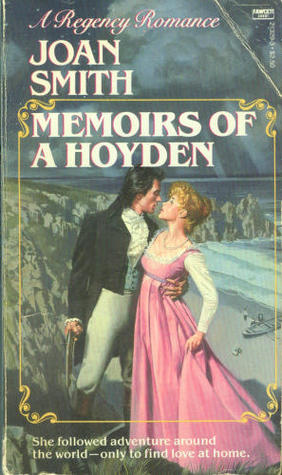
An oldie but a goodie. Joan Smith. Joan Wilder. Great romance--Juanita!

Joan Wilder? THE Joan Wilder? No, but someone even better in the 80s.

In The Relapse, the character Hoyden is a country heiress whose romping ways make her impatient for a life in the city. There she imagines wild indulgence in excitement and intrigue. She manages to marry two men on the same day to achieve this ambition.

“…her language is too lewd to be quoted. Here is a compound of ill manners and contradiction! Is this a good resemblance of quality, the description of a great heiress and the effect of a cautious education? By her coarseness you would think her bred upon a common, and by her confidence, in the nursery of a play-house.” –Jeremy Collier, A Short View of the Immorality and Profaneness of the English Stage (1698)

Not at all flattering.

The distinction of being a hoyden was scarcely more flattering by the nineteenth century. Indeed, its precise meaning remained more or less the same. It was not her occupation, her sins, nor her flamboyance that was censured—but the fact she cared not a whit what others thought.

Well-known examples of hoydenish behavior during the Regency will be examined in future posts. A new series, if you will, of the real Regency hoyden.

“Good gracious, what fun this has been! Who knew I would return home married?” Lydia laughed.

Her insensitivity upset Jane, Elizabeth and their father.

Pride and Prejudice, Jane Austen