Regency Brothers – The Soldier

Richard, the second oldest brother, was a military man for most of his adult life.

“Well, to own the truth, I’ve never cared for military life above half,” confided Endymion. “But the thing is, Cousin Alverstoke will very likely cut off my allowance, if I sell out, and then, you know, we shall find ourselves obliged to bite on the bridle. Should you object to being a trifle cucumberish? Though I daresay if I took up farming, or breeding horses, or something of that nature, we should find ourselves full of juice.”

another old cover of a marvelous Regency

another old cover of a marvelous Regency

I?” she exclaimed. “Oh, no, indeed! Why, I’ve been cucumberish, as you call it, all my life! But for you it is a different matter! You must not ruin yourself for my sake.”

“It won’t be as bad as that,” he assured her. “My fortune ain’t handsome, but I wasn’t born without a shirt. And if I was to sell out, my cousin couldn’t have me sent abroad.”

“But could he do so now?” she asked anxiously. “Harry says the Life Guards never go abroad, except in time of war.”

Frederica by Georgette Heyer

Endymion was the cousin and heir to the Marquis of Alverstoke, the elegant peer who amused us earlier with his sally about a Baluchistan hound in Regency Dogs. His heir is a young man who feels he is ill-used, despite having a commission in the army purchased for him.

Richard Martin’s family could never hope to have the money to purchase a commission for him. Moreover, he was not well-placed to become a member of the romantic Life Guards Heyer wrote much about:

With white crests and horses’ manes flying, the Life Guards came up at full gallop and crashed upon the cuirassiers in flank. The earth seemed to shudder beneath the shock. The Hyde Park soldiers never drew rein, but swept the cuirassiers from the bank, and across the hollow road in the irresistible impetus of their charge.

An Infamous Army: A Novel of Love, War, Wellington and Waterloo by Georgette Heyer

Richard settled in the enlisted ranks of the First Foot Guards. His regiment was not as prestigious as the Life, but it performed with the greatest distinction in the Peninsular War, as reported in the Grenadier Guards website:
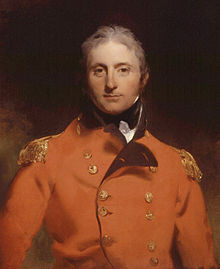
Sir John Moore - "you know I always wished to die this way."

Sir John Moore – “you know I always wished to die this way.”

In the autumn and winter of 1808 they took part in Sir John Moore’s classic march and counter-march against Napoleon in Northern Spain and, when under the terrible hardships encountered on the retreat across the wild Galician mountains the tattered, footsore troops, tested almost beyond endurance, showed signs of collapse, the 1st Foot Guards, with their splendid marching discipline, lost fewer men by sickness and desertion than any other unit in the Army.

Subsequently they took part in the battle of Corunna and when Sir John Moore fell mortally wounded in the hour of victory it was men of the 1st Foot Guards who bore him, dying, from the field.

The Grenadiers got their name when they defeated the Grenadiers of the French Imperial Guard, the best and brightest of Napoleon’s troops, flung as a last-ditch effort into the fray at the Battle of Waterloo in 1815.

Back in England, Richard retired and published a volume of poetry and some pamphlets. His only daughter made what was considered a brilliant marriage, bringing the Keeper of Printed Books of the British Museum up to scratch.

We don’t know much beyond that, besides John’s bitter account that Richard was always applying to him for money.

This must have come as a severe disappointment. When he was in the army, Richard had risen through the ranks to become Quartermaster Sargeant, a non-commissioned officer. It was largely a ceremonious position, but John was confounded as to why his brother had been appointed to watch over the Government’s assets when he could scarcely keep track of his own.

Regency Brothers – the Painter

Like his other Regency brothers, John Martin (1789 – 1854) strove to break away from his lower-class background and achieve the notice of the ton.

It seemed he had done so when his drawings became much admired by the Princess Charlotte and the Earl of Warwick. However, the former was not known for her taste in art. Despite having taken out a patent for soap, which the Royal Navy found useful as it would not curdle in sea water, his lordship lived in “penury, mortification and wretchedness.”

John was already supporting his older brother William, another tinker of limited success.

John Martin - from A Memoir

John Martin – from A Memoir

What he needed was a well-heeled patron. Drawings and sepia painting on teacups was only a scrambling sort of business.In order to attract such attention, he would have to break out of the current mold of Romantic painters. Constable and others were producing pastoral landscape themes which characterized a good deal of painting during the Regency. John decided to incorporate his father’s thundering Old Testament discourse, and took the “Picturesque” movement in a whole new direction.

Sadak in Search of the Waters of Oblivion was submitted to the Royal Academy in 1812 for display at Somerset House. When the painting arrived, there was some confusion as to which end of the canvas was the top of the painting. For all the initial difficult it posed in the hanging, Sadak was completely ignored. Dejected, John took it away–one has to believe he carried it upside down. Once in his modest lodgings, he saw a calling card had been left in the dingy foyer. It was from a well-connected Governor of the Bank of England, William Manning, and he wanted to purchase the canvas.

As an amusing aside, John’s new patron was also the MP for Plympton Erle. His seat had been previously occupied by the unpopular Earl of Carhampton. This Irish peer had the indignity of reading his own death notice in the paper. Incensed, he demanded it be withdrawn. The paper complied, under the prominent headline, Public Disappointment.

Manning not only replaced an unpopular peer–his purchase encouraged John to continue his theme of vast, wild nature. In these works, appropriately titled Joshua Commanding the Sun to Stand Still upon Gibeon and Fall of Babylon, humans were rendered insignificant beneath glowering clouds. It was called Sublime.

Critics called it bombastic, the worst sort of populist art.

However, the Regency period was experiencing not just a sea change in the style of its arts, but in the nature of the audience. By the time John’s Belshazzar’s Feast was to be exhibited at the British Institution, he had aroused not only the interest of Whig politicians and the Duke of Buckingham, his work was now commanding the attention of the masses. Feast could not be displayed in intimate, hushed surroundings, to be admired only by the wealthy and privileged. A railing had to be erected, to protect the massive painting from the crowds that came to view it.

Even now John Martin’s paintings command astonishment and awe. Just watch this clip from the Tate Britain’s Museum. It had recently exhibited John’s work, entitled Apocalypse.

Does his work seem familiar? Rock bands use his work for their album covers. Movie makers incorporate his vision in theirs.

Bombastic, perhaps. But altogether unforgettable.

John Martin's Sadak in Search of the Waters of Oblivion (1812)

John Martin’s Sadak in Search of the Waters of Oblivion (1812)

Regency Brothers – the Tinker

William Martin (1772 – 1851) was the oldest of these famous brothers of the Regency. More siblings were on the way so he was sent to live with his grandparents at Haydon Bridge on the River Tyne, flowing northward toward the “miry court” of beloved Crichton Castle.  He seemed to follow in his father’s footsteps, trying a variety of occupations beginning with that of tanning hides. This diverse interest perhaps led him to practice what he best became known for.

“Oh, ye seekers after perpetual motion, how many vain chimeras have you pursued? Go and take your place with the alchemists.” — Leonardo di Vinci

“There are three laws of thermodynamics: you can’t get something for nothing, you can’t win, and you have to lose.” — someone’s high school chemistry teacher

The Regency was a time of increasing strides made in reducing the cost of labor. Why not a machine that produces its own power, without regard to friction or absence of external force? William was entranced by the notion. He was not particularly of a slovenly nature, but he had warmed to the idea of something that would work without being prodded to do so. Art imitating life.

Medal of Isis

Medal of Isis

Anyway, he was unsuccessful. His perpetual motion machine, optimistically named Eureka, was dismissed because it incorporated external force–a big no-no. Concealed in its design was an air tube through which force was applied secretly to power a seemingly effortless machine. No matter, his spring weighing machine brought him a Regency honor in 1814–the Isis medal from the Society of Arts–a recognition that he was a serious inventor.

He soon had reason to habitually wear the thing about his neck. He had become a “stout, portly man, perfectly cracked but harmless.” His well-known diatribes against Newton’s Theory of Gravity completely negated his contributions to science and many thought his proper place was among the British Society of Asses.

Thank goodness for his wife’s earnings. She was a celebrated dressmaker, “inoffensive and respected by rich and poor.”

Regency Brothers – Tinker, Painter, Soldier and–Arsonist

We love the Regency era novels of Pride and Prejudice and Persuasion for the same reasons we like the Edwardian era dramas of Gosford Park and Downton Abbey. These are stories that take place in stratified societies with rules the plot must heed like lodestones. If they stray too far they will offend the reader.

It sounds like a recipe for boredom and might well be–but for the persons that threaten to upset one’s beautiful world. Characters like George Wickham, Mrs. Clay, Mr. Parks and Tom Branson.

This post is an introduction to four brothers of the Regency, whose contributions, some dubious, enriched and horrified the Beau Monde.

Syon Park's conservatory to hold beautiful plants for the Duke of Northumberland (taken by Phill Brown - Creative Commons Attribution-Share Alike 2.0 Generic license)

Syon Park’s conservatory to hold beautiful plants for the Duke of Northumberland (taken by Phill Brown – Creative Commons Attribution-Share Alike 2.0 Generic license)

The Martin boys were among twelve children born to William Fenwick Martin and his wife Isabella in Northumberland. The family was decidedly lower class, the father being somewhat peripatetic in both lodging and trade. He had at one time been a fencing master but also built coaches, tanned hides and kept taverns.

Such an unstable environment was perhaps unsuitable for raising children and they were sent to live at various times with relatives before both parents died in 1813.

The sons were as follows:

The Tinker:  William– the oldest. An inventor and philosopher who “tinkered” with machines and ideas.

The Painter:  John — the youngest. An artist and historical painter to Prince Leopold of Saxe-Coburg.

The Soldier:  Richard — the second oldest. A quartermaster in the Guards, serving in the Peninsular War and at Waterloo.

The Arsonist:  Jonathan – the third oldest. Arguably the most famous of all.

They entertained the ton, existing in the beautiful world that was all around them, but forever out of reach.

Perhaps their stories will entertain you as well.

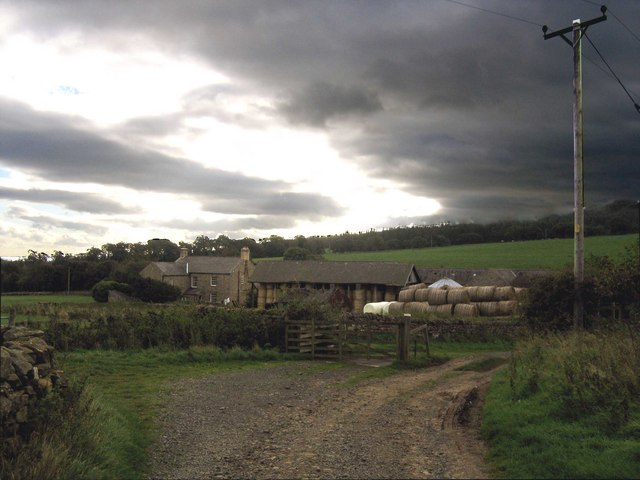
Northumberland cottage (photographed by Brian Norman and licensed under the Creative Commons Attribution-Share Alike 2.0 Generic license)

Northumberland cottage (photographed by Brian Norman and licensed under the Creative Commons Attribution-Share Alike 2.0 Generic license)

Paleontologist to the Regency – Part Three

“Really, my love, I’m not at all feeling the thing.”

William stepped close to Mary, cupping her heart-shaped face in his hand. “Adam is with Willie and Eva, Sweetheart. He’s at peace.”

Dr. Buckland and his wife had just laid their nine-year-old son’s body in the Christ Church crypt, alongside those of their two older children.

“Darling,” he pleaded. “I’ve news to cheer you. Miss Anning has found a possible explanation for the bezoar stones–”

“Which are nothing more to me than the other dead things in my life.”

Mary gestured to the side table, groaning beneath the weight of fossils stacked upon each other in layers like they had lain in the earth before being dug up. The whole was lit by candles stuck in various vertebrae. “They are all wretched, reminding me of my beloved son.”

A beach near Lyme - licensed under GNU Free Documentation 1.2

A beach near Lyme – licensed for use under GNU Free Documentation 1.2

“Then let us begone from here,” her husband declared. “Let’s go to Lyme.”

“To see more dead things?”

“To see Miss Anning. She always cheers you.”

But once arrived at Lyme, Mary could only sit on a little rise, above the beach that was a “vast charnel house of the bones of the monsters that had once lived.”

Far below, she could see her husband picking through the sand. With him was a fellow geologist and well-known Lyme resident, Sir Henry de la Beche. He was a former military man whose illustrations made Miss Anning’s fossil collection famous.

“Mrs. Buckland, are you just going to sit up here, useless to us all?”

Mary looked up at Miss Anning’s approach. She was not troubled in the least by the other’s brusque manner. Indeed, she expected it from a woman who had struggled all her life. After all, Miss Anning had the distinction of being struck by lightning at the age of fifteen.

“I daresay I have been useless,” Mary answered. “You are fortunate, Miss Anning, in that you’ve no children of your own.”

The other shrugged and settled herself on the ground nearby, her thick walking boots sticking out unceremoniously from beneath her skirt.

Mary looked away once more to the beach below. “Sir Henry is devoted to you. Why do you not marry him?”

Miss Anning snorted. “I’m the daughter of a carpenter and a Dissenter, Mrs. Buckland. Our union would ruin us both and that would never do. Besides, we deal very well together without being married. He brings credit to my work that would otherwise go unnoticed.” Henry de la Beche - Awful Changes

Nevertheless, Mary saw how Miss Anning looked down at her skirt, at hands unfashionably browned from the weather. Hands that twisted against each other and them fumbled for something concealed within the folds of the drab fabric.

Miss Anning drew out three brown rocks and handed them to Mary. “My bezoar stones.”

“More dead things?” Mary asked.

“Oh, my dear, have you not been attending? Your husband believes these are actually fossilized feces.” Miss Anning paused, her face beaming. “Those are not dead things. They are the leftovers of the living!”

“Upon my word,” Mary said, turning the stones over in her hands.

It was a new discovery. In its joy, Mary found reason to laugh again.

Paleontologists to the Regency – Part Two

Sometimes we have to look past the Regency to see the grandeur of its achievements. This post takes us to Christmas, 1839 and England’s Jurassic coast, a catalogue of the island’s past:

About midnight of December 25th the inhabitants of two cottages in the undercliff were awakened by loud sounds produced by the grinding of slowly moving masses of the adjacent rocks; they found the floors of their houses rising upwards toward the ceiling, and with difficulty escaped. In a few hours one cottage was thrown down. — The Life and Correspondence of William Buckland 

George Pulman reported in his Book of the Ax (1875) that the cottagers had just finished celebrating Christmas Eve “in old jovial style at Bindon Farm, with a burning of an ashen faggot and its accompanying merrymaking.” One of the cottagers, William Critchard, was dismayed to find the footpath he normally trod to get to his landlord’s place had fallen seven feet. He scrambled along its descent to waken his landlord and “with the master’s help” was able to get his household goods out of his cottage before the whole thing disappeared.

Christmas Day a rabbit shooting party was nearly swallowed up by fissures opening in the fields.

The great Dr. Buckland and his wife, the former Mary Morland, were summoned to diagnose the situation.

They proceeded immediately to the location and observed the tremendous chasm with “crags, knolls and mounds confusedly hurl’d” where there had previously been a flat plain suitable for grazing sheep. Fossils and exposed strata had to be noted, as well as drawn by Mary’s “clever pencil.”

she drew that, too!

she drew that, too!

An earthquake? No, indeed. The Regent’s favorite geologist and his intrepid wife, in the course of their search for fossils, could properly interpret the layers of earth that were now exposed by the violent sinking. Chalk sat upon fox-mould, a peculiar strata of soil, which when soaked with water (it had been an unusually wet year) causes the whole to slide.

Having laid to rest the fear of earthquakes, the area prepared for the inevitable tourists who came in droves. The summer culminated in a harvest celebration, with booths erected and young women hired as “nymphs of Ceres.”

“If the world were to be destroyed and any Englishmen survived, they would celebrate the events upon the fragments with a dinner.” — Douglas Jerrold

Paleontologists to the Regency – Part one of three

Miss Mary Moreland (1797 – 1857) had a lovely white Spanish donkey. He would pull her small carriage around the countryside, stopping occasionally for her to disembark and collect shells. Miss Moreland’s love of natural history had been cultivated by the Oxford community in which she was raised after her mother died. The donkey was patient, waiting in between the buggy traces without being tied, while his mistress peered at objects half-buried in the ground. Sometimes she would take her sketchbook and draw the fossil as she found it in the earth.

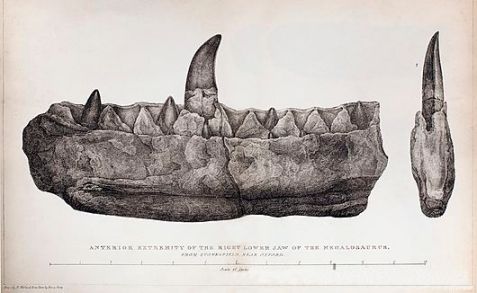
These drawings were much admired among her academic neighbors. Even in far away revolutionary France, they came to the notice of Napoleon’s favorite naturalist, Georges Cuvier. He was instrumental in establishing the science of paleontology and proved that extinction was indeed a fact. Cuvier was to publish a new work comparing the anatomy of those things living to that which has long been dead.An advance copy of the book was sent to William Buckland, fellow of the Royal Society and the Regent’s favorite geologist. Buckland had garnered recent fame when he presented the first documented dinosaur, Megalosaurus, to an astonished ton.

oh, yes--she drew that!

oh, yes–she drew that!

What happened next might have come out of a Regency romance:

“Dr. Buckland was traveling somewhere in Dorsetshire, and reading a weighty book of Cuvier’s which he had just received from the publisher; a lady was also in the coach, and amongst her books was this identical one, which Cuvier had sent her. They got into conversation, the drift of which was so peculiar that Dr. Buckland at last exclaimed, ‘You must be Miss Morland..’ “

Miss Morland had created the illustrations of Cuvier’s paleontological tome, displaying an uncanny ability in understanding ancient fossils which Dr. Buckland had been pursuing his entire life.

She was twenty-eight and he was forty-one. Yet Miss Morland did not hesitate to accept Mr. Buckland’s proposal of marriage. They planned to depart right after the wedding on a honeymoon abroad. New fossils awaited their discovery and Cuvier, taciturn as he was, wished to meet Miss Morland in person.

The beloved Spanish donkey? As living things do, he had become old and infirm. He made his own departure, just as the wedding bells were ringing.

Physician to the Regency

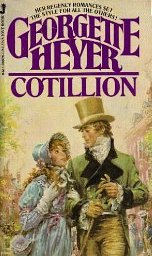
Georgette Heyer's Cotillion

I love these old covers. This one is from the 70s, I think.

“Ermine or chincilla with blue, Meg! Sables never show to advantage!”

By the time this point was fully argued, news was brought to Lady Legerwood that the doctor had arrived, whereupon, after hurriedly commending Kitty to her daughter’s care, she hurried away, bent on convincing the worthy physician that certain unfavorable symptoms, which had manifested themselves during the night, made it advisable for him to call in Sir Henry Halford, to prescribe for Edmund.

As the family doctor, a rising man, was at daggers-drawn with the eel-backed baronet, it did not seem probable that she would be seen again for some appreciable time.

——— Cotillion, by Georgette Heyer

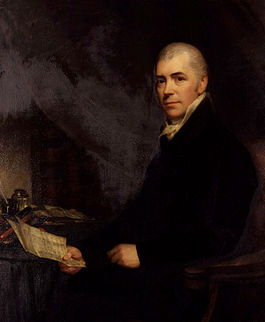
Sir Henry Halford (1766 – 1844), was considered the foremost physician to the ton during the Regency.

He was born Henry Vaughan but changed his name by an Act of Parliament to Halford, anticipating a substantial inheritance from the original Halford family.

Sir Henry Halford (looking over the voucher list for Almack's, I'll warrant)

Sir Henry Halford (looking over the voucher list for Almack’s, I’ll warrant)

It was his connections and smooth manners that recommended him and not his skill as a practitioner. It didn’t hurt that he was also married to Elizabeth, the daughter of John St John, 12th Baron St John of Bletsoe. He managed to snag a position as doctor to the Royal Family and was on hand to take custody of the 4th vertebra of Charles I, which still bore marks of the ax.

Ms. Heyer knew her character well. Contemporaries called the good doctor that “eel-backed baronet in consequence of his deep and oft-repeated bows.”

Monk Lewis: “thy skull discern a deeper hell”

Many readers of Regency-era literature recognize the name “Monk” Lewis.

But who the devil was the fellow?

Monk Lewis

Matthew Gregory Lewis (1775 – 1818) was the son of a wealthy Jamaican planter. His mother ran off with the music teacher when her son was six. He later supported her financially and socially, and then she became lady-in-waiting to the Princess of Wales.

His success was almost entirely dependent on his classic tale of The Monk. This was the Gothic poem of a holy man’s descent into depraved evil.

She sealed his lips with a wanton kiss;

‘Though I forgive your breaking your vows to heaven,

I expect you to keep your vows to me.’

It was an astonishing success, all the more so because the author was not of age. The first edition was followed by a second and third. The most objectionable passages were edited out for having caused much grief to his family. Someone said of Lewis, and perhaps others:

“Twenty is not the age at which prudence is most to be expected.”

He never married. When he came into his fortune, the aristocrats who had previously welcomed him into their salons–the Hollands, Lansdowne and others–now despised him. Lewis pouted at first, reading during dinner and criticizing the company to be had at Oatlands.

Oh! Wonder-working Lewis! Monk, or Bard

Who’d fain would make Parnassus a church-yard

Lo, the wreaths of yew, not laurel, wreath thy brow

Thy Muse a Sprite! Apollo’s sexton, Thou!

—-Byron in English Bards and Scotch Reviewers

Even his fellow poets attacked him, and over one work alone. What was it about The Monk that attracted such great vitriol?

The Monk

The work was a morality plot, normally despised by the young, but delivered so cleverly that even Austen’s Northanger Abbey was bound to mention it as the best thing since Tom Jones. All harkened to it like a Pied Piper with its horrific plot and violent supernaturalism. Rape, live burial, grisly murder and the downfall of the once-sanctified and now defiled.  These lurid themes became interwoven in a new genre–the Gothic tale.

It was all Lewis was ever known for. But it was enough.

The Engineer to the Regency

Sir Marc Brunel (1760 – 1849)
Aye, he’d have her and his freedom

Sophia Kingdom (1775 – 1854) was the youngest of sixteen children of a Plymouth naval contractor. Her father dead, she was entrusted to the tender care of a brother who thought revolutionary France would be a proper place for his young sister to go to school. Abandoned and penniless in the maelstrom that was the Reign of Terror, she managed to find work as a governess. Surrounded by suspicion and danger, she also found love.

Marc Isambard Brunel, a naval cadet from Normandy, shared her love of mathematics and drawing, as well as an active dislike for Robespierre, le dictateur sanguinaire.  He had been keeping a low profile when he fell in love with Sophia, but government agents still caught up to him. He fled France, forced to leave his beloved behind. Soon after, she was imprisoned for allegedly spying for England. Daily expecting execution, Miss Kingdom managed to flee to England where she awaited the return of her lover.

Six years later she was still waiting for him when he landed at Falmouth. Within the year they were married and living in London. For a time they had an apartment in Lindsey House, a Grade II mansion, thought to be the oldest in Chelsea. It was built by the Earl of Lindsey on the site of Thomas More’s garden.

They also lived for a time in King’s Bench Prison, being deeply in debt from various failed engineering projects Brunel was involved in. It seems only appropriate their big break came about when Brunell engineered the Thames Tunnel between London’s Rotherhithe and Wapping in 1825.

“It ought to be easy ought to be simple enough

Man meets woman and they  fall in love

But the house  is haunted and the ride gets rough

And  you’ve got to learn to live with what you can’t rise above

if you want to ride  on down in through this tunnel of love.” — Bruce Springsteen, Tunnel of Love

Their son, Isambard Kingdom Brunel, is remembered among England’s most celebrated and revered English engineers. He was played by Kenneth Branaugh during the 2012 Summer Olympics opening ceremony.

Lindsey House