Christmas with a “K”

“For Christmas that year Princess Augusta, known to Victoria and Albert’s children as ‘Aunt Prussia,’ sent Vicky four miniature fruit and vegetable shops just like those in Berlin, and to brother Bertie, five cartons of Prussian toy soldiers in wood and lead.”

— An Uncommon Woman, by Hannah Pakula (1997)

In exchange, the Princess Royal’s mother, Queen Victoria, sent a Scottish kilt to Germany, as a present to Fritz, the fifteen-year-old prince.

Aunt Prussia  forced the poor lad to wear it for a State dinner.

Set of World War I toy German soldiers.

I love vintage German ornaments. The reproductions are quite nice, too. They remind me that a lot of Christmas as we know it came from Germany.

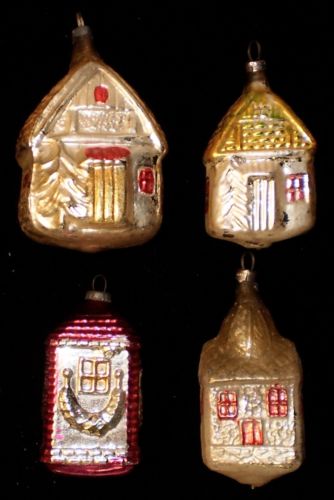
German “putz” houses

glass tree ornaments


German Christmas customs have become so embedded it’s easy to forget their origin. The Advent wreath, for instance, marks the Sundays of Advent. On each one I pray that the combination of so much greenery adjacent to an open flame does not burn the church down.  Weihnachtsmarkte, the Christmas market, makes a great fundraiser for any group, be it a historical society or a soccer booster club. Der Adventskalender, or Advent calendar, is meant to provide order to the wild anticipation children experience with the coming of Christmas.

This is entirely theoretical, of course.

A 1970s Advent Calendar — from Cold War West Germany


They even say der Weihnachtsmann, or Christmas man,  resembles Santa Claus. Scholars would have us believe this mythical figure is derived from Thor.

A Santa worth waiting up for.

Merry Christmas!

The Regency Christmas Table

“At [the tables of the rich] the refinements of foreign invention are for once superseded by the simpler products of old English cookery…”

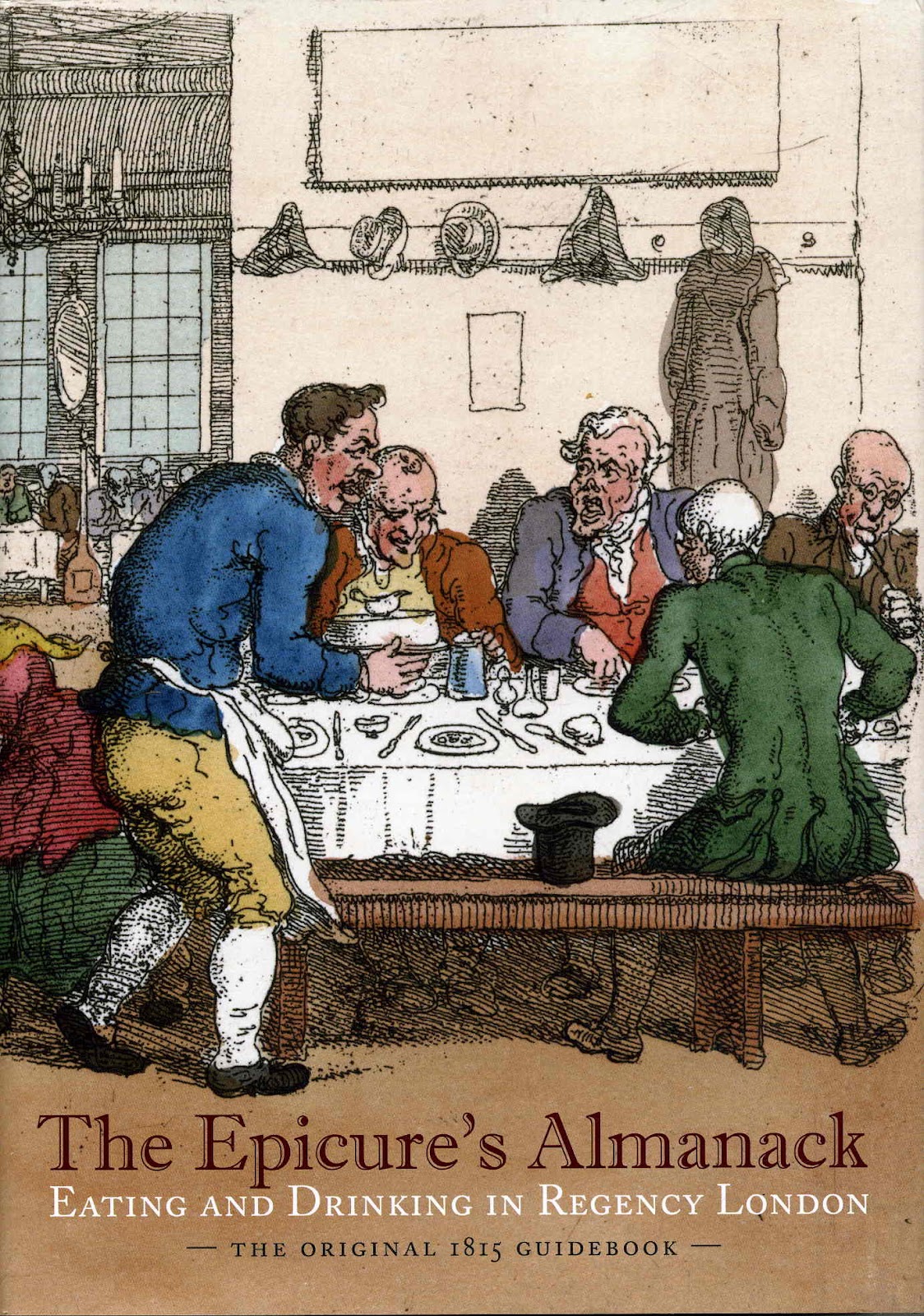
the Epicure’s Almanack by Ralph Rylance, edited by Janet Freeman (2013)

The foregoing is found in the conclusion of this remarkable historical document, the “first London good food guide.” It is a description of the Regency Christmas table, and is contained in the December appendix.  Rylance noted in his 1815 guidebook that various meats and specialties, including “mince-pye,” are presented on fashionable tables during the holiday. They were also distributed to those who were dependents, like servants and tenants, and to the poor.

The result was that nearly everyone shared the same “established national dishes” at Christmas. Many might not have been accustomed to such rich fare, and thus the author noted that particular care had to be taken to aid the digestion. Rylance refers to ripe port and mellow October–thanks to the editor for defining the latter as a “strong ale typically brewed in October.”

At the end of the year, in anticipation of the Season, larger shipments than normal of bulk food would be sent to the London markets. Rylance makes special reference to brawn from Canterbury and parts around Oxford, and he did not mean good-looking, muscular men:

“..manufactured from the flesh of large boars, which are suffered to live in a half wild state, and when put up to fatten, are strapped and belted tight round the principal parts of the case, in order that their flesh may become dense and brawny.”

Good God!

Today’s Christmas brawn served in the UK–with pig’s head, trotters, herbs and spices. From http://ow.ly/1cXT30he5AU

By the time of the Regency, horticulturists had developed facilities, called forcing-houses, to supply the metropolis with fresh vegetables in mid-winter. Fresh spring vegetables were grown under frames and transported to the markets stands of Covent Garden, where they would join potatoes, turnips, carrots and onions  brought out of storage.

Thus, the Regency Christmas table was able to enjoy “forced small sallads,” asparagus and green-peas, the latter:

“welcomed with more general satisfaction than any other vegetable that comes to the table. “

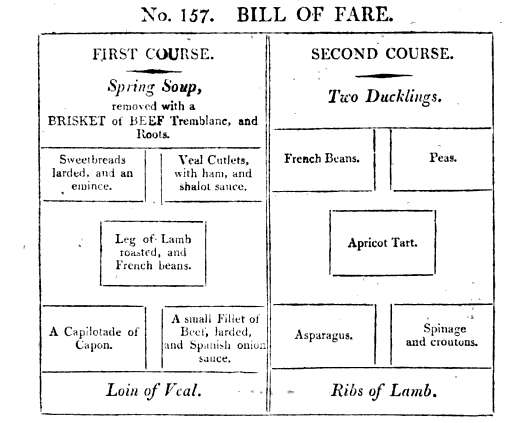
One could enjoy them cold, as in a salad.* Or, as noted in “A Complete System of Cookery,” they make a fine addition to the second course of dinner. The recipe is simple–cook in boiling water with a little salt and sugar. The peas can be served separately or poured over the top of stewed meat, such as duckling.

From: A Complete System of Cookery: On a Plan Entirely New; Consisting of Every Thing Requisite for Cooks to Know in Their Departments … by John Simpson (1813)

*note: the author’s father detested that dish generally contributed by little old ladies to Christmas pot-luck suppers–the pea salad.

The Lord be Thanket!

The following is my translation of the Selkirk Grace:

“Some Folks have meat and cannot eat,  and some have meat that want it;

But we have meat and we can eat, and so the Lord be thankit!”

Many other forms exist, from the picturesque Scots to Gaelic.

   Robert Burns — voted greatest Scot

The Grace has long been attributed to Robert Burns, the Scottish herald of the Romantic movement. Burns was a popular guest among the nobility, who were charmed by his command of the rustic tongue and his ability to entertain with stories and song.

He was a guest at the Earl of Selkirk’s country seat in the Isle of St. Mary’s, when he paid this tribute, off the cuff as it were, before dining at Lord Daer’s table, son of the 4th Earl.


There is some dispute about the authorship of the prayer.  One Robert Chambers*, relying upon an unnamed correspondent, alleges the Grace was said by Covenanters in the south-west of Scotland in the seventeenth century, where it was apparently known as the Galloway Grace.

Doubtful it would be remembered today had it not been taken up by the Ploughman’s Poet.

“I didn’t understand a word of that!”

Happy Thanksgiving!

*see Select Writings of Robert Chambers, Volume VII, (1847)


A Place to Live a Thousand Lives

“In reading, attention is also to be paid to the How, as well as to the What.”

— The Brief Remarker on the Ways of Man, etc.. by Ezra Sampson (1823)

By the nineteenth century, reading as a pleasurable pastime was flourishing on both sides of the Atlantic. The author of the above quote viewed this development with ambivalence, lamenting that reading has become so commonly fashionable anyone could read anything and anywhere, even in the toilet(!)

Indeed, as a young reader, I had no specific place to read. A monkey swing would do. Or the diving board of a kidney-shaped swimming pool.  Reading was just reading–to be devoured and half-digested and forgotten midway through the next book.

Entering higher education, however, the act of reading becomes a necessarily serious business. College libraries are generally constructed to reflect that. An excellent example is the Mary Helen Cochran Library at Sweet Briar College.

Often compared to the Banqueting House at Whitehall,  the Cochran Library bears the legacy of Inigo Jones–Corinthian pilasters, horizontal cornices, and an elegant balustrade.

It was built in 1929, to the design of Ralph Adams Cram (1863-1942), eminent American architect heavily influenced by Regency-era European building design. He is best remembered for his execution of the Gothic Revival in ecclesiastical (NYC’s Cathedral of St. John the Divine) and academic (West Point) buildings.

Cram was also a prolific author–his little horror short story, The Dead Valley, is a gem for Halloween reading.

For the red-brick library and other buildings at the fledgling college for women, Cram chose Georgian Revival, reflecting what was traditional and architecturally pleasing in the Virginia Piedmont.

Cram’s little gem is now on the National Register of Historic Places and is featured in a Library Journal walking tour as well as the American Libraries Library Design Showcase.

There are two spaces in the Cochran which are devoted to reading. The first is the Reading Room, a soaring space flanked by dark wood bookcases, illuminated by light streaming in through the Palladian windows high above. The ceiling is quite fine, its plaster-work sporting ribbon, fruit and flowers.

The Reading Room in 1935. It is essentially unchanged.

Just beyond the Reading Room is the place where I first discovered the pleasure of having a specific place to read–where the how of reading began to influence what I was reading. Paneled in dark cypress, the Browsing Room resembles the private library of an Edwardian country estate, with a fireplace that only needs a Clumber spaniel sleeping before it, the mantel carrying the portrait of donor’s mother for whom the library is named.  The bookshelves are beautifully carved with a deep red color backing in Pompeiian red. They are custom made for the room.

Over seventy years later, the Browsing Room is unchanged (the portrait removed to protect it from nearby renovations).

In 1935, the Browsing Room was presided over by the portrait of Mary Cochran.


It is a space that is permanent–the best in the world “for living a thousand lives,” to quote author George R. R. Martin.

Since college days, I’ve had many places to read, and they all resemble the Browsing Room in one way or another. My reading spaces are sanctuaries, steady, serene and immovable, even as my reading tastes have changed from time to time.

Sweet Briar College, as seen from the gate leading from Daisy’s grave. Thanks to the valiant efforts of alumnae, the gates of this institution dedicated to the liberal education of women will remain open, and one hopes permanently.

I was recently asked what my dream reading space would look like and was introduced to Arhaus.com. I’ve got my eye on their Portsmouth settee and they have many other unique living room pieces great for a personal library.


The Regency’s Haunted Attraction

Full many a traveller oft hath sigh’d,
And pensive wept the Countess’ fall,
As wand’ring onward they’ve espied
The haunted towers of Cumnor Hall.

— Cumnor Hall (the Ballad of) by William Julius Mickle, (1784)

Cumnor Place, sometimes called Hall, was at one time the abbot’s residence at the monastery of Abingdon. Amy Robsart died there in 1560, falling down stairs while the servants were away. Tudor enthusiasts know her as the first wife of Robert Dudley, courtier of Elizabeth I.

Although an extensive inquiry cleared “sweet Robin” of the crime, suspicion remained, as Amy’s death had occurred so very opportunely for a man who made no secret of his desire to wed the queen. As an aside, 1971’s Elizabeth R is my very favorite portrayal of the Queen and her times. Leicester was played by Robert Hardy, a marvelous actor who passed away just this last August.
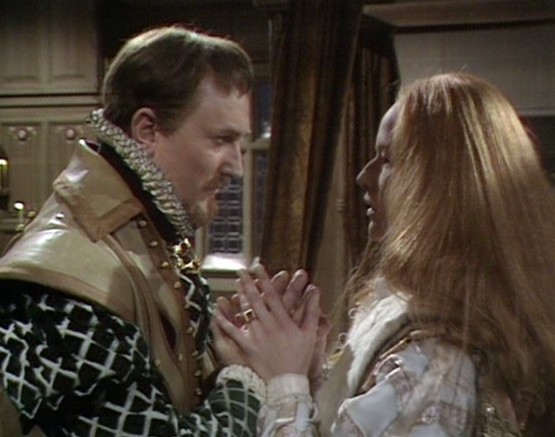
 

“Oh, I burn!”

For centuries afterwards, the village of Cumnor and its Hall remained obscure, excepting the aforementioned ballad by Mickle, which came to the notice of that poet’s fellow Scotsman, Sir Walter Scott. He was inspired to write a historical novel–a collection of fanciful events culminating in Lady Dudley’s death at the hands of Lord Dudley’s evil steward.

Assisting in this endeavor was the wife of the Reverend Dr. Thomas Hughes, Rector of nearby Uffington. She was a bustling sort who was only too delighted to gather local lore for his research, whether it be helpful or not.

“My dear Mrs. Hughes, a thousand thanks for all your kindness about Kenilworth..Cumnor Hall, & other particulars. I am not sure how far they may be all useful..”

— Letters and Recollections of Sir Walter Scott, by Mrs. Mary Ann Watts Hughes and collected by W. H. Hughes (1904)

Undoubtedly it was these very particulars which made Kenilworth an enormous success in 1821, when it was first published.
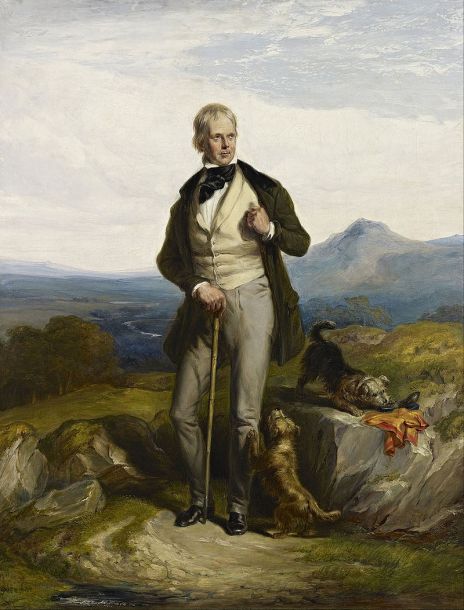
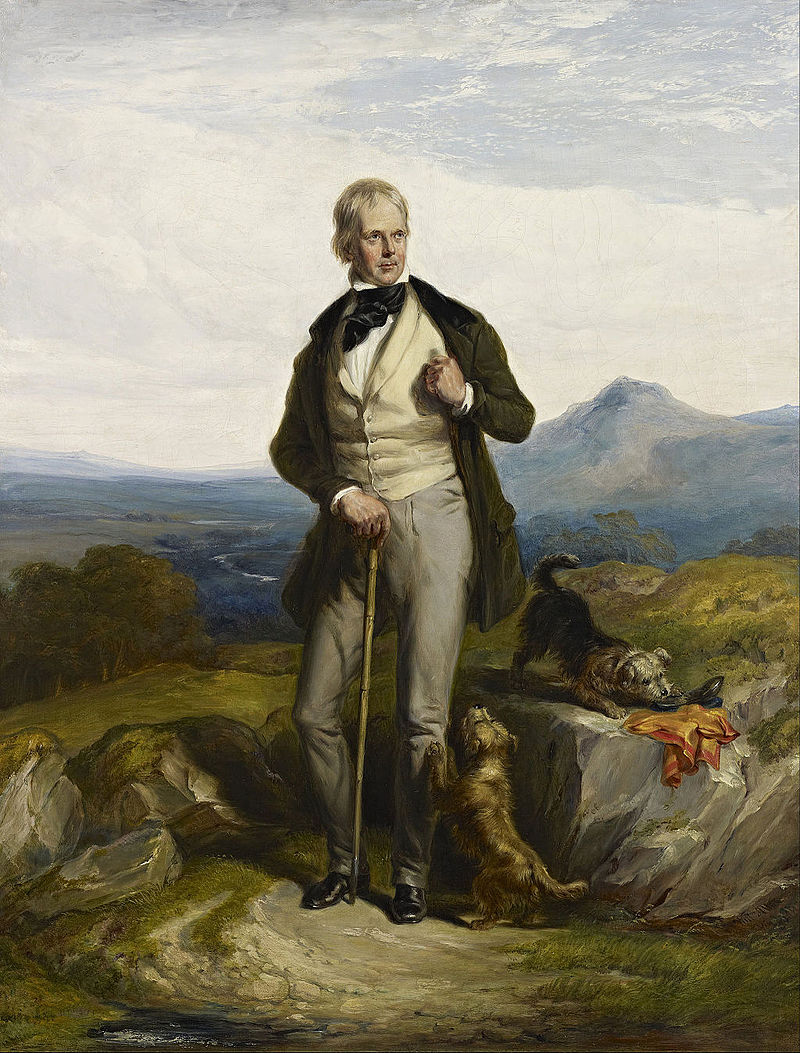
The Wizard of the North — Sir Walter Scott by Sir William Allan.

So stirring was the novel that many travelled to Cumnor to see the hall and its environs where Kenilworth’s tragic events took place, convinced the whole must be haunted. The fact that the old hall had already been demolished by the Earl of Abingdon, Montagu Bertie, caused much dissatisfaction all ’round.

“The disappointment was felt by everybody, for it was said that all the world had hastened to the site of the tragedy so graphically described by Scott, only to find they were too late(!)”

— The Antiquary: A Magazine Devoted to the Study of the Past, edited by E. Walford and G. L. Apperson (1889)

Lord Abingdon came face to face with his iniquity when he reportedly drove guests from his country estate in Wytham over to Cumnor to see the ruins, apparently having forgotten he’d pulled down the main walls years before.  Mrs. Hughes reported to Scott that his lordship was so ashamed and filled with regret, he was very ready to “hang himself for flinging away” what all the Regency was clamoring to see.
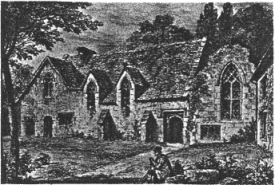
Cumnor Place, before demolition. Parts of it were incorporated in the reconstruction of Wytham Church

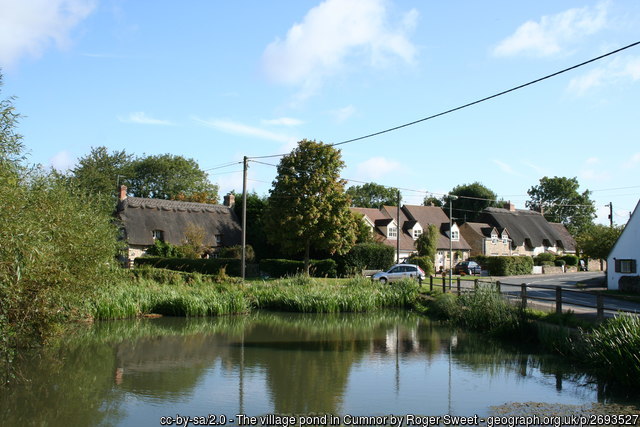
Enterprising persons soon turned the sleepy village of Cumnor into the Regency’s most popular haunted attraction. The vicar, who had knowledge of the hall prior to its destruction, collected fees for pointing out the location of the treacherous stairs and conducting tours of the rubble. The proprietor of the Red Lion changed the name of his establishment to the Black Bear, the name of the inn in the novel. Villagers recounted the exorcism of Lady Dudley’s ghost in the previous century, insisting she was “laid down” in the village pond by no less than nine parsons, with the consequence that its waters never froze again.
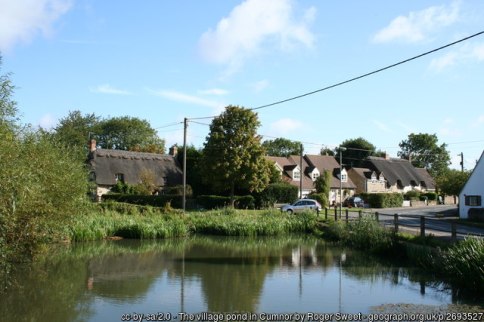
Cumnor pond today–quaint and serene

Scott, now grateful to Mrs. Hughes, wrote to congratulate her on these efforts:

“..I am not the less amused with the hasty dexterity of the good folks of Cumnor and its vicinity getting all their traditionary lore into such order as to meet the taste of the public.”

Historians were not so appreciative and hastened to correct the public’s perception of the matter by conducting inquiries and holding lectures. Some of these worthies condemned Scott and others for “exercising the minds of the vulgar” and fueling a resurgent belief in ghosts.

One indignant antiquarian wrote:

“The narrative is absolutely current in this day; and I have received a drawing of the pond in which the disturbed spirit of the unfortunate lady is said to have at length obtained quiet and repose(!)”

— An Inquiry with Regard to the Particulars Connected with the Death of Amy Robsart (Lady Dudley) at Cumnor Place.. by Thomas Joseph Pettigrew (1859)

Despite these remonstrations, the ghost of Cumnor had become something of a commodity for the place. At least, the expectation was there when a later Lord Abingdon sold Cumnor Place to one Rev. W. E. Scott-Hall. Buyer’s remorse set in when it was discovered there was no ghost anywhere in Cumnor. Scott-Hall sued the earl to rescind the contract of sale since the ghost was missing.

Legal scholars chortled over the implication a ghost should be part of a property conveyance.

“Is a family ghost, like a villein, an incorporeal heriditament? Or is it in the nature of a family heirloom? Can one have seisin of a ghost, and how?”

— The Law Quarterly, Stevens and Sons (1894)

Happy Halloween!

The last Regency Remnant

Today’s post was inspired by a visit to the now-closed St. James Gardens in London, illustrated in the remarkable blog , A London Inheritance.  It is estimated that tens of thousands of bodies are buried in the Gardens–the remnants of those who lived during the flower of the Regency. They are buried under the footpaths and grassy flats which will soon become the busy hub for the Hs2 high-speed train.

The Gardens was originally established in 1788 as a secondary burial ground for St. James Church in Piccadilly. A so-called chapel of ease was built in the churchyard to allow parishioners to attend services there, particularly as the journey to the mother church in Westminster might prove difficult or inconvenient. In 1793, amid expanding urbanization of the St. Pancras area of London, the chapel of St. James became an independent parish church.

The Christie auctioneer family memorial is in the gardens. The National Temperance Hospital in the background is also set to be demolished (if it hasn’t already) to make way for the station.

Strangely enough, one of those interred was Lord George Gordon (1751 – 1793). He had famously converted to Judaism, and one would think a Christian burial was not what he had in mind. Then again, his wishes must have been easy to disregard in the wake of the destruction wrought by his eloquence. One of the houses destroyed in the riots which bore his name belonged to the Lord Chief Justice, William Murray, 1st Earl Mansfield (1705 – 1793), featured in this blog. Rioting was a serious issue during the Regency, for who could have foreseen a crowd being convinced Catholic relief legislation would lead to a renewal of the Inquisition?

Matthew Flinders (1774-1814) is also buried in the Gardens–a captain in His Majesty’s Navy who tradition says christened Australia, is immortalized on countless statues, shilling notes and geographical points, and lives on in the 1940s best seller, Love Must Wait.  During his voyage to the continent that made him famous, Captain Flinders was captured by the French and imprisoned for many years.  Perhaps it was some consolation the Admiralty had refused to permit his new wife to accompany him, else she would have suffered the same fate. In the end,  the joy of reuniting with his childhood sweetheart was tragically cut short, for he died upon returning to England from the illness he contracted during his confinement.

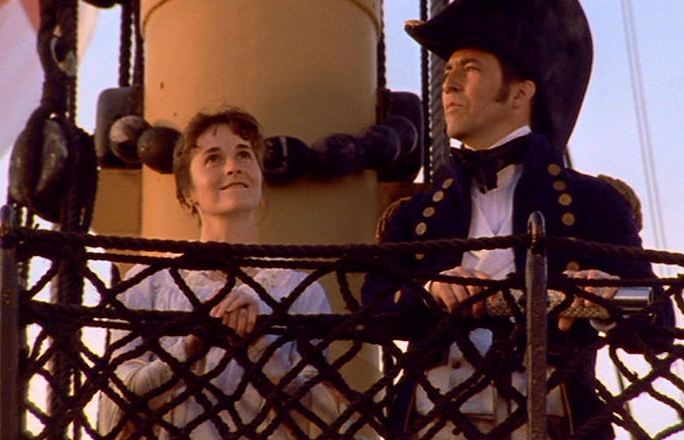
Anne and Captain Wentworth’s happy ending  was denied to Ann and Captain Flinders

The last resting place of an Irish nobleman is also in the Gardens–Laurence Harmon Parsons, 1st Earl of Rosse, (1749 – 1807). As Sir Lawrence Parsons and parliamentarian, he published the book Thoughts on Liberty and Equality. That was in 1793, when pretty much everyone’s thoughts ran along those lines, for the Reign of Terror had just begun across the Channel. The Parsons family was notable for their interest in astronomy and photography, bequeathing their passion to the young son of sixth Earl’s countess–photographer and later Lord Snowden, husband of Princess Margaret.

Lord Snowden and Princess Margaret on a visit with  LBJ and Lady Bird. What a world we live in! (or used to)

By virtue of Burial Act of 1852, which dealt with (literally) overflowing London burial grounds, the St. James cemetery was closed to future interments and made into a garden. In a slow but sure progression of decay, by 1964 only remnants of the Regency existed at the site. Most of the memorials had been removed and the church was demolished. From a BHO description of the chapel, it is interesting to note that the Ten Commandments prominently displayed behind the pulpit had been covered up.

Thou hast outliv’d thy popularity and art become

(unless verse rescue thee awhile) a thing forgotten,

as the foliage of thy youth.

–from The Yardley Oak by William Cowper


The Rake and a Regency House Remnant

On the outskirts of London, at the edge of Epping Forest, lies the site of old Wanstead Manor, which belonged to Elizabeth I’s favorite Robert Dudley and, in turn, his stepson, the Earl of Essex. A century later, Sir Richard Child, Earl Tilney built what was called the ‘noblest’ Palladian mansion there. Its magnificence entertained the Prince Regent, provided a fitting temporary residence for the refugee Bourbons and served as a backdrop for epic celebrations of Wellington’s victory over Napoleon.

Wanstead House was the crown jewel of a Regency heiress’ fortune.

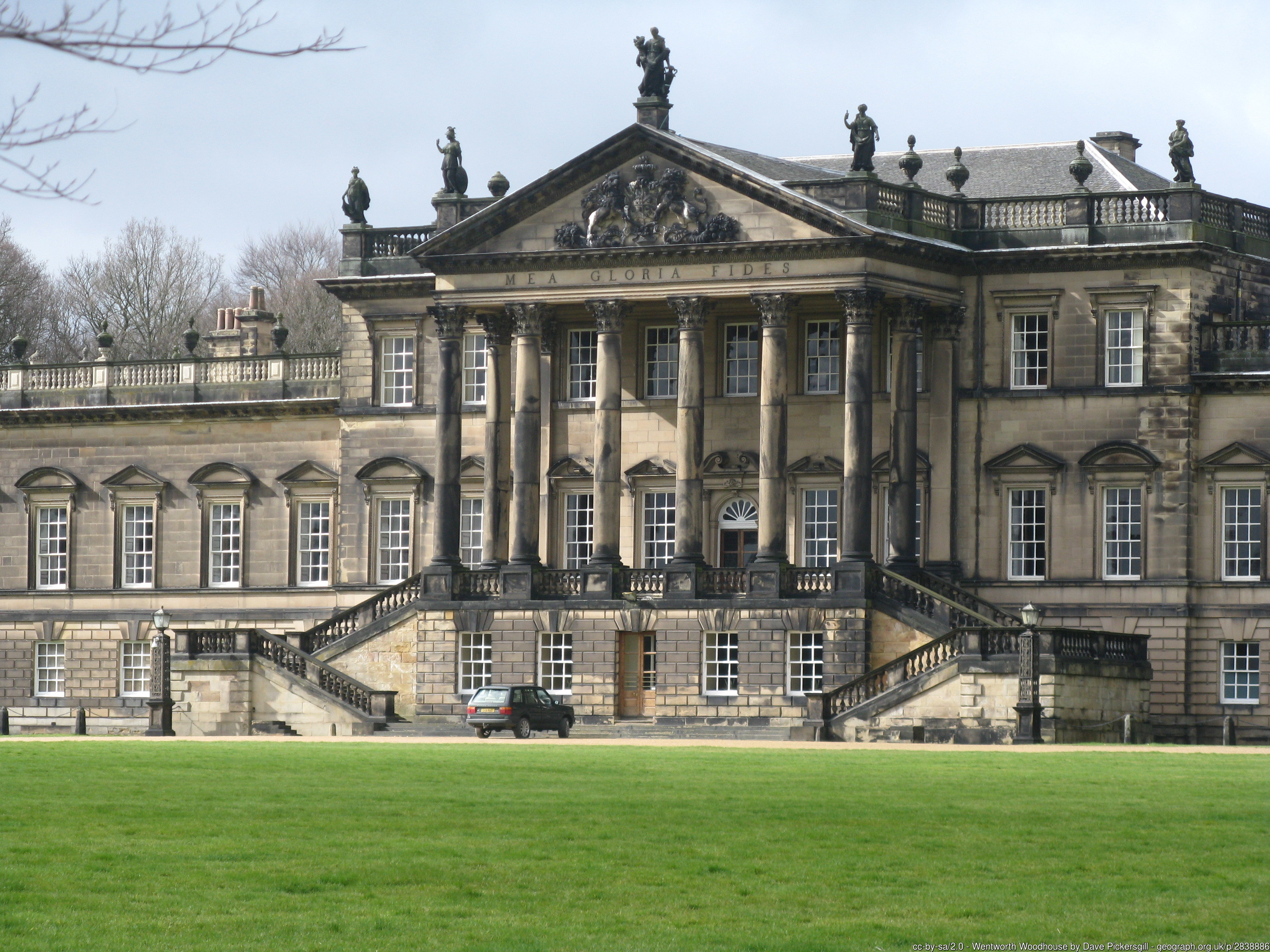
The east front of Wentworth Woodhouse resembles Wanstead, minus the Baroque ornaments. Ironically, at one time the parkland of this house was made the largest open pit mine in post-war Britain. Photo by Dave Pickersgill — via geograph.org.uk

Catherine Tylney Long was the ‘Wiltshire heiress’ in possession of Wanstead House. Against the advice of her relations and his, she married the notable rake William Wellesley-Pole, a nephew of Wellington.

The progress of their courtship and disastrous marriage has been well-documented–a perfectly cautionary tale against reforming the spendthrift libertine. As for the marital abode, Wanstead House, its demolition and dispersal makes an informative study of Regency-era creative financing. Wellington tried to save the estate for the unfortunate offspring of the ill-fated match–a mighty effort that kept the Court in Chancery as busy as the one portrayed in Dickens’ Bleak House.

What remains of Wanstead House is the beautiful park containing the ornamental waters once connected by picturesque bridges, the Temple and the Grotto, and surviving portions of tree-lined avenues.

Author John Harris, “No Voice From the Hall” recollected that only pits from the Wanstead House cellars remained. This is the ruined grotto on the grounds.

The best remnants of Wanstead, however, were sold in a famous 32-day sale the rake held of his wife’s belongings. These heirlooms are still selling today in the most exclusive auctions in the world, giving a glimpse of the fine objects that once adorned the great Regency-era houses.

via the Royal Collection Trust, the Nautilus Cup was purchased at the Wanstead Sale by George IV


Jane Austen and a Regency house remnant

The reference Jane Austen makes to Kempshott Park is from her January, 1799 letter– familiar to many of her fans:

“Charles is not come yet, but he must come this morning or he shall never know what I will do to him. The ball at Kempshott is this evening and I have got him an invitation . . . . I am not to wear my white satin cap to-night, after all; I am to wear a mamalouc cap instead,..”

The turban Mrs. Croft wore in 1995’s BBC version of Persuasion is probably similar to the marmalouc cap — a nod of admiration to British efforts against Napoleon in Egypt.

Kempshott was an out-the-way manor in Hampshire’s Basingstoke Hundred, and not far from Miss Austen’s residence in Steventon.  The logistics of nearby toll roads and rather good hunting combined to make this corner of England greatly desired during the Regency and Kempshott came to the notice of the Prince of Wales, who conceived a fancy for the estate as his hunting box.

HRH leased the commodious house from a man named Crooke, who was then residing at Stratton Park, the mutilated house mentioned in this blog’s previous post.  The course of the house’s history during this time is well-documented at Kempshott Park: a Prince’s Retreat. At various times the Prince entertained both Mrs. Fitzherbert and Princess Caroline of Wales at Kempshott.

By the time Miss Austen was summoned there, Prinny had left for the Grange–the one whose fabulous art collection was bombed by the Luftwaffe (see previous post).  Then Kempshott was leased to Lady Dorchester. It was her ball Miss Austen immortalized in her letter, living on after countless others have been forgotten.

Alas, Kempshott House did not live on. We are lucky one Constance Hill, author of Jane Austen: Her Homes and Her Friends (1904), was able to visit the mansion in its waning years. It had come into the hands of the Rycroft baronets, after undergoing some alteration since the Regency, sporting a fine Italianate exterior that had been added in the 1830s. Miss Hill was able to discover the ball-room of Jane Austen’s day and noted that it had been divided in later years to form a drawing room.

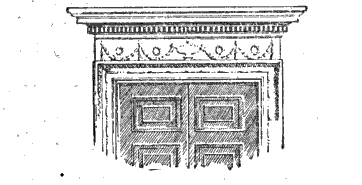
Presumably Miss Hill had her sketchbook with her, for she includes a fine pencil drawing of the ballroom’s intricate door frame in her volume.

World War I led to a long period where the house was vacant, its fixtures gradually dismantled and sold. One dealer attempted to capitalize on the house’s impressive connections, for a chimney piece like the one pictured below was plundered from Kempshott. This was sent on to America where it was joined with odds and ends from unknown origin, to form the centerpiece of a room puffed off as if taken from the house wholly intact–what some would later call a spoof.

This chimney piece, attributed to Henry Holland, is crafted out of Breche marble. Holland was in his French period when hired by Prinny to redo Kempshott, and would have favored this type of marble prominently featured at Versailles. Photo via 1st Dibs

Kempshott House was about to be demolished when visited by author John Harris in the 1960s.

“We found a brooding house, dark and gloomy, its stucco crumbling, deserted, abandoned to agricultural use…potatoes inside, and bales of hay, and an end wall had been broken open at ground floor level to shelter a tractor.”

— No Voice from the Hall by John Harris (1998)

One wonders what Jane Austen would have thought of potatoes piled where she once danced.

More Remnants of a Regency House

Probably the strangest remnant of a Regency house is Stratton Park in Hampshire. The estate was once a monastery, dissolved and reduced to rubble by that advisor to the Tudors, Wriothesley (easy to pronounce, hard to spell). A Palladian house was built upon the site and later sold by the Duke of Bedford to Sir Francis Baring in 1801.

Sir Francis was a powerful banker to the Whigs and a great friend of Lord Shelburne, whose Lansdowne House has been featured several times in this blog. He remodeled Stratton Park into a neo-classical Regency house, relying on the expert services of Dance the Younger, who had a hand in the design of aforementioned Regency centre of London.

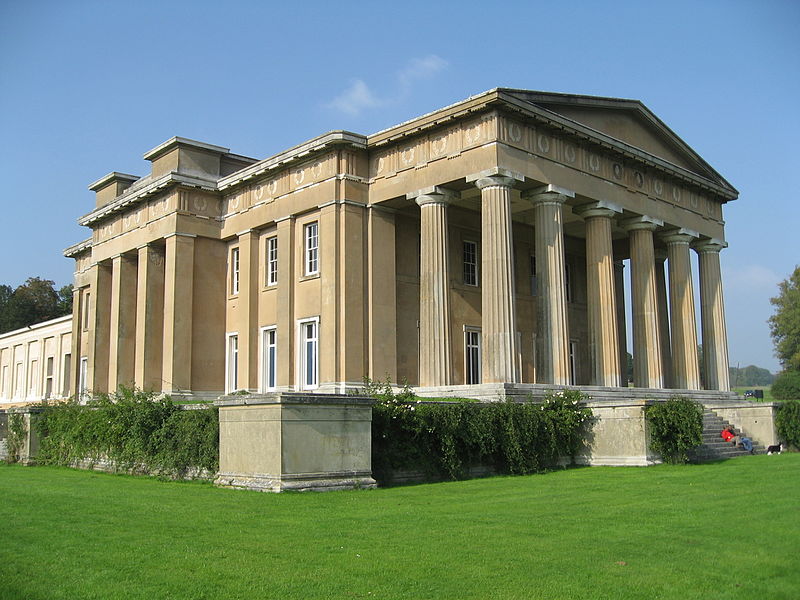
Elizabeth Coade, whose stoneworks made her into a wealthy Regency-era business woman, was applied to for a supply of marble to make up the neo-Greek entrance hall and staircase installed behind a magnificent Doric portico. These elements were fashioned by Coade’s craftsman and later famous sculptor, John de Vaere.

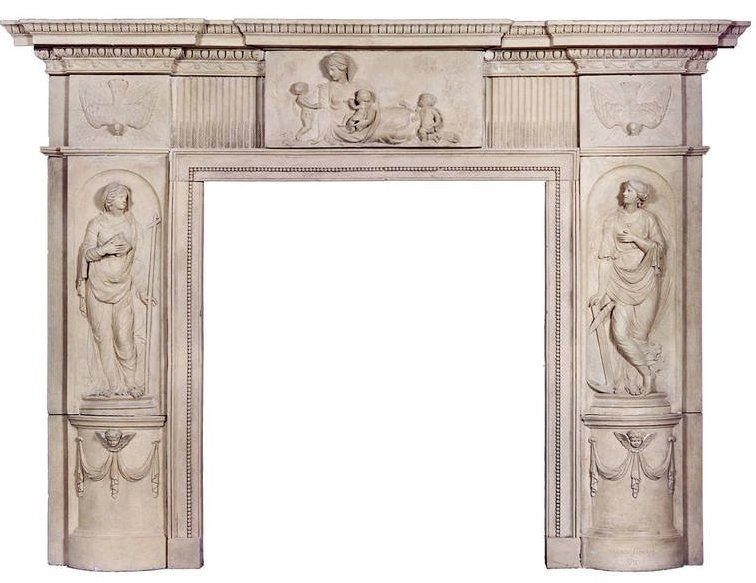
Coade white marble chimney piece

Henry Repton was engaged to create a magnificent park from some of the finest oak-tree plantings in the country which the Hampshire woods were famous for, making the region a favorite site for country houses.

Indeed, just up the road from Stratton Park is Northington Grange, pictured below. Surviving today, it unfortunately lost its trove of Old Master paintings, destroyed when sent away from the estate for safekeeping during the war. Apparently the warehouse storing these priceless treasures was obliterated by a Luftwaffe bomb.

Feeling a little Doric today.
Northington Grange, via Mpntod at English Wikipedia

The Grange was in a state of deterioration, its owner unable to cope with the extraordinary burden of repair and upkeep, when author and country-house snooper John Harris saw it. He planned to see nearby Stratton Park afterwards, for it was scheduled to be demolished. Presumably it, too, would be like the Grange, and many other country-houses that had survived the war in a state of collapse.

Upon inspection, Stratton Park appeared to be in surprisingly good repair despite war misuse. Its fabulous French interiors were still intact, along with the exquisite marble fittings. It seemed the house’s only fault was that it didn’t suit modern taste and therefore was destined for the wrecking ball.

“Even today one wonders, ‘how could they?’ ”

— No Voice from the Hall, by John Harris (1998)

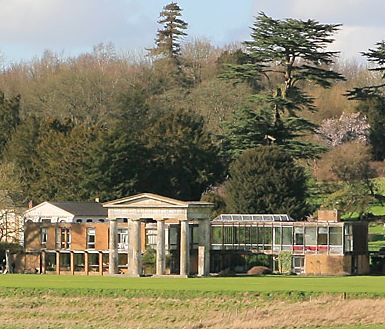
Stratton Park — the Doric portico in front of the modern house is all that remains. Photo via Wikimedia Commons, Peter Facey

Only the Doric portico was saved.


Remnants of a Regency House

This blog has visited lost houses of England before, mostly the result of scouting for locations that may one day be resurrected as fictional houses in this author’s historical romances. For example: Coleshill House, Cassiobury Park and Sutton Scarsdale.

 A plaster remnant the salvage firm left behind at ruined Sutton Scarsdale – photo via Wikicommons, Phil Sangwell

The stories of Regency-era house demolition are, on the whole, a sad affair. These large mansions with separate worlds of upstairs and downstairs, gardens and parks, coverts and woodlands, employing distinct crafts outside and domestic servants inside, fascinate viewers of Downton Abbey and Gosford Park. They fail to survive modern life, however, much as anything else that is labor-intensive to sustain.

When post-war Britain underwent huge economic and social upheaval, what was formerly sacred was broken up, dispersed, or burned on the lawn.

“In 1955, one house was demolished every two and a half days.”

— No Voice from the Hall, by John Harris (1998)

I’m particularly glad Mr. Harris went to great effort to record his own experiences of these vanishing houses. Uffington and Burwell Houses in Lincolnshire, the former already a ruin, the latter to be demolished, gave up vivid remnants of the Regency period.

Uffington was destroyed by fire in 1901. The conservatory remained standing, storing what had been hastily saved from the conflagration but never reclaimed, forgotten for over fifty years.

“..a half-burnt Regency side table, broken gilt picture frames, bits of marble, plaster fragments, a shattered gilt Georgian torchère.”

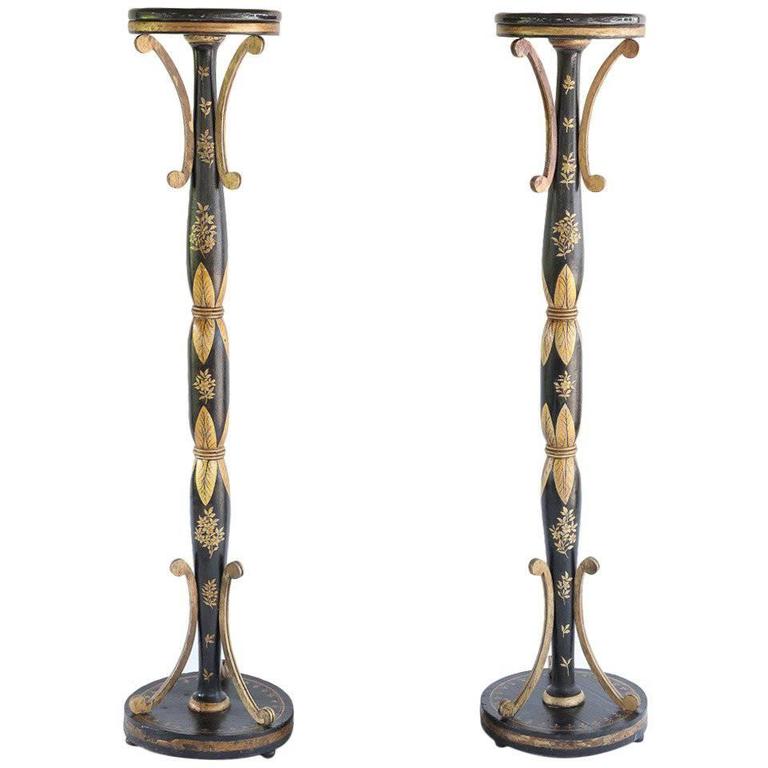
 1815 Regency torchères for sale  in Houston, Texas of places – photo via 1stDibs

At abandoned Burwell, the author found the house being used as a barn. Sheep exited the manor beneath the Doric entrance as freely as you please. Grain flowed like a vast desert beneath ornate plasterwork ceilings. A massive overmantle frame still containing its two-hundred year-old landscape painting reigned over sightless sacks of potatoes. These were stacked up so high they reached the bottom of family portraits still hanging on the drawing room walls, festooned in spiderwebs.

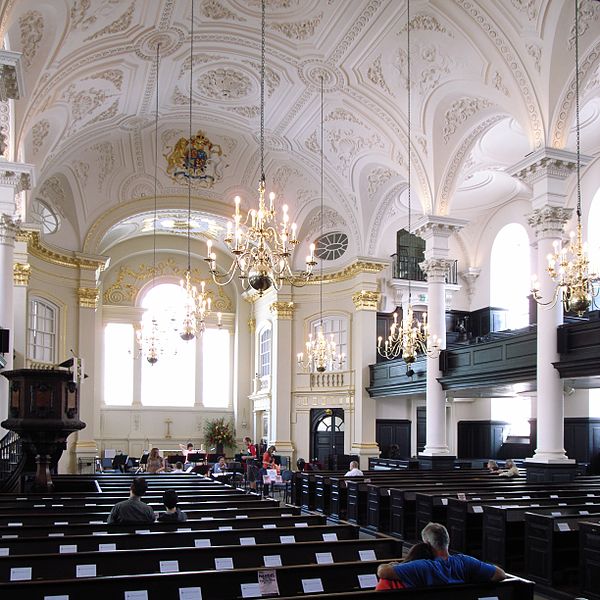
The ceiling of St. Martin in-the-Fields, designed by Gibbs, influenced the plasterwork ceilings of many Regency-era homes, including Burwell’s. photo via Wikimedia Commons, Steve Cadman photographer

Later, the author returned to Burwell, only to find the “philistine” Lindsey County Council had given consent for its demolition. He arrived in time to see workers hacking away at the rococo plasterwork, a pile of broken marble on the lawn, and a fire burning up the mahogany-carved stair.

“I was black with rage. As a single act of destruction, the burning of a masterpiece from the National Gallery would have been no worse.”