Holland House – A Rival to Lansdowne House (part one)

Its turrets and gables lacked the elegance of London’s newer, Palladian town homes.  Its “relics and curios” were dusty books and historic English papers.  Its location was staid Kensington, not fashionable Mayfair.  Its mistress was not even received at court.  But this Regency seat of influence was nontheless a formidable rival to glittering Lansdowne House:
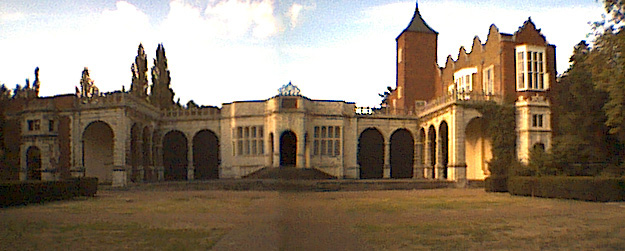
Holland House

Yet great things were done at Holland House–reforms planned and accomplished, literary lions fed with appreciation and encouragement.  All the great names of that period may be found on the lists of the Holland House entertainments.

—  Charles Dickens, “Holland House,” All the Year Round, A Weekly Journal, Vol. 66, 1890

With the Regency barely on the horizon, the house was known as Cope Castle and practically a ruin when it came into the possession of Lord Henry Richard Fox, third Baron Holland.  He was a mere baby and presumably not ready to take on any renovations even though the house had an illustrious history.  Its best days, it seemed, were behind it.

Those days began when Queen Elizabeth I granted a part of Kensington Manor to one Walter Cope–that part that once belonged to the Abbot of Abingdon–and built a multi-turreted Jacobean mansion that others mockingly called Cope’s Castle.  The Renaissance had penetrated English architecture by the time of its construction in 1607 but classical features like columns, arcades, parapets and the like were applied in a more freeform style rather than with any strict order that characterized the later Palladian movement.  Cope Castle, unlike Lansdowne House, was more like a free spirit.

the haunted Gilt Room

Cope’s daughter inherited the house and it became greatly enlarged upon her union with the Rich family, also grown wealthy on confiscated church property when its patriarch had prosecuted Sir Thomas More on Henry VIII’s behalf.  Her husband was Henry Rich, Earl of Holland, from whom the house takes its present name.   He negotiated the marriage of Henrietta Maria to Charles I and built the house’s famous gilt-room in expectation of entertaining the new Queen there.  This did not come to pass, nor was the Earl to survive the coming storm.  His ghost was said to be seen in that very room, richly dressed as he had been on the scaffold, holding his head in his hands.

After the Restoration of Charles II, the house was sold to Henry Fox, whose sire had the distinction of fathering this first of three sons at the age of seventy-three.  Fox eloped with one of the famous Lennox sisters and it was his grandson, also named Henry, third Baron Holland, who made Holland House a rival in Regency gatherings, as we shall soon see.  Today, Holland House is a ruin, destroyed by a fire-bomb in World War II.

Holland House library – World War II
There’s a Tory in Lansdowne House

“Ah, Lord Grenville,” said Lady Portarles, as following a discreet knock, the clever, interesting head of the Secretary of State appeared in the doorway of the box, “you could not arrive more a propos. Here is Madame la Comtesse de Tournay positively dying to hear the latest news from France.”

The distinguished diplomat had come forward and was shaking hands with the ladies.

“Alas!” he said sadly, “it is of the very worst. The massacres continue; Paris literally reeks with blood; and the guillotine claims a hundred victims a day.”

The Scarlet Pimpernel, Baroness Orczy                                           File:1st Baron Grenville.jpg

The year was 1792 and Lord William Wyndham Grenville (1759 – 1834), First Baron Grenville, was Foreign Secretary.  He was a member of the Tory cabinet formed by Prime Minister William Pitt the Younger and was tasked with managing the blood bath and upheaval that was occurring on the Continent.  To complicate matters, there was conflict among the ministers.  Lord Grenville was positive that greater success against the French in the War of the First Coalition could be had with military action on the continent, as opposed to skirmishes at sea and jousting with the colonies as proxies.

He was up against Pitt’s great friend, Henry Dundas, First Viscount Melville and the kingdom’s Secretary of War:  “a man so profoundly ignorant of war that he was not even conscious of his own ignorance.”  Dundas was a wealthy man, purely by virtue of his first wife.  He divorced her over adultery, and ensured she would never see her children again.  This was a sentence imposed for the rest of her life.  She lived another sixty-nine years.

Pitt could not be persuaded to abandon Dundas, even when the man became instrumental in stopping all efforts to abolish the slave trade.  It is almost certain that at this time Grenville began to rethink his Tory connections.  Then came the King’s refusal to consider the question of Catholic emancipation and the Pitt government resigned.

A quiet interlude followed while Grenville was out of office.  A time for reflection and for preparation of his greatest life’s work that still lay ahead.  He had heard of the ideas being discussed in a Palladian home in Berkeley Square.  He did not have to visit there for long before he found himself surrounded by a circle of Whig supporters.

Grenville’s chance came in 1806 when Pitt died, leaving a vacuum of power.  Enter his lordship with the backing of Lansdowne House and he was elevated to the position of Prime Minister.  It was an extraordinary moment as he became head of a coalition government known as the “Ministry of All Talents.”  And none too soon.  War with France had reached a fever pitch and national unity was vital.  Grenville’s charm united politicians from almost every persuasion.  He even managed to placate His Majesty to accept such persons to whom he had been previously hostile.

It was then one of the most important goals cherished in Lansdowne House was achieved–the abolition of the slave trade.

In 1823 Grenville retired.  He and his wife withdrew, childless, to a country home he had built, Dropmore House, near Windsor Castle.  He established one of the largest stands of conifer trees in Britain at his pineturn there.

Sadly, Dropmore was badly damaged by a fire that took four days to put out in 1990. Another in 1997 left the house uninhabitable.  The property has since been restored by a developer interested in turning the mansion into luxury apartments.  It is a pity the firm in charge of this endeavor has gone into liquidation.

http://www.youtube.com/watch?v=4y5fybV7vW4 at 52.51 is a lovely clip from the 1934 movie production of the Scarlet Pimpernel.  It is the ballroom scene in which his lordship plays a slight role.

http://www.youtube.com/watch?v=AvctyYcUIaE at 6:03 is also a clip from the Dr. Who series showing the exterior of Dropmore before it was destroyed by fire.

Is There a Doctor in Lansdowne House?

Sir James Mackintosh was a doctor in Lansdowne House.  But you may remember from an earlier post that his presence was required for something other than practicing medicine.  He was called to exercise his great conversational power.

Dr. Francis Willis – physician to George III
copyright Richard Croft http://www.geograph.org.uk/photo/903770

He might have needed a doctor.  He died from a chicken bone lodged in his throat.

Jane Austen’s World has a lovely article on physicians during the Regency.  I particularly enjoyed the discussion on a doctor’s place in society.

The Beau Monde’s collection of articles is another favorite source of mine.  Alicia Rasley contributed a very comprehensive outline on the subject here.

Actually, this post was inspired by a recent article in a major newspaper http://on.wsj.com/IKwNny.  Click on the link to test your knowledge of old medical terms.  See if you can match them with the modern ones.

If someone were to become ill at Lansdowne House, they might be suffering from the following:

Stopping (constipation)

Humid tetter (exzema)

Ship fever (typhus)

Morphew (scurvy blisters)

Podagra (gout)

Catarrh (inflammation of the sinuses)

Brain fever (could mean meningitis, encephalitis or malaria

Grippe (influenza)

I thought these terms were interesting.  I hope you did, too.

This clip from Monty Python’s Holy Grail on the matter is amusing:  http://bit.ly/JTg8f at 3:00.

“They’re doctors?”

An Attorney in Lansdowne House

He was Lord Brougham and Vaux.  Before he gave his name to a special sort of carriage and legions of General Motors vehicles, he came down to London from Scotland to be a member of the House of Commons as a Whig.  This gained him entry to Lansdowne House.  His renown came from his heroic defense of Queen Caroline of Brunswick, the erstwhile wife of the Regent.

“He was a man of marked abilities, distinguished as a statesman, as an orator, a historian, a lecturer, an essayist, a political economist.  As a lawyer, he rose to the top of his profession; as a statesman, he rose to the office of Lord High Chancellor, as an orator, his reputation was among the first of his time, as an essayist, he was one of the brilliant band of writers who made the Edinburgh Review the leading literary authority in the world.”

They left out the part of his dalliance with the Regency’s most celebrated courtesan, Harriette Wilson.  Her clients included the Prince of Wales, four Prime Ministers, as well as the Lord High Chancellor.

Hmmm. 

A Scot in Lansdowne House

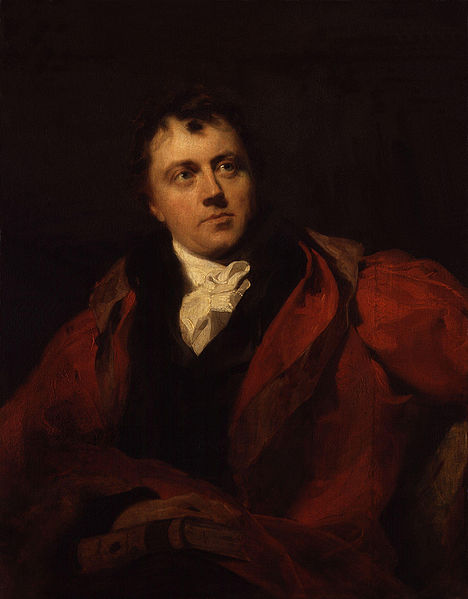
Sir James Mackintosh (1765-1832) was born in Aldourie, Scotland, on the banks of Loch Ness.  He had been described by himself and others as “indolent and dilatory at every period of his life.”  When taking his degree, he put off writing his thesis until an hour after the appointed time of his examination by the entire faculty enclave who were kept waiting for him in patient condescension.  How did this obscure Scotsman come to the notice of Lansdowne House, particularly when admittance within its halls was habitually sought after by the industrious and the prompt? 

The man was just so very interesting!

His mind was stored with the wisdom of the ancient and modern world; and his remarkable memory enabled him to retain all that he had read.  His conversation was enriched with wit, philosophy, history and anecdotes, and so extensive was his range of knowledge that it was said of him that he could pass from Voltaire’s verses to Sylvia up to the most voluminous details of the Council of Trent. —  from an 1894 article entitled Lansdowne House in the Chautauquan (a journal of the Chatauquan Literary and Scientific Circle)

He was trained as a doctor and as a lawyer, but was continually drawn to the spheres of philosophy and politics.  His speeches were well-attended but it was his response to Edmund Burke’s criticism of the Revolution in France made Mackintosh one of the Whig party’s most erudite writer and orator.   Later he deplored the actions of the revolutionaries that led France to descend into a military dictatorship, but he remained a passionate defender of the rights of man and a vociferous opponent of the system that supports a titled nobility.

In 1798 he formed an exclusive Whig club in London, called the King of Clubs.  Good conversation was already the rage in London and membership to this group was in great demand.  Conversation Sharp was prevailed upon to join.  He later reminisced about those days long after the club had disappeared:

Ah yes! – our King of Club days with Mackintosh, Bobus, Dumont and Romilly, were days that the Gods might envy !”

Aldourie, Scotland - the bank of Loch Ness

For me, however, this frequent visitor to Lansdowne House could not have been more moving in his writings or his orations than when he exerted himself in the cause of Love.  To the dismay of his family and hers, he married Catherine Stuart, one of the most “fortunate circumstances of his life.”  She was prudent where he was excessive, she was industrious where he was indolent.  She was the making of him and his success to such an extent her disapproving brothers not only became reconciled to the marriage, but became Mackintosh’s most ardent champions.  But when she died, he could scarcely contain his grief.  She was his beloved and in an age where women’s achievements were subordinate to men’s, he was passionate that she be remembered for her efforts.  He sought advice from one Dr. Parr as to how he should form a suitable epitaph to “my dearest Catherine:”

“To her I owe that I am not a ruined outcast; to her whatever I am; to her whatever I shall be.”

Dr. Parr was astonished at this letter and agreed to arrange for the Latin inscription on Catherine’s tomb.  He replied,

“I never received from mortal man a letter which, in point of composition, can be compared with that which you wrote me the other day.”

He did not think it bad at all.

Animal Rights and Lansdowne House

“Mama, I’m as concerned about Diana as you are.  If she truly needs me, I will always be there to help her.”

“Of course.”  She poked her elegant finger among the brooches and earrings in the ornate box.  “You’ve managed everything quite well up to now, have you not?  But beware, my darling.  We have only just arrived in London.  Inevitably, Diana is bound to choose another improper friend.  One that may not be as amenable to your carte blanche as Miss Swynford.”

“Did you say Diana’s gone out riding?  I should go call for my horse.”

The dowager cocked her head.  “Your niece is all the way to Hyde Park by now, most likely.   Quite keen, she was, to try out her new mare.”

“That wretched animal she picked up from the horse knackers?  The dealers at Tattersall’s were glad to be rid of her after she injured one of their grooms.”

“The very one.  She tried to kick one of ours in the head just this morning.”

Diana’s Garnet was never a favorite of her Uncle Russell’s.  She was an ill-tempered mare and he always said Diana rode her just to spite him.   But in his heart he was proud of his niece for saving the animal from the knackers, and for trying to make something of the tall, angular chestnut.  He knew Diana needed Garnet, just as Garnet needed Diana.   The Marquess of Wimberley was only too aware that the victim of abuse, be it man or beast, can sometimes be set upon the road to healing when given a purpose–a destiny.  And his lordship fervently hoped this first step for Diana would lead her toward recovery.  Little did he know it would lead him there as well.

The notion of rescuing animals–saving them from ill-treatment–was a topic of considerable discussion in the Regency period.   Philosophy was motivated in those days by new ideas about the rights of man.  A century before, Locke, and later Kant, had already raised the notion that animal abuse was a bad thing–not for the animals, but for man.  In the mid-eighteenth century Rousseau argued the matter one step further.  The beasts of nature, by virtue of them being sentient, have their own right to the mercies of natural law, even if they cannot reason on their own.

The entire idea of introducing laws to protect animals remained, however, purely philosophical.

It was also something of a comedy.  Wollstonecraft’s In Defense of the Rights of Woman at the close of the eighteenth century was met with another tract published under the satirical title, Vindication of the Rights of Brutes.   In other words, if we give rights to women, we shall dashed well have to give them to the beasts!

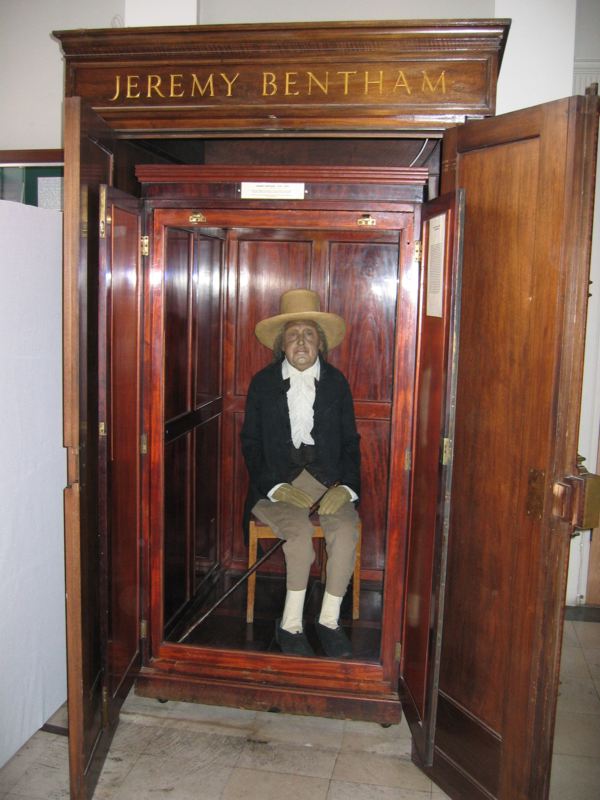
Enter Lansdowne House and one of the Marquess’ most illustrious guests–Jeremy Bentham (1748 – 1832).  He was a philosopher well-known for his radical notions about freedom and equal rights, getting the C out of the E (ie, separating church and state), and abolishing slavery.  When it came to animal rights, he brushed aside natural law as “nonsense upon stilts” and made an argument that was unanswerable:

“…The question is not, Can they reason?, nor Can they talk? but, Can they suffer?”

It must be said he did not oppose the use of animals for medical research.  He gave his own body to a medical college for public dissection and ordered that his corpse be put on display in an auto-icon.

When not engaged in philosophical dialogue, Bentham was known for courting women with “clumsy jocularity” (Michael St. John Packe’s The Life of John Stuart Mill).  The women in particular were members of the Marquess of Lansdowne’s family.  It appears from some of Bentham’s correspondence the ladies had refused to receive him when he called at Lansdowne House.  His style of rebuke, a mixture of pleasantries and irony so typical of the Regency, is amusing:

“I am glad to find you have begun to feel something like remorse; it is a virtuous sentiment–do not struggle to suppress it.”

An American in Lansdowne House

If Tom Moore was Anacreon, Washington Irving (1783 – 1859) was the “upstart American who dared to write English well.”

It is difficult to coax a Brutus from a receding hairline, but he has a lovely mouth.

Irving had initially sailed to England to bail out his family’s business in the aftermath of the War of 1812.  The conflict had been ruinous for American merchants and despite their son’s best efforts, the Irving clan’s cross-Atlantic enterprise was forced to declare bankruptcy.

Over his family’s protests, Irving remained in England to pursue a writing career.  His Sketch Book became a great success and soon Irving was fast friends with the Scottish bard, Sir Walter Scott, as well as the Irish one.  Sketch Book was really a series of installments first published in American and then in London.  The short stories it contained, like Rip Van Winkle and Legend of Sleepy Hollow, gained Irving admission into the highest circles of the ton and into the best houses of London, particularly Lansdowne.

Like many authors of new-found success, Irving was almost immediately a victim of literary piracy.  His publication in America was hastily copied and distributed in England without any compensation to him, there being no international copyright law at the time.  Eventually he acquired a more reputable (!) publisher and from then on his works were released concurrently on both sides of the Atlantic, to protect his copyright.

His presence in Lansdowne House was frequently noted.  There, Irving was:

“modest, shy and retiring…not the man to shine in large companies of perfect strangers.  Moore laughingly said of him that he was ‘not strong as a lion, but delightful as a domestic animal.’ “

Irving was also victim to that other scourge of authors–writer’s block.  He went to the Continent in search of new material, spending some time in Germany where he was well-received by the royal family.  There he made a frustrated attempt to woo a fellow American, Emily Foster, then living with her mother in Dresden.  Disappointed when she rejected him, he left for Spain to seek inspiration for new writings on the history of Christopher Columbus and that frontier of medieval conquest–Grenada.  He made popular the new genre of historical fiction, called romantic history at the time.

Eventually, after an absence of seventeen years, Irving returned to America to continue his writings.  This was briefly interrupted with a stint as U. S. Minister to Spain, a difficult position since he had to deal with warring factions vying for control over the twelve-year-old Queen Isabella II.

He died at Sunnyside, his beloved cottage in Tarrytown, NY.

Sunnyside Cottage--a long way from Lansdowne House, but just as charming.

It is no surprise that Lansdowne House should desire to have the First American Man of Letters, the first to earn his living by the pen in that new nation, to be one of its brightest luminaries.

Laughing Gas at Lansdowne House

The third Marquess of Lansdowne was no stranger to the rich and famous that came to the great London house.  His father had hosted Benjamin Franklin (1706 – 1790) when the latter came to negotiate the terms for American independence.  One who was credited with the discovery of oxygen, Joseph Priestley (1733 – 1804) ran tame at Lansdowne House as well, living off the largess of the first marquess when he was still Lord Shelburne.

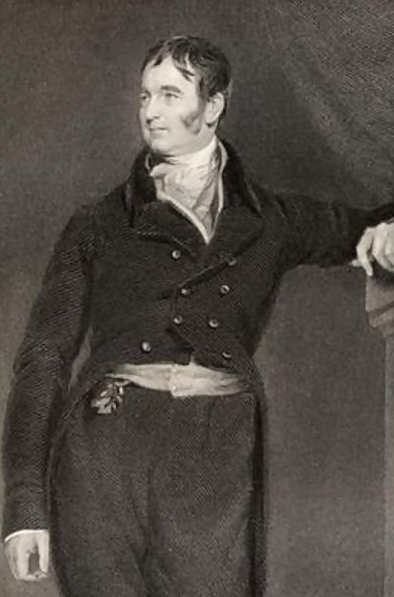
Sir Humphry Davy

But the parade of important persons during the Regency period, when our Lord Lansdowne was master there, is impressive indeed. There was a reason for this.  Unlike other patrons of artists and persons of science, the third marquess welcomed these to his home as equals:

“No trace of such distinctions ever checked the talk at Bowood or Lansdowne House.  If help was needed, it was freely given.” —  The Gentlemen’s Magazine and Historical Review, MDCCC LXIII, by Sylvanus Urban

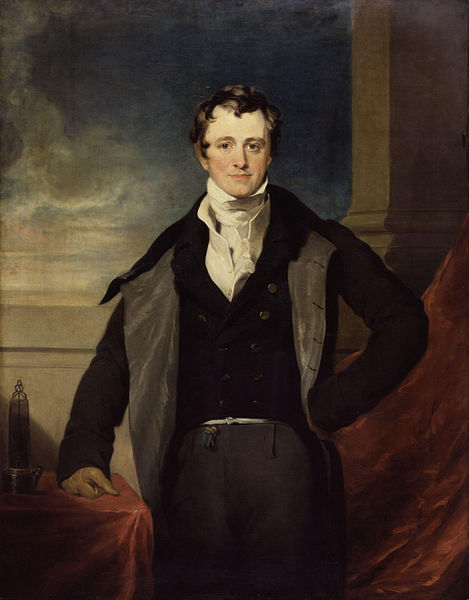
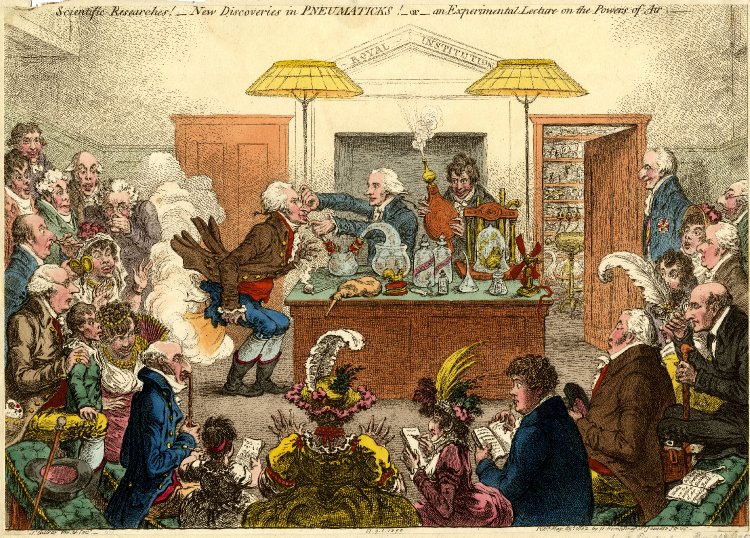
The greatest scientist of the Regency was no stranger to Lansdowne House. Sir Humphry Davy (1778 – 1829) was a pioneer in chemistry, having discovered important earth elements and inventing the Davy lamp used by miners to detect dangerous gases.

But enough of the science.  I declare, the stuff makes me bilious.

Truth to tell, Sir Davy put on exhibitions of his experiments that were not only explosive but made all the females swoon.  He was a very good public speaker, endowed with considerable charisma and the elusive ability to impart science in an understandable manner.  Note the cartoon and its display of Davy’s large female following.

I cannot deny he is rather attractive.  Is it the neckcloth or is it just me?

File:Royal Institution - Humphry Davy.jpg

Spectators were particularly drawn to his experiments depicting the effects of nitrous oxide.  He once said that laughing gas bestows all the benefits of alcohol and none of its flaws.

I’ll have what she’s having.

“Most Delicate in his Acts of Generosity” – the Third Marquess of Lansdowne

Lansdowne House was not only famous for its architecture and furnishings–it was known for its people, as well.  This post is dedicated to the one person who not only brought the house into its prominence in the Regency period, but very possibly saved it from destruction.

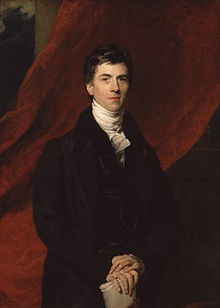
Lord Henry Petty-Fitzmaurice, Marquess of Lansdowne

Lord Henry Petty-Fitzmaurice, third Marquess of Lansdowne (1780-1863) was born in Lansdowne House to the second wife of his father, the first marquess, Lord William Petty, also known as Earl of Shelburne.  It was his older half-brother, Lord John Henry, who succeeded their father.  However, he died a few years later and Lord Henry became not only Earl of Kerry but Marquess of Lansdowne as well.

 An heir and a spare.

And what a spare he came to be.

The hero in Vivien’s story, Notorious Vow, also succeeded his older half-brother.  His patrimony was an earldom in shambles.  The marquisate was similarly situated when it came into Lord Henry’s hands.

Indeed, Lansdowne House had been left by Lord Henry’s predecessors in such a dilapidated state it might have gone on the auction block.  The situation was quite desperate, leading to a scandalous litigation over the debts the estate was faced with, brought by various creditors who held substantial mortgages on Lansdowne House and the family’s country estate of Bowood.  These persons sought to recover monies from the sale of many of the estate’s assets, among them the large art collection that was once once housed in the magnificent Adams rooms of Lansdowne House.  Even the trees themselves had all been cut down and sold as firewood.

Under Lord Henry’s watch, the trees were eventually replanted and Lansdowne House, along with its art collection, restored to former glory.  It was to be one of many of his lordship’s remarkable achievements.  He was a humble man, having turned down a dukedom and the office of Prime Minister.  Nevertheless, his presense was a powerful one in Britisih political life–championing the causes of eduation, Catholic emancipation and the abolition of the slave trade.

He was a man worthy of presiding over the Regency Centre of London:

“Under him the reputation which Bowood and Lansdowne house had secured in the lifetime of Lord Shelburne as meeting-places not only for politicians, but for men of letters and of science, was fully maintained. In the patronage of art and literature Lansdowne exercised considerable discretion, and re-established the magnificent library and collections of pictures and marbles which had been made by his father, and dissipated during a short period of possession by his half-brother. Most delicate in his acts of generosity, he freed the poet Moore from his financial troubles; he assisted Sydney Smith to long-waited-for preferment and he secured a knighthood for Lyell.”

—–from an article written by William Carr and published in 1895 (as reprinted in Dr. Marjorie Bloy’s English History website here.)

The Ghosts of Lansdowne Passage

The layers of history in an old place like London continually fascinate me.  The city is like an ancient mansion that’s been made over by successive generations to suit changing tastes in fashion and function.  New wallpaper is placed over the old, new paint is slathered over faded oak.  When these layers are peeled back, we see something completely different, in the same place.  And it never fails to amaze.

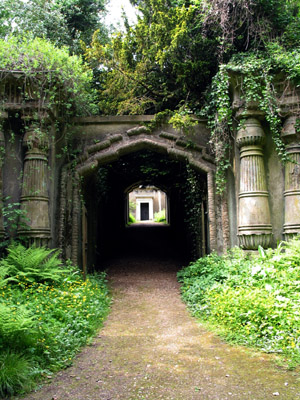
Highgate cemetery - London (licensed under the Creative Commons Attribution ShareAlike 3.0 License)

Fitzmaurice Place is a small street leaves the southeast corner of Berkeley Square and runs into Curzon Street, just where the old core of Lansdowne House sits.  Across from its truncated facade is a pedestrian walkway lined with shops that leaves the house and ends up at Hay Hill on the other side.   It is called Lansdowne Row.

In the days of the Regency, this was a narrow walkway sunken between forbidding walls.  Walls so tall that they permanently darkened this shortcut linking the two ends of Mayfair.  You couldn’t see what was on the other side of either wall, nor were you meant to.

There are very few good photographs of the passage.  I used this image of the Egyptian Avenue monument from London’s Highgate cemetery.  It looks imposing–and a little spooky.

At Lansdowne Passage, in the middle of the most fashionable part of Regency London, two great estates–two great families–came together in a physical way.  As mentioned in an earlier post of the series, Lansdowne House was built in such a way as to give Devonshire House an unobstructed view toward Berkeley Square.  The two houses had enormous gardens.  They abutted one another yet gave way to that ancient right of passersby–an easement, if you will, called the right of way.  This came to be known as Lansdowne Passage, appearing much like a crevasse when Diana, sometimes called Viscountess Northam, climbed the ladder of the Lansdowne House garden to remonstrate with the Viscount Hartington, heir to His Grace, the Duke of Devonshire, who stood on his garden ladder opposite.

Many legends abound of the walkway, mostly because its long length was hidden from observation and provided a perfect route for robbers and ladies of the night.  Indeed, Hay Hill at one end of the passage was long a favorite of highwaymen.  Even the Prince Regent was robbed there at gunpoint, along with his brother, the Duke of York, of the three shillings they had between them.

A highwayman once urged his steed down into the deep passageway to escape apprehension, goading his horse to leap across the descending stairs, landing heavily on the paved stones below.  They were now in a narrow passageway, mind you, and the rider must needs take the reins in one hand and grip the cantle behind him with the other so as to reduce the width of his profile, spurring into the darkness lit only by a full moon riding the sky above.  Then there was the ascending stair opposite.  Even the most intrepid horse must pause, his ears pricked forward, throwing his head down to eye the obstacle ahead.  But alack!  Pursuers are even now approaching–their cries funnelled between haughty walls to spur even a spooked animal to leap upwards, scrambling and skidding for purchase on stone steps to Hay Hill above and the wilds of undeveloped London beyond.

Iron bars were erected to prevent this sort of thing from happening again.

Today, Lansdowne Row is listed as one of London’s haunted places.  Spectres of highwaymen, footpads and the Loquacious Lady still wander the passage, lit by the storefronts of Hugo Morelli and Starbucks.