The Real Regency Reader: The Miser Married

One popular book on the Regency bookshelf was written by an unlikely spinster, Catherine Hutton (1756-1846). She used the character of a spendthrift to conquer a miser in her 1813 novel The Miser Married, A Novel. The story is mostly a series of letters, many consisting of a daughter’s observations of her widowed mother’s adventures and those of the widower Mama sets her cap for.
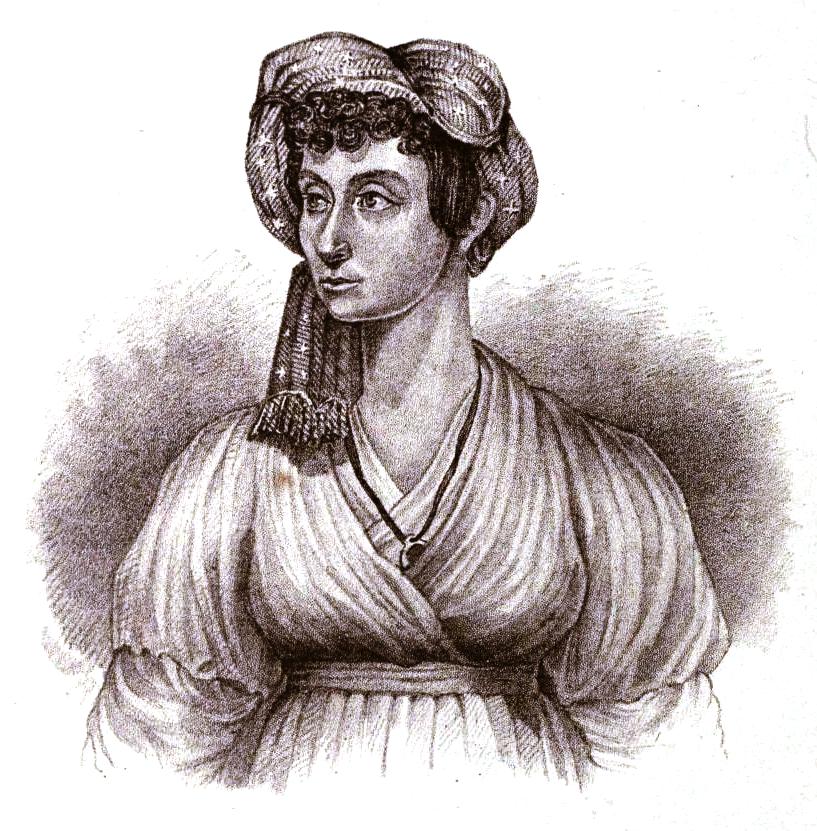
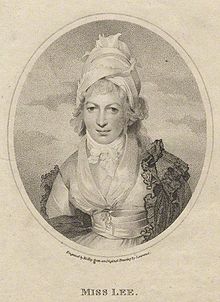
Catherine Hutton

Catherine Hutton

The novel opens with Mr. Winterdale, a gentleman of some means who keeps to himself and known to be ever careful of his money. He is quite aware of his new neighbors:

“The lady who has taken Ravenhill Lodge is come to it, with her family, which Martha tells me consists of a daughter and a niece. She says Mrs. Mereval is a handsome woman, not more than eight and thirty, and that the two girls are very beautiful. So they may be for me. I had a glance of two female figures, peeping through the lattice of the little door in the park wall, and I sent for the carpenter directly, to nail it up with boards. These women may, perhaps, think they have a right to be acquainted with me, because they chuse to come and live at the next house. I can tell them that will be no easy matter.”

Then we have the daughter’s letter, written in the wake of being diverted from reading her novels:

“Which, my dear Harriet, in the catalogue of human events, do you think capable of bringing Mr. Winterdale to our house? ..not for a morning call but a positive inmate; eating, drinking and sleeping under our roof? You are mute with astonishment; at length you answer, “a broken leg, perhaps.” Your conjecture is exactly right.”

Throughout the three volumes of the novel, the series of letters from the characters cleverly display a wide range of personalities in a diverting tale of the miser and the beautiful widow. The author is not above commenting on other Regency books, relying on the aforesaid novel-reading daughter:

Mrs. Hannah More–Cœlebs in Search of a Wife. Comprehending observations on domestic habits : “Wicked novel reader as I am, I confess that, in some of her long arguments, I turned over six leaves, instead of one!”

On Maria Edgeworth’s Lenora: “The moral purpose of Leonora is to persuade woman to attend to her duties, rather than her rights. In a word, to counteract Mary Wollstonecroft.”

Of Holcroft and his Anna St. Ives: “(It) is written, as the author, himself, declares, to inculcate the lesson of fortitude to females. I admire her fortitude; but I think her rather too philosophical, for a young lady.”

Miss Hutton was an expert on characterization, a talent highly prized by Regency readers. As such, she was certainly aware of how her keen observations might strike a nerve in more than one quarter. In her Prologue, she lays bare her trepidation in releasing her first novel to the “awful Tribunal of the Public.”

She knows she is an unlikely novel-writer, being only certain of her ability to make a variety of puddings:

“..but that I possessed the inherent qualities necessary to write a book, was not suspected by me, till lately.”

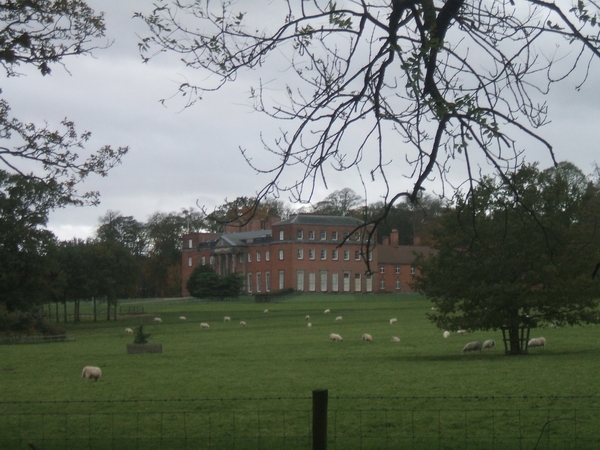
What Ravenhill might have looked like. Remote.

What Ravenhill might have looked like. Remote.

The Real Regency Reader

Reading was an important pastime in the Regency. With more leisure came more time. And more reading.

In Heyer’s Cotillion, the heroine has had more than enough leisure time at her guardian’s dreary country house, with nothing but her governess’s bookshelf to entertain–and educate her. She elicits the aid of the hero, who, if he can be persuaded to enter into a pretend engagement with her, will take her to London. There she might have the opportunity to bring the dilatory Mr. Westruther up to scratch.

This is the copy I have--from 1968--the hair is a little That Girl, don't you think?

This is the copy I have–from 1968–the hair is a little That Girl, don’t you think?

“No, dash it!” protested Mr. Standen. “Not if you’re engaged to me, Kit!”

She became intent on smoothing the wrinkles from her gloves. Her colour considerably heightened, she said: “No. Only–If there did happen to be some gentleman who–who wished to marry me, do you think he would be deterred by that, Freddy?”

“Be a curst rum touch if he wasn’t, ” replied Freddy unequivocally.

“Yes, but–If he had a partiality for me, and found I had become engaged to Another,” said Kitty, drawing on a knowledge of life culled from the pages of such novels as graced Miss Fishguard’s bookshelf, “he might be wrought upon by jealousy.”

“Who?” demanded Freddy, out of his depth.

“Anyone!” said Kitty.

“But there ain’t anyone!” argued Freddy.

“No,” agreed Kitty, damped. “It was just a passing thought, and not of the least consequence! I shall seek a situation.”

What you read during the Regency was generally held to be informative of your character. In the case of Jane Austen’s novels, you might recall the sensible Anne Elliott in Persuasion enjoys prose and views Mr. Benwick’s inordinate fondness for poetry with a little alarm. Her father, on the other hand, “never took up any book but the Baronetage.”

Then again, too much reliance shouldn’t be placed on a person’s reading selections as a guide to their makeup. This next series of posts is intended to illustrate how diverse a real Regency book can be, and its reader as well. For instance, a novel might deliver a moral tale better than a collection of the vicar’s sermons from Harrow-on-Gate. Also, females thought to be flighty because of their penchant for Gothic tales suddenly reveal themselves to have a will of iron.

Just ask the Honorable Frederick Standen.

The Real Regency Hoyden: according to Jane Austen

The word “hoyden” appears in none of Jane Austen’s writings. But we know one in her novels when we see her.

When Lydia Bennett was discovered to have been living in sin with Mr. Wickham, her uncle Mr. Gardiner wrote the following in a letter back to Longbourn in the most ominous tones:

‘She was sure they should be married some time or other, and it did not much signify when.’ — Pride and Prejudice

Sally Siddons, a hoyden in some books, by Thomas Lawrence

Sally Siddons, a hoyden in some books, by Thomas Lawrence

To make matters worse, Lydia remained entirely immune to Mr. Darcy’s remonstrations. Her behavior, and the reaction of others, make for some of the best commentary on the real Regency hoyden.

The Wickhams’ living together before marriage was not what inspired the most condemnation.  It was the way they, and most particularly Lydia, carried on with complete impunity. She was quite insensible to the notion she ought to be made into an honest woman (a euphemism that ironically denies the true state of affairs–Lydia Bennett is as honest a woman as one might find in the Regency.) And when she is made whole by a wedding brought about by a bribe, she returns to home full of self-satisfaction.

There is plenty of sermonizing. Mr. Collins seems most appalled over Lydia’s lack of humility and remorse. He reserves the worst condemnation for her:

“The death of your daughter would have been a blessing in comparison of this.”

A fitting end to hoydenish behavior.

Austen’s letters reveal still more about the real Regency hoyden. Naughty escapades almost always refer to members of the aristocracy. Her correspondence, like her novels, focus on the fact such characters manage to attend the most exclusive parties even after their debaucheries. Somehow they inveigle invitations to functions as if nothing bad had ever happened.

The notorious Mary-Cassandra Twistleton received special notice in Austen’s 1801 letter to her sister. Amazed that this divorcee should appear in the Upper Rooms at Bath, the author was astonished at how a woman generally acknowledged to have committed adultery might appear unconcerned in company at a select gathering:

“I am very proud to say that I have a very good eye at an Adultress, for tho’ repeatedly assured that another in the same party was the She, I fixed upon the right one from the first.”

In March 1817, she wrote to her niece Fanny, commenting acidly on a recent engagement of a daughter of Lord Paget, divorced from his lady wife some years before:

If I were the Duchess of Richmond, I should be very miserable about my son’s choice. What can be expected from a Paget, from and brought up in the centre of conjugal Infidelity and Divorces?–I will not be interested about Lady Caroline. I abhor all the race of Pagets.

Divorce was not at issue–it was the temerity of the daughter to wed publicly.

Hoydenish, for certain.

The Real Regency Hoyden: What does she look like?

“I have been in love a great many times,” said Byron, “but I always had a low opinion of women.”

Raphael's Portrait of a Young Woman

Raphael’s Portrait of a Young Woman

This remark from such a man as Byron startled me, and I could not avoid expressing my surprise, adding, “that such a declaration would not be believed by his fair readers.”

But he persisted in the assertion and asked me if I thought Raphael had a very exalted notion of the sex, because he painted so many graceful and engaging female figures.

“As proof of his actual taste and discernment in female matters,” added Byron, “look at his Fornarina, the idol of his affections, a strapping country hoyden–as fat. coarse and unsentimental in looks as one could desire.”

Conversations of an American with Lord Byron, Museum of Foreign Literature, Science and Art, Vol. 27 (1835)

Raphael’s “Young Woman” is, according to tradition, the Roman Margherita Luti, the painter’s mistress and a bakeress. I’ll grant you the headdress does not typically call to mind such an occupation but a hoyden?

It is revealing that it is not her nakedness or apparent lack of modesty Byron finds objectionable. He disdains her size (strapping) and rustic attributes. She is unrefined and even running to fat.

Curious that he leaves the term “unsentimental” for the last of his condemnation. This is the worst of anything he can say about her. She is obviously a hoyden and therefore lacking in sentiment. Or is it that she looks unsentimental and is therefore a hoyden?

Byron was a romantic. His literary works held sway during the Regency and influenced taste toward “intuition and emotion.” This was partly a reaction against the past which valued the rational and the objective (the boring).

In a glance, Byron could perceive in the rustic a hoyden nature which had no appreciation for the fine arts and social graces. Recall his low opinion of women. Perhaps none of them could achieve his artist’s exquisite perception of what is good. He compares himself to Raphael in this instance.

Byron wasn’t personally acquainted with La Fornarina. For all he knew, she might have been able to translate Latin to her native Italian. But since she was a hoyden, in either appearance or sentiment, she was worthy of low opinion.

Never mind that she could bake a cake.

Raphael's sarcophagus: they say he died from excessive sex with Luti

Raphael’s sarcophagus: they say he died from excessive sex with Luti

The Real Regency Hoyden: the Sexed Mind

During the Regency, the rising middle class added to the ever increasing demand for more daughters to be accomplished. Voluminous writings pondered the wisdom of educating so many females.

“The shoemaker, the publican, the barber, the tailor, the butcher, the journeyman weaver, send their daughters to boarding schools, and no sooner do they enter those seminaries then they are all at once transformed into young ladies,..” — An Inquiry into the Best System of Female Education, J. L. Chirol (1809)

The italics are the author’s–as is the scorn.

"And what is hell, can you tell me that? A pit full of fire. ..What must you do to avoid it? ..I must keep in good health and not die." --Jane Eyre

“And what is hell, can you tell me that?
A pit full of fire.
..What must you do to avoid it?
..I must keep in good health and not die.” –Jane Eyre

Despite this disdain, it was generally conceded that female education was not a bad thing, as long as it did not seek to blur the differences between the minds of male and female:

 “The mind of each sex has some kind of natural bias…Women have generally quicker perceptions, men have juster sentiments. Women consider how things may be prettily laid. Men how they may be properly laid.” — Hannah More, Strictures on the Modern System of Female Education  (1811).

Table-setting was always the province of men in great houses.

The sexed mind refers to that ruling theory of education in the Regency which demands curriculum be tailored to the sex of the pupil. The character of a hoyden figures largely in these musings, although she does not cut as attractive a figure as she did during the Restoration. She exists to illustrate what educators must endeavor to thwart–the boldness and vivacity that threatens to allow a girl to cross over into the province of men.

Just possessing qualities of quickness, even in a young girl, is evidence of her lacking in mental capacity, according to the noted Reverend John Bennett in his Strictures on Female Education (1793). It was an argument that couldn’t be answered, and therefore became more cemented as the nineteenth century wore on.

Even the feminists who should have stood by the hoyden added their scorn to Mr. Chirol’s:

“I also object to many females being shut up together in nurseries, schools or convents. I cannot recollect, without indignation, the jokes and hoyden tricks which knots of young women indulged themselves in, when in my youth accident threw me, an awkward rustic, in their way.” — Mary Wollstonecraft, A Vindication of the Rights of Women (1792)

"Ye virgins fair; ye lovely flowers, the blooming pride of vernal hours! Chase while I speak, O chase away, what e're is frolic, lively and gay."

“Ye virgins fair; ye lovely flowers, the blooming pride of vernal hours! Chase while I speak, O chase away, what e’re is frolic, lively and gay.”

The Real Regency Hoyden: Down a Primrose Path

ScarlettIt was the same conflicting emotion that made her desire to appear a delicate and high-bred lady with boys, and to be, as well, a hoyden who was not above a few kisses….

“Oh, Honey, no. Don’t be unkind. She’s just high-spirited and vivacious.”

—- Gone With the Wind, Margaret Mitchell

Scarlett’s time came well after the Regency. However, the censure that fell upon her was from the same rain cloud which hovered over early nineteenth century England. Hoydens were not whores, per se, but any sign of vivacity, or high-spirits, might lead a young woman astray.

Hoydens generally appeared in early nineteenth century fiction as a foil to the modest, well-behaved heroine. Of course, modest, well-behaved heroines could be dead bores. Therefore, they were given mysterious secrets to keep or sent away to frightening places where all sorts of things might happen to them in their innocence. The hoydenish character was a tool to complicate matters.

In retrospect, it seems ironic that it is the hoyden who appears more in control of the tangled events which entrap her more strait-laced sister.

Sophia Lee was the daughter of an actor and became a well-known mistress of a girls’ school in Bath. It was perhaps prudent that she waited to publish her Gothic novels until after retiring from her headmistress vocation. In 1804 she published The Life of a Lover, a Series of Letters, in which the estimable heroine had the profound misfortune of bearing the same name as the natural daughter of the “dissolute Lady Leybourne” with “a levity which a cloisterSophia Lee, "The Life of a Lover" cannot abate, and a face pretty enough to make the seclusion necessary.”

They both find themselves boarders at a French nunnery and at once the hoyden sets about making mischief, when she’s not casting lures at a disreputable marquis. Before she departs from the story, “to fly to the arms of my lover,” she and another whom the heroine had reason to trust betray her.

The hoyden intercepts the heroine’s letters to the man she loves and through clever guile works a misconception that thwarts the heroine and her beloved. In a black moment, the heroine considers why virtue has served her so ill. The hoyden has no such recriminations. She is, if anything, very sure of herself:

“Two heads are better than one at a plot; and mine, they tell me, equal to most of my sex!”

The Real Regency Hoyden

“A wild, boisterous girl. A tomboy.”

Originally the term hoyden referred to a boy–a rude, boorish youth noted in sixteenth century school records. Later the word becomes a symbol of a rude, boorish girl in Vanbrugh’s The Relapse, a parody on an earlier play extolling the reformation of the rake. For more on rakes, please see the previous posts on this blog.

An oldie but a goodie. Joan Smith. Joan Wilder. Great romance--Juanita!

Joan Wilder? THE Joan Wilder? No, but someone even better in the 80s.

In The Relapse, the character Hoyden is a country heiress whose romping ways make her impatient for a life in the city. There she imagines wild indulgence in excitement and intrigue. She manages to marry two men on the same day to achieve this ambition.

“…her language is too lewd to be quoted. Here is a compound of ill manners and contradiction! Is this a good resemblance of quality, the description of a great heiress and the effect of a cautious education? By her coarseness you would think her bred upon a common, and by her confidence, in the nursery of a play-house.” –Jeremy Collier, A Short View of the Immorality and Profaneness of the English Stage (1698)

Not at all flattering.

The distinction of being a hoyden was scarcely more flattering by the nineteenth century. Indeed, its precise meaning remained more or less the same. It was not her occupation, her sins, nor her flamboyance that was censured—but the fact she cared not a whit what others thought.

Well-known examples of hoydenish behavior during the Regency will be examined in future posts. A new series, if you will, of the real Regency hoyden.

“Good gracious, what fun this has been! Who knew I would return home married?” Lydia laughed.

Her insensitivity upset Jane, Elizabeth and their father.

Pride and Prejudice, Jane Austen

Love and the Real Regency Rake

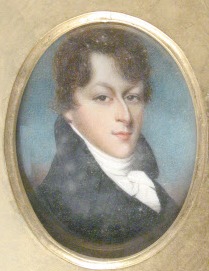
Miniature of John Mytton by Samuel John Stump

Miniature of John Mytton by Samuel John Stump

The rake is supposed to be an object of desire, a hero of modern Regency romance. There is nothing desirable nor heroic about John Mytton. Something is missing in his story.

The character of the rake first appeared in seventeenth century. He was a libertine, a prodigal bent on rebellion and frequently addicted to excessive appetites. During Charles II’s reign, Restoration comedies modeled this new kind of hero after certain aristocrats who indulged in such antics. They could be anything from Sir Charles Sedley, a man who simulated sex in public while drunkenly naked, to the more notorious (!) George Villiers, 2nd Duke of Buckingham who killed the Earl of Shrewsbury in a duel over the latter’s wife.

After a while, however, the tiresome rake began to weary the play-going public.

Enter the feisty heroine, employed to restore the libertine to his senses and thus allow the rake to remain a popular device in literature. She, too, was modeled after redeeming females. Even though Sedley couldn’t marry her, being unable to obtain a divorce from his insane wife, Ann Ayscough remained with him until the end of his life. Villiers’ wife took him back after the affair with the widowed Countess of Shrewsbury:

“The Duchess of Buckingham has merit and virtue; she is brown and lean, but had she been the most beautiful and charming of her sex, the being his wife would have been sufficient alone to have inspired him with a dislike. Notwithstanding she knew he was always intriguing, yet she never spoke of it, and had complaisance enough to entertain his mistresses, and even to lodge them in her house; all which she suffered because she loved him.” — Memoirs of the English Court by Madame Dunois (1699)

She loved him.

Without such love, poor John Mytton was doomed. Recall in an earlier post the warning that Mytton was not fit for marriage. Did that make him insensible to love?

After his second wife left him, John tried in vain to get her to return to him. He even went so far as to seek her out at Chillington Hall, her family’s home to which she had fled. Constables were summoned to handcuff him, for in his great strength he had knocked down eight strong manservants in the foyer, desperate to see the one he loved.

His friend Nimrod laments the self-destruction that not only robbed Mytton of his happiness, but the love of his life as well:

“He loved this woman to distraction; he would have given the apple of his eye for her at any time; he would have risked twenty lives to have gotten her back again, and obtained her forgiveness; he raved about her in his madness, and sent her his dying benediction!”

Chillington Hall, now a wedding venue. Photograph licensed by John M. per Creative Commons Attribution Share-alike license 2.0

Chillington Hall, now a wedding venue. Photograph licensed by John M. per Creative Commons Attribution Share-alike license 2.0

The Real Regency Rake: Mother’s Love

John Mytton was a rake only a mother could love.

“The excessive tenderness of a fond mother is no match for the wayward temper of a darling boy, and how often is his ruin to be traced to this source!” — Nimrod, John Mytton

That fond mother was Sarah-Harriet Owen, daughter of a neighboring squire. After five years of marriage to the elder John Mytton, she was left a widow with a daughter, Harriet-Rebecca, and her son, John to raise. The two-year-old boy’s nearest relation, apart from mother and sister, was his uncle, his mother’s brother. Mr. Owen lived near Shrewsbury in Woodhouse and tried to advise his young nephew (and perhaps remonstrate with his sister) but these attempts to moderate the scion’s reckless behavior were rebuffed. Later, in conversation with Nimrod, the uncle confides he might lament the ruin his nephew had wrought, but was thankful he had nothing to do with it.

Don't stay out too late, dearest, and please refrain from harassing the neighbors.

“Don’t stay out too late, dearest, and please refrain from vexing the neighbors.”

A neighbor, Sir Richard Puleston, observed the raising of Master Mytton from closer quarters than Uncle Owen and called the little fellow “Mango, king of the pickles,” for “he was as finished a Pickle as the fondest mother and his own will could possibly have made him.”

By all accounts, Harriet-Rebecca was a dutiful girl and exhibited none of the deplorable qualities of her brother. She made a respectable  marriage to Sir John Heskith-Lethbridge. Although long-forgotten as her brother’s memory lives on, Harriet-Rebecca’s death was recorded by an admiring essay in the Gentleman’s Magazine of 1826.

That his sister was admirable and John was not is the foundation of Nimrod’s accusation–the woman who brought John forth was the author of his downfall:

Thus fell John Mytton–by nature, what God must have intended every man should be; by education, or rather, from the want of proper education, nearly at last what man should not be. The seed was good; but it fell among thorns and was choked.”

Lady Berwick's son, the 5th Baronet. Very good and very dull.

Lady Berwick’s son, the 5th Baronet. Very good and very dull.

John never blamed his mother and settled a handsome annuity upon her. Nor did she abandon him in his final desperation. After the sale of his unentailed properties and a failed attempt to woo his estranged wife, John escaped to France. He eventually landed in prison and not four days after being informed of this circumstance, his mother went to be with him. She managed to extricate him from this present coil, but continued heavy drinking and a propensity for insulting the French made it necessary to bring John back to England:

“where not only a prison, but the grave, yawned to receive him, and in prison he died.”

She survived John by several years, dying in Cheltenham. In her obituary, scant mention was made of the ruin that was her beloved son. This was passed over with hardly any comment, as if the author searched for some redeeming quality to mention. This was found in the lady’s connection with the nobility–her sister was the late Lady Berwick.

The Real Regency Rake: His Servants

We’ve already discussed Mytton’s agent, that long-suffering fellow from Oswestry, who tried in vain to stay his master’s impulsive spending. Wily merchants, like the pheasant dealer who stocked birds for Mytton’s heronry, learned to bypass Mr. Longueville and apply directly to the baronet for payment. Mytton had a reputation for honoring his debts on the spot, in their entirety. Unfortunately for his agent, he would send the applicant to Oswestry with his invoice in hand upon which was written simply: “Right” and signed “John Mytton.”

John Mytton had several grooms with designated occupations. One had the unlikely name of Tinkler–his “home stud” groom. Tinkler’s job was to oversee his master’s race horse breeding operations. Nimrod reports this employee was of the “old sort,” a “careful nurser of young racing stock.” Mytton was quite in charity with this thinking, not wanting his young stock to be raced too soon. Unfortunately, when other horsemen pushed their young colts and fillies to the track early, Mytton’s stock hadn’t a chance.  “Too fond of green meat,” they said of the groom, and the master.

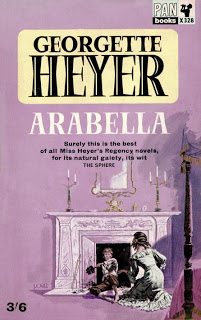
Valets, as you might have guessed, must needs have their work judged by the turnout of their employer. In Arabella , Heyer gives us an unforgettable image of the posh hero’s body-servant Mr. Painswick (and that name is rather glorious in its setting, you can be sure):

Thank heavens for that little grocery in Staines!

Thank heavens for that little grocery in Staines!

“Your boots, Sir! You will never use a jack!”

“Certainly not,” said Mr. Beaumaris. “Some menial shall pull them off for me.”

Mr. Painswick gave a groan. “With greasy hands, Sir!  And only I know what it means to get a thumb-mark off your Hessians!”

Mytton, in contrast to the elegant Mr. Beaumaris, is a rake. He cares not what society thinks of the state of his Hessians. Which is why he elevated a stable-boy to the rank of valet. It was perhaps an unlucky thing for the boy, who was with Mytton when his four-in-hand, by mistake, turned down a closed road and crashed into a barrier. The valet, riding in the coach with his master, suffered serious injuries. Mytton, as was usually case, came out without a scratch.

In the midst of so much carelessness in Mytton’s service, some fraud was bound to occur. Nimrod was astonished to see a favored servant of Mytton’s roaming aimlessly in Shrewsbury.

“I have left Mr. Mytton’s service,” said the man.

“How so?” observed I, with surprise, knowing him to have been a favourite servant.

Apparently said employee had been induced to change the veterinarian’s bill (is that so wrong?) to pocket the extra change from Mytton’s ever-ready and generous hand. And so he might have gotten away with it but for our man Longueville who discovered the discrepancy. It was Nimrod who interceded for the servant, having always demonstrated good character during his service with a Shrewsbury clergyman. Mytton, in typical fashion, forgave his servant and kicked him back in the servants’ hall with an order to put on his livery.

crash