Regency Love: Happiness with Him

Pragma is one of four types of love in classical (Greek) philosophy. It is distinctive for its apparent lack of emotion. Love without love. It’s like zen. If you think you understand it, you really don’t. In the time period of the Regency, we have the example of Charlotte Lucas of Pride and Prejudice. The following is her explanation to dear Lizzy on the subject:

 I hope you will be satisfied with what I have done. I am not romantic, you know; I never was. I ask only a comfortable home; and considering Mr. Collins’s character, connection, and situation in life, I am convinced that my chance of happiness with him is as fair as most people can boast on entering the marriage state. Charlotte Lucas
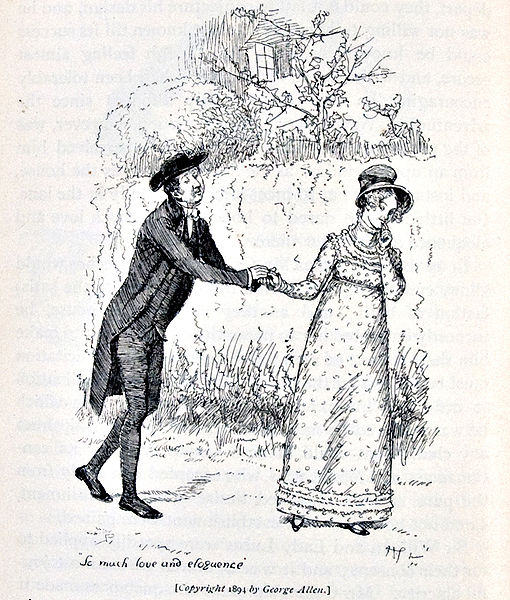
“Happiness with him,” she says. Does this sound like love, or even an expectation of it? Indeed, there seemed to be little of it when Lizzy later discovers her friend has ordered her household so that her sitting room is on the opposite end of the house from her husband’s. Where is the love? To modern eyes, it seems nonexistent. To the ancient Greeks, it is there–and so, too, for those in the Regency.

“I believe most young women so circumstanced would have taken Mr. W. & trusted to love after marriage.” — Caroline Austen on her aunt’s rejection of her suitor, Harris Bigg-Wither

Trusting to love after marriage was more common in those days than entering that estate with it. As proposed in Ruth Perry’s essay, Sleeping with Mr. Collins, the notion of love during the Regency was poised between two eras, the sensibility of the prior century and the growing desirability of romantic love in the next. She couches this theory within the context of marriage, that in the seventeenth and eighteenth centuries romantic love was not required for marriage and indeed, sexual desire was not in any way a component thereof. A sensible marriage had a better chance for producing love than the notion of proceeding with the vows while clouded by emotional desire.

This had begun to fade in the nineteenth century. Thus, we have in Austen’s famous novel the two friends, one representing the old way and dear Lizzy the new. We don’t know if Charlotte eventually fell in love with Mr. Collins. It seems if Austen wanted to condemn her to eternal disgust she might have indicated that future for this character, but she did not, leaving us to speculate.

Austen’s niece went on to relate that her aunt’s rejected suitor later found great happiness with a woman who was “quite fond” of him. Caroline practically sighs with regret even as she admires her aunt for choosing love over the security of marriage.

Frankly, I agree with Ms. Perry that Jane Austen just couldn’t see herself being called Mrs. Bigg-Wither.

Regency Love: My Little Comet

It  has recently come to light that Sir John Lethbridge of Sandhill Park fathered an illegitimate daughter with Mary Jane Vial, who married her neighbor, the gothic novelist and anarchist (!), William Godwin. He was the widower of Mary Wollenstonecraft. Most of Godwin’s friends despised his new wife.

Charles Lamb called her a bitch.

Mary Jane’s daughter was then known as Jane. She was a hurly-burly, forward sort of girl who somehow managed to form a close relationship with her new stepsister, the reserved Mary Godwin.  No sort of adventure was beyond Jane. They say she promoted her stepsister’s elopement with the poet Percy Bysshe Shelley, if only to get away from home. Those six weeks they trekked across Europe are summed up in Jane’s observation of her prim stepsister:

From Rousseau's Confessions

From Rousseau’s Confessions

..we came to a clear running shallow stream, and Shelley entreated the Driver to stop while he from under a bank could bathe himself – and he wanted Mary to do the same as the Bank sheltered one from every eye – but Mary would not – first, she said it would be most indecent, and then also she had no towel and could not dry herself – He said he would gather leaves from the trees and she could dry herself with those but she refused and said how could he think of such a thing?

— from “Claire Clairmont and Mary Shelley: identification and rivalry within the ‘tribe of the Otaheite philosopher’s’ ” by Deidre Coleman

They were all reading entirely too much Rousseau, who liked to explore alternative domestic arrangements, particularly in his Confessions: La Nouvelle Heloise.  The female characters of Confessions seemed very like the two stepsisters. Julie was prim like Mary and naturally Jane saw herself as vivacious Clara. She began to call herself Claire, longing to act out Rousseau’s drama with her stepsister and husband, as a “household for three.”

But there was conflict, and instead it was a love triangle.

Shelley rather saw himself and his wife as a tranquil constellation upset by the importunities of his fair sister-in-law, disruptive as a comet:

“Comet beautiful and fierce/Who drew the heart of this frail Universe/ Towards thine own; till/ wrecked in that convulsion/Alternating attraction and repulsion/ Thine went astray and that was rent in twain.” — Epipsychidion

Their eventual destination, the Villa Diodati in Switzerland, was decided upon by Claire. She’d had an affair with Lord Byron and was now pregnant by him. Byron,protested to his disapproving half-sister:

“What could I do? — a foolish girl — in spite of all I could say or do — would come after me — or rather went before me — for I found her here … I could not exactly play the Stoic with a woman — who had scrambled eight hundred miles to unphilosophize me.”

Again, a triangular relationship reemerges at Claire’s instigation. Shelley absolutely worshipped Byron. Yet it was not he Claire brought to the Great One’s notice–it was her half-sister she would draw into his orbit, writing:

“[Y]ou will I dare say fall in love with her; she is very handsome & very amiable & you will no doubt be blest in your attachment.”

The trio eventually returned to England ignominiously and without funds. Much had been made of their relationship. Shelley’s friend, Thomas Jefferson Hogg, chortled that Shelley had two wives. Coleman offers another theory: that the love triangle was not seen by Claire with the male “on top.” Her position in the triangle was, predictably, at the apex point.

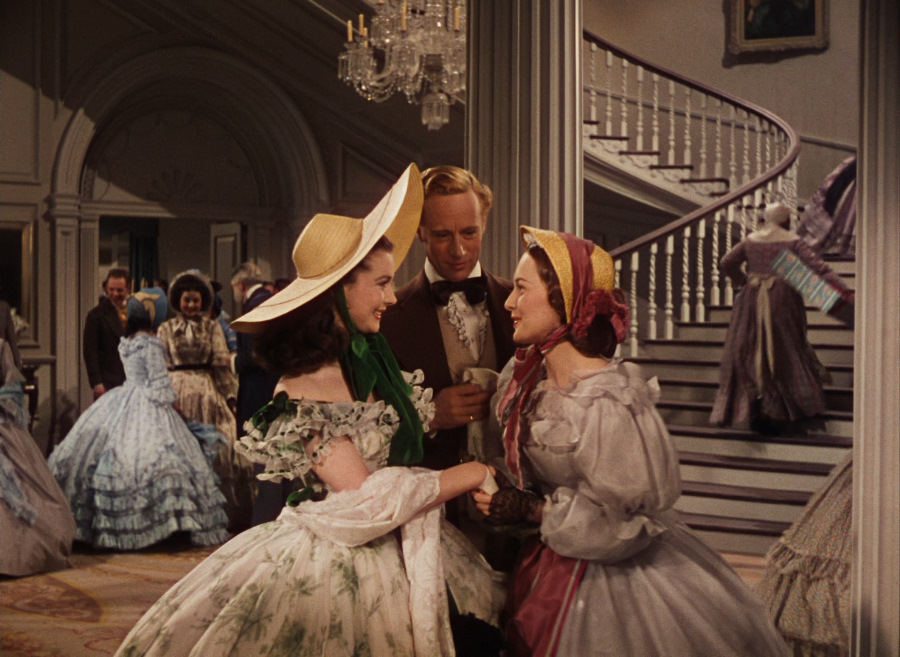
Scarlett - a comet, too

Scarlett – a comet, too

But what men may indulge, women may not dream of. Byron called her a “little fiend” and her unconventional ways served to isolate her from others. Her predilection for the love triangle may have faded by the time became a governess in Russia, for she spurned two men at once, joking:

“I must really take great care of my poor heart lest I should not only fall in love with one but perhaps with both at once.”

Regency Love: Infatuation

“Dear Sir–I have just returned (without reading it) a letter of Ly. F(alkland) & a parcel containing I know not what–…she is certainly mad or worse–I think you must really take some step or she will commit herself in some greater absurdity–I heard from her once before but did not like to trouble you again and soon–but really this is too bad–Believe me”

— 1813 Letter from Lord Byron to William Corbett, kinsman of Christina, Lady Falkland

Lady Falkland’s husband had been one of Byron’s good friends. In 1808, Lord Falkland and one Mr. Powell had parted friends after a night of drunkenness. The next evening, Falkland hailed Powell with a good-natured sally: “What? Drunk again tonight, Poggy?”

Chalk Farm, London, the site of Lord Falkland's duel, as it appears today. Photograph licensed under the Creative Commons Attribution-Share Alike 3.0 Unported license.

Chalk Farm, London, the site of Lord Falkland’s duel, as it appears today. Photograph licensed under the Creative Commons Attribution-Share Alike 3.0 Unported license.

“Mr. Powell did not relish the mode in which he had been accosted and, after a retort, Lord Falkland snatched a cane from a gentleman’s hand, and used it about his head.” — The Lady’s Magazine: Or Entertaining Companion for the Fair Sex (1809)

The parties were unable to resolve their differences, with the result that Lord Falkland was fatally wounded in a duel with Powell. His widow, Christina, was left destitute.

Byron felt sorry for her and left a significant sum of cash for her to find in a teacup where she resided in Manchester Square’s “Durant’s Hotel.” He did so discreetly, to avoid drawing attention to her insolvent state. Thus he set in motion an infatuation fueled by her imagination, and his poetry.

It was not the money, mind you. It was the act itself–a furtive, secret offering, that no one was meant to see but her alone. That act was like a seed planted in her mind made fertile by the Thyrza stanzas in Byron’s wildly popular Childe Harold:

“Ours too the glance none saw beside / The smile none else might understand.”

Christina convinced herself of an intimacy with Byron that did not exist, yet seemed very real to her. The hero of the poetry was, like Byron, “world-weary and isolated” and she identified with him. Adding to that appeal was the notion he dared not publicly announce his love for her, nor would he dare ask she do the same.

Durrants Hotel, still in operation today.

Durrants Hotel, still in operation today.

She dashed off a letter to him:

“Tell me my Byronif those mournful, tender effusions of your Heart & mind, to that Thyrza, who you lamented as no morewere not intended for myself […] now my Byron if you really believe I could add to or constitute your happiness, I will most joyfully receive your handbut remember I must be loved exclusively.”

They say infatuation is a form of madness. Who knows if Christina had recovered from it by the time she died in Vauxhall in 1822.

But that was where they had moved Bedlam Hospital in 1815.

The Real Regency Vampire

At the dawn of the Regency, vampires had little to show for themselves in literature. What had been written of them was neither compelling nor seductive. There was the bat that had attacked the king in Sir Burges’ poem Richard the First (1801). The slave dealer in Montgomery’s 1807 The West Indies was a “bloated vampire of a living man.” In 1810, His Grace the Duke of Norfolk found himself the embarrassed object of an obscure poem’s dedication about a goblin entitled The Vampire. Miss Aiken, in her 1811 Epistles on Women, decried those polluting “vampire forms.”

Then came The Vampyre in 1819. Critics promptly gave it the kiss of death:

Villa Diodati - watering hole of the junta

Villa Diodati – where the junta rusticated

“a flat and feeble tale of supernatural horrors.” Edinburgh Monthly Review

“one (and we are happy to believe the last) of that travelling junta of our country-folk..” Antheneum

That “travelling junta” would be Mary Shelley (Frankenstein), Percy Bysshe Shelley and Lord Byron, who spent part of 1816, that “year without a summer” in a scandalous interlude at a Swiss villa. To be part of a junta was not what bothered Byron. It was the fact that the “vampyre” was neither a bat nor parasitic slave trader, but a suave English aristocrat.  Not unlike himself:

“A bustling inhabitant of the world..restless and erratic..subject to pecuniary embarrassments.” — Monthly Review, 1919

Pecuniary embarrassments aside, the fact the creature had been christened Ruthven left no doubt in anyone’s mind as to its identity. This was entirely due to the efforts of Lady Caroline Lamb a few years before in 1816’s Glenarvon. Her character was also named Ruthven, but everyone knew him as Byron–the villain who had so cruelly abandoned her.

To add insult to injury, the publisher had the effrontery of passing off The Vampyre as Byron’s own work.

The devil!

The notion was not so farfetched to the average Regency reader. It must be remembered that Byron had written of vampires before. His Giaour (1813) featured an infidel who indulged in an illicit affair with a pasha’s harem girl. She had been tossed into the sea to die whereupon the giaour killed the pasha. Byron’s narrator predicted the giaour would eventually suffer the fate of the vampire, rise from the dead and suck the blood of his loved ones, to his everlasting torment.

Perhaps Byron might not have added the following footnote to Giaour if he knew one day he might be made into a vampire himself:

“The Vampire superstition is still general in the Levant…I recollect a whole family being terrified by the scream of a child, which they imagined must proceed from such a visitation. The Greeks never mention the word without horror. The freshness of the face, and the wetness of the lip with blood, are the never-failing signs of a Vampire. The stories told in Hungary and Greece of those foul feeders are singular, and some of them most incredibly attested.”

This picture of the modern vampiric nobleman is provided courtesy of Find a Grave

This picture of the modern vampiric nobleman is provided courtesy of:               Find a Grave

Amid a flurry of protestations and recriminations over the vile Vampyre and his story, it was eventually revealed that one Dr. John Polidori was the true author, whom “we cannot imagine what mental disease could induce Lord Byron to endure for a moment.” The good doctor was in attendance during the interlude at the Villa Didorati (the lodging of the aforementioned junta). There he had served in the capacity of Byron’s own personal sawbones before they parted in ways less than amicable.

Dr. Polidori was astonished at the vindictive hurled in his direction, which went something like this:

“The publication of that vile abortion, ‘The Vampyre‘ under the name of the greatest of living geniuses, was a wrong… which will not be easy for the perpetrator to expiate.”

He hastily insisted that the work was never meant to see the light of day, that he had placed the manuscript into the care of an unnamed lady, who later gave it to an unscrupulous publisher, who unleashed it upon an unsuspected Public wholly and wantonly without permission.

Amid the flurry of these protestations and recriminations, the aforementioned Public devoured the work, giving it an astounding success.

It was the birth of a new subgenre within the Gothic novel.

Regency Wrecks: Voyage to Paradise (part two)

It is perhaps ironic that Alceste was leaving China just as Medusa’s captain was being brought to trial. Captain Maxwell had already lost Daedalus and was having the depths continuously sounded as his ship passed between steep rock reefs. When she did strike one, it was at speed and the ship’s carpenter reported the worst. To get her off the reef would cause her to sink instantly. The ship had to be abandoned, the only refuge a nearby, waterless mangrove island surrounded by pirate-infested waters.

Maxwell had indeed landed in the basket. With the loss of two ships to his name, he must redeem himself in some spectacular way or sink into ignominy and disgrace.

William Amherst, 1st Earl Amherst by Davies (1803)

William Amherst, 1st Earl Amherst by Davies (1803)

Lord Amherst and his embassy were sent in the ship’s barge and cutter toward Java, leagues to the south. Hopefully they would reach that distant island and send back a rescue party. Maxwell did not dare go with them, He had to remain behind with his crew and remaining passengers, numbering 200 men and one woman.

Once Amherst and his embassy had disappeared beyond the stifling horizon, Maxwell wasted no time setting about his redemption. Soon the wreck would be spotted by inhospitable natives and he would have to be ready. Provisions were stowed in a cool cave and the crew was set to digging a well, searching for fresh water, for they had sent the bulk of their water supplies with his lordship. With the remaining lifeboats, a crew was sent back out to the Alceste to salvage what remained on her.

Sea-dyaks on proas (multi-hulled Micronesian sailing vessels) caught the salvage crew by surprise and chased them back to the mangrove island. These ruthless Malay pirates had the reputation for murdering anyone on board ships they captured and were even known to commit cannibalism. It soon appeared that the Dyaks were most concerned with the wreck and its contents–principally anything that was metal–and seemed content to plunder the Alceste rather than assault the makeshift fortress Maxwell and his men had hastily constructed.

Eventually, the Dyaks set fire to the Alceste and withdrew with their booty. This gave Maxwell a chance to send another boat out to the wreck and retrieve flour, wine and beer that had been exposed by the destruction of Alceste’s upper works.

The Dyaks were bound to return for the castaways on the island, who were by now starving, thirsty and ragged. When the pirates appeared, they had more boats, including a flagship, perhaps carrying a “rajah.” They continued to plunder the wrecked vessel and made forays to capture the remaining boats on the island. These were repelled but eventually, the time of a great attack had come.

Captain Maxwell addressed his men:

“My lads, you must all have observed the great increase in the enemy’s force, and the threatening posture they have assumed. I have reason to believe they will attack us this night. I do not wish to conceal our real state, because I do not think there is a man here who is afraid to face any sort of danger. We are in a position to defend ourselves against regular troops, far less a set of naked savages, with their spears and krises. ..Let every man be on his alert, and should these barbarians this night attempt our hill, I trust we shall convince them that they are dealing with Britons.”

Morning came without the expected attack. Instead, a much larger force of Dyaks had arrived by boat. The situation could not be more desperate. The relief ship that was supposed to have been sent by Lord Amherst had not arrived. Perhaps he felt compelled to abandon such an unlucky captain. Or perhaps his lordship and his party had met with some grim fate before they could get to Java.

With this in mind, it became rapidly clear to Maxwell that they had to get off the island or be slaughtered. To get off the island, he and his men needed boats. The Dyaks had them.

Maxwell sent his marines down to the shore to capture them. Wading into the sea, they aimed their muskets but were unable to keep steady aim in the strong tide. The Dyaks surged forward on their swift proas, screaming with savage delight. Then one piercing cry from the direction of the Alceste came–a pirate lookout, pausing in his plunder, was gesturing wildly toward the open sea.

On the searing horizon, the topmast of the Honorable East India Company’s Ternate appeared, and she was armed to the teeth. She had been sent by Lord Amherst to rescue his favorite captain–sent the very day the Alceste’s barge had landed in Java.

Captain Maxwell was soon on his way back to England. The ship carrying him stopped at St. Helena and the captain was presented to Napoleon. Perhaps Maxwell was looking a bit chagrined, this captain who had lost two French frigates and was on his way home to be court-martialed. However, the exiled emperor received him with great courtesy and remarked, rather sourly, that he should not be blamed by the British government. At least what he had lost had been taken from another to begin with.

L’emperor had lost much more than just Meduse, Minerve and Corona.

Vous êtes très méchant. Eh bien!” he said to Maxwell.

Shipwreck of the Minotaur by JMW Turner (1810)

Shipwreck of the Minotaur by JMW Turner (1810)

Regency Wrecks: Voyage to Paradise (Part One)

“I see the boat on the lake! Cpatain Murray Maxwell
And Charon,
Ferryman of the Dead, Calls to me, his hand on the oar:
‘Why linger? Hasten! You delay me!’
Angrily he urges me.”– Alcestis, by Euripedes (438 BC)

She was once known as the Minerve, a proud, 38-gun Armide-class frigate of the French Navy. Like Corona, she had been captured by the British during the Napoleonic Wars. Towed to Plymouth, she was refitted and renamed Alceste, for the queen who would be called upon to die in place of her husband, Admetus, one of Greek mythology’s Argonauts.

Perhaps this was an omen.

In 1807, before he was to wreck Daedalus, Captain Maxwell was given the command of Alceste. Instructed to go to the Mediterranean, Maxwell and his ship raided Spanish shipping carrying supplies for Napoleon’s armies. Their greatest success came during the Adriatic Campaign when Alceste intercepted a convoy of French frigates. After a heated battle, a large ship Pomone and an accompanying storage vessel carrying 200 cannon surrendered to Maxwell. The ships and cargo were sold for prize money. By 1812, Alceste had made her captain a wealthy man.

Who knows what might have been her fate had Maxwell gone down with the Daedalus the next year?

But he did not. A court martial proceeding cleared him from all blame for the loss of the former Corona. Captain Maxwell had money, friends–and a second chance with Alceste.

Lord Amherst was to go to China and establish relations with its emperor. He chose Captain Maxwell to transport him and his diplomatic mission. The captain was given command of Alceste once again. Unfortunately, Amherst’s mission was doomed to failure. As an Englishman, he had opposed one emperor in Europe and saw no reason to kowtow to another, refusing to offer tribute as to an overlord.

La Pomone contre les frégates HMS Alceste et Active, by Pierre Julien Gilbert

Pomone fights the frigates HMS Alceste and Active, by Pierre Julien Gilbert

Angrily Alceste was directed to withdraw with her insulted passengers aboard, and sailed to the mouth of the Pearl River. There she was confronted by a blockade of junks. These were summarily disposed of by the frigate’s numerous cannon, the first shot marked with a note the said something like, “here’s your bloody tribute.”

With this parting shot, the Alceste set sail for England. The last peril she had to pass was the Gaspar Strait.

Regency Wrecks: “The Dangerous Area”

In England, there was a good deal of schadenfreude accompanying the outrage following the sensational wreck of the Medusa. The French in command of a French frigate–the best possible combination for maritime incompetence, they said, Even the masterful painting of the drifting raft of desperate survivors received tumultuous applause in London because Monsieur Gericault’s effort was:

“of the utmost difficulty, and with a singular absence of the national vanity ascribed to his countrymen, one which it would be well for the naval character for France to have blotted from her maritime annals.” — the Globe (1820)  the Hortense

Had British seamen been at her helm, such a disaster might have been diverted. Unless one happens to be sailing in a place known as “The Dangerous Area.”

Off the southern coast of present-day Sri Lanka lie two great coral reefs and accompanying rocks called the Great and the Little Basses. Unlike the Arguin Bank that the Medusa foundered upon, these formations along Ceylon’s shores, as it was known in those days, were well-documented and mapped. Yet time and again, ships fell victim to their deadly projections.

Some believed it was the haze that lay over the water, so that:

“..even in the day time those excellent landmarks along the shore, which, if, discernible, afford an infallible guide, cannot occasionally be distinguished when close to the Basses.” —  The Nautical Magazine (1848)

But that didn’t account for the number of wrecks that occurred at nighttime, and to ships that were well out to sea. Or, so they thought.

On several occasions, from 1792 to 1804, English ships believed to be well away from the treacherous reefs would suddenly find themselves during the night observing breakers, the signal they were among the rocks. It was as if the alien shore had lured their vessels toward danger like the Sirens of old.

The Corona was a forty-gun frigate of the Hortense class, built for the French Navy. Like her sister ship the Caroline, she had been captured by the British Navy during the Napoleonic Wars. Corona’s decks were covered with the blood of her dead captain and 200 of her crew before she was set ablaze by her captors. Pulled to Malta, she was repaired and renamed the Daedalus, now in the Prince Regent’s service.

She was given to the command of Captain Murray Maxwell, grandson of the Second Baronet of Monreith. She nearly ruined his naval career.

Daedalus was escorting East India Company ships Atlas and Bridgewater to China. Ceylon, now known as Sri Lanka, is the gateway to the South China Sea. Captains knew to pass by its coast well to the south and avoid the reefs there altogether. Yet somehow, by morning, to everyone’s surprise and alarm, it was discovered the ships were among the Basses:  Shipwreck - North Sea

“..the Atlas grazed outside the Little Basses, and soon after that the Daedalus struck on a reef within the Basses, and the Bridgewater, close on the starboard side of the frigate, grazed over the same reef, but she bore away and passed between the Little and the Great Basses as did the rest of the fleet…” —The Nautical Magazine (1848)

Daedalus was doomed. To haul her off the reef would sink her faster than leaving her where she was. Almost to the minute that everyone was evacuated, she keeled over and sank.

Later, it was discovered that strong underwater currents exist all along the southern coast of Ceylon, capable of hauling even a British frigate to places it never intended to go. Because these conditions seems to be especially strong at night, the British government eventually installed two lighthouses to warn ships of their proximity to “The Dangerous Area.”

Regency Wrecks

Ship surgeon Jean Baptiste Henri Savigny reached Paris on September 11, 1816, having just survived an ordeal that was to become a sensation of the Regency. Within twenty-four hours of his arrival, a tiny paragraph was inserted in the newspapers that the ship he sailed on, the Medusa, had been lost off the coast of West Africa.

Shipwreck was common in those days, but Monsieur Savigny carried with him a singular account of his ordeal. He had been one of the survivors consigned to a cumbersome raft to be pulled by one of the ship’s lifeboats to safety. He submitted his diary to the French government, detailing:

“the hasty and chaotic abandonment of the Medusa and detailing the suffering of the 150 people on the raft. Although soberly and tightly written, the facts of cannibalism and butchery were in themselves sensational. Nor had he concealed the fact that the towrope of the raft has been deliberately cast off by the First Lieutenant of the Medusa, amid cries of “Let’s abandon them!”

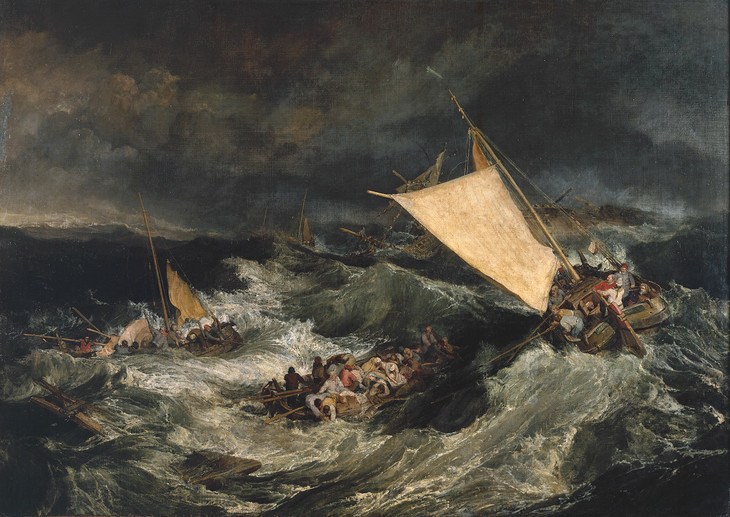
Turner's Shipwreck (1805)

Turner’s Shipwreck (1805)

Monsieur Savigny was simply looking to be compensated for his expenses incurred by his voyage home, and for the loss of his property in the shipwreck. The government accepted his account and did nothing. However, a copy of his account was carried away. The damning story of the Wreck was published soon after and it was not long before English translations of it were available to Regency England. It was a sensation, the story of French sailors and captain, charged with the responsibility and safety of their passengers, deliberately abandoning them to a fate of privations so horrible that an entire Nation was shamed before all Europe.

This is not the first time this blog has addressed the singular catastrophe that was known as the Wreck of the Medusa. It was a powerful subject of the Romantic age, a sublime image of depravity and abandonment in an age that prided itself for culture and civilization. I am compelled to return to this subject matter because these occurrences captured the attention of Regency society. There are other Regency wrecks that bear attending to, of other French ships under Britain’s flag, and the heroism of their crews that inspired even the admiration of Jane Austen.

The Real Regency Reader: Jane Austen

“It is difficult to think of a novelist who makes reading a more animating part of her characters’ lives than Jane Austen.”

–John Mullan, What Matters in Jane Austen?: Twenty Crucial Puzzles Solved (2013)

We know how Northanger Abbey’s heroine, like Cotillion’s Kitty, was much guided by knowledge gleaned from novels and therefore committed foibles as a result of such reliance. Or Fanny of Mansfield Park who had rather more learning from books than those rich Bertram girls who supposed her ‘stupid at learning.’ Already mentioned is Sir Elliot of Kellynch Hall in Persuasion whose reading was limited to the Baronetage and so, too, was his conversation. Recall in Pride and Prejudice Miss Bingley’s spectacular attempts at diverting Mr. Darcy from his book when a day earlier she had attacked our darling Lizzie for not playing cards because she loved books.

1940's Pride and Prejudice, starring Greer Garson and Laurence Olivier

1940’s Pride and Prejudice, starring Greer Garson and Laurence Olivier

I did not understand the significance of reading in Jane Austen’s world until it was illuminated by Professor Mullan:  being literate during the Regency means reading books. In Sense and Sensibility, Lucy Steele is illiterate not because she can’t read, but because she does not read.

“Lucy’s ignorance of books will be as much a torment to poor Edward, her future husband, as her cunning and self-interestedness.”

This blog has mentioned the value of book collecting during the Regency, A library of any size was a mark of distinction because it conferred upon those who had access to it an erudition valued in those days. Professor Mullan points out that Austen had no more than two years’ formal schooling but yet had access to her father’s library which was vast for a country clergyman.

One must suspect that her admiration for books and reading must reflect what Regency readers must have thought:

“I only mean what I have read about.  It always puts me in mind of the country that Emily and her father travelled through, in The Mysteries of Udolpho (Penguin Classics). But you never read novels, I dare say?”

“Why not?”

“Because they are not clever enough for you — gentlemen read better books.”

“The person, be it gentleman or lady, who has not pleasure in a good novel, must be intolerably stupid.” — Mansfield Park

The Real Regency Reader: A World Without Souls

In 1805, John William Cunningham had the great fortune of marrying Sophia Williams, youngest daughter of a wealthy Hertfordshire merchant. She gave him nine children and her papa bought him the living of Harrow-on-the-Hill. As vicar, he could leave many duties to his curate, and concentrate on his Calling–sermonizing.

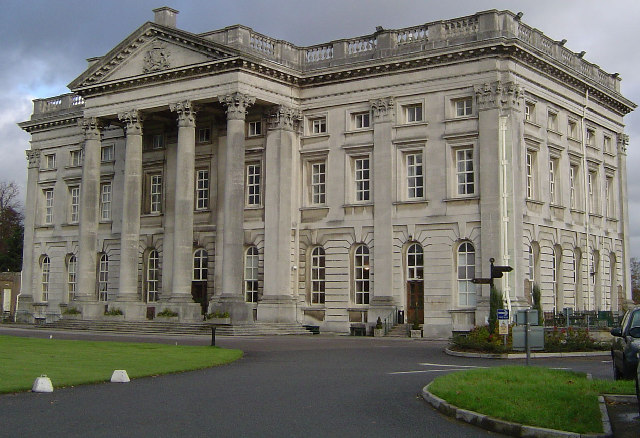
Sophia's father owned Moor Park. Photographed by Nigel Cox, Creative Commons Attribution Share-alike license 2.0

Sophia’s father owned Moor Park. Photographed by Nigel Cox, Creative Commons Attribution Share-alike license 2.0

Unfortunately, there was only so much sermonizing the people in the village could take.

To reach the faithful beyond Harrow-on-the-Hill, John was determined to publish a book of sermons. However, he must have realized his potential readers, like the villagers, might be put off by his message. He decided to put forth his evangelizing effort in the guise of a Novel. His publisher, the venerable Hatchards, evidently approved.

John wrote his novel after the fashion of a work he much admired, The Story of La Roche, which follows the travels of a Christian philosopher and his beautiful daughter, Madamoiselle La Roche. It was a French tale serialized in The Mirror (not the current tabloid, but a late eighteenth century magazine out of Edinburgh). Incidentally, the editor warned the readers of the Mirror in the preface to La Roche that the work had a religious theme.

Inspired, John dashed off A World Without Souls. In it, a young man, Gustavus, leaves his home and the girl he is much attached to and travels abroad (to a place very like Regency England) in the company of a wise mentor. They come to a place resembling Hyde Park where the ladies and gentlemen are in full promenade on Sunday:

“But have they no veneration for the Sabbath?”

“Yes..the females do their utmost..by enforcing servants and horses upon unnecessary employments, to defraud two beasts of their lawful rest, and shut out two souls from heaven.”

Harrow-on-the-Hill

Harrow-on-the-Hill

Souls was well-received by some, but excoriated by others. Not because it was religious in nature, but that it sought to fool the reader into thinking it was a novel. And one should never try to fool the Regency reader:

“We cannot say that such flimzy disguises altogether please our taste. They remind us of a coarse and clumsy deception well known to and put into practice by Essex shepherds. When an ewe has lost a lamb by premature death, these men strip the fleece off the carcase, and fasten it on the young of some other ewe, in order to induce the mourner to suckle the substitute.

With the silly animal the imposture succeeds. Not so does it fare with man. We detect, we smile, we contempt, we are disgusted.”

The Gentleman’s Magazine and Historical Chronicle (1813)

John was completely unapologetic. Even in the epilogue of his novel, he disparages the notion his young male character be reunited with his love:

“If I marry Gustavus and Emily, it will be objected to me, that it is incredible a tale of truth like mine should terminate like a novel (!)”