Thanksgiving in High Dudgeon

The following are notable complaints from the Regency era about the bounty that we celebrate today, known as  Thanksgiving:

“It is commonly reported that there is no season in the year in which so much wickedness and drunkenness prevail among the farmers, as in that of bringing the harvest home.”

— Cheap (!) Repository for Moral and Religious Tracts, 1810

Indeed, it appears that the juvenile crime of stealing from orchards tended to be more frequent during the harvest period, and particularly on Sundays:

“..for it is always remarked those depredations are committed by them on those days..The other days in the week, when fruit is ripe, boys are generally employed in the field, driving carts, or at harvest.”

— Gentleman’s Magazine and Historical Chronicle (July – December, 1819)

The same edition of the Magazine reports that even a bountiful harvest suffers from the problems of an economy plagued by stagnant labor, for few that have left the fields for manufacturing jobs desire to return:

“..during the last harvest, men could not be obtained in sufficient numbers, in the agricultural counties, to get in the crops as fast as they were ready.”

Things are generally at sixes and sevens during this time of the year, and in particular for one lady in Sunderland who became quite ill. Her stomach behaved as if she had swallowed something that was alive; and later, after two swallows of brandy, she discovered that was indeed the case, for she expelled an animal that had all the appearance of a small dog-fish:

“The patient supposes that this may have resulted from drinking ditch-water in the last harvest; and she still remains ill, under the apprehension that more of the same kind may yet remain in her stomach.”

— The Annual Register, with a View on History, Politics and Literature for the Year 1827

thanksgiving


Leg-Shackled by an Apparition

This post is a temporary departure from our discourse on writs. It is, after all, Halloween!

The following is a tale of a haunted bedroom, and reads a little like a Regency romance:

A young buck of the ton quit London to join a weekend house party in the south of England. His host, an older gentleman and quite worthy, owned a considerable country estate there. By reason of a wedding, the house was completely full of overnight guests, so that only one bedroom was vacant.

It was allegedly haunted.

Up to every rig and row, our hero was not above enjoying an overnight lark with an apparition and readily agreed to sleep in the disturbed room:

“Sir, you will oblige me by letting me lie there; for I have often coveted to be in a place that was haunted.”

Apparitions; or, the Mysteries of Ghosts, Hobgoblins, and Haunted Houses by Joseph Taylor (1815)

That night, the intrepid young man committed himself to sleep, for the room was comfortably furnished and the fire had been generously built up. At three o’clock in the morning he woke, for someone had entered the room. He could not see who it was for his candle was extinguished.

Fortunately, the intruder revived the fire with a poker, the brightening glow revealing the apparition to be a young woman in naught but her shift, She was so pale as to be indistinguishable from a wraith.

It was not until she got into bed with the astonished young man that he perceived the apparition to be flesh and blood. Only the living breathe while asleep. Her hand, which he clasped, was warm.

Finding she had a ring on her finger, he took it off unperceived.

Presently, his fair bed fellow rose and left the room. Clutching the evidence of her visitation in his hand, the young man locked the door against further incursions and went to sleep.

As is the case with country house mysteries, the guests greatly anticipated the outcome of a night spent in a haunted bedroom. Indeed, everyone appeared well before nuncheon so as not to miss the opportunity to find out how the young man, so clearly awake on every suit, had passed the night before.

Before he would gratify their curiosity, however, the bachelor required the females assembled to identify the ring he held up. The daughter of the house very prettily claimed it, declaring she had lost it somehow during the night and had despaired of its recovery.

She was thrown into an even prettier state of confusion when the handsome guest took her by the hand and brought her before the master of the house, her papa, announcing:

“This is the lovely spirit by which your chamber is haunted.”

Amid the company’s good-natured laughter, the worthy host begged his weekend-guest to become a tenant for life, and offered his daughter for marriage, along with a large dowry.

This generous offer was so advantageous to the young gentleman, that he could by no means refuse it; and his late bed-fellow, hearing what her father had said, was easily prevailed upon to accept him as her husband.”

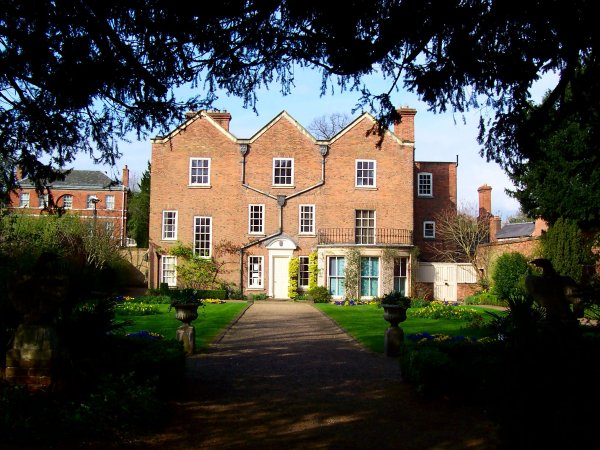
Belgrave Hall - supposedly haunted by a former owner's seven daughters. Photo by Roger Hutchinson via Wikicommons

Belgrave Hall – supposedly haunted by a former owner’s seven daughters.
Photo by Roger Hutchinson via Wikicommons

A Regency Title: by Writ

“..for where an ancient baron, holding a baronial estate, that is, a castle or a manor held of the king ‘in capite per baroniam,’ was summoned to Parliament, his title did not arise by writ of summons, but from his barony, and he became a baron by tenure.”

— A Treatise on the Origin and Nature of Dignities, or Titles of Honor; by William Cruise (1823)

So summed up the Duke of Rutland’s opposition to Lady Henry’s desire to be a baroness. He argued their ancestor, Robert de Ros, was summoned by writ to attend the king as baron by virtue of the lands he held. And because those lands could only pass to heirs male, the title was never meant to be held by a mere female.

There can be no Baroness de Ros.

The attorney general, Sir Arthur Piggot, was the Crown’s representative in the matter. He determined the facts of the case, which were thus:

  • that Robert de Ros indeed held lands of the Crown;
  • that said lands were not mentioned in the writ that summoned him to the Crown’s parliament;
  • that the only mention of any land was the manor de Ros, a property that was not held in capite –that is–of the Crown.

It was for the Committee of Privileges in the House of Lords to decide if Lady Henry’s petition had any merit.  Had she made out a valid claim to the ancient barony by proving it was created by writ alone, and not by tenure of lands?

Arundel Castle, home of "the chief actors in some of the most gloriously memorable scenes of British history."

Arundel Castle, home of “the chief actors in some of the most gloriously memorable scenes of British history.


Her lawyer, Mr. Adam, reasoned that if the Crown had meant to make a baron by virtue of his property, why didn’t the writ summoning him mention them? He acknowledged there were cases of tenured barons who were summoned to parliament without mention of their lands, but these were the exception to the rule, the most famous example being Arundel, an ancient title that passes by virtue of whomever holds the castle of that name.

Just being keeper of the castle does not make one a parliamentarian.  In this, the House of Lords agreed, as Cruise reports:

“..after hearing what had been alleged and proved on the part of the duke of Rutland, the said duke was not entitled to the barony claimed on the part of the coheirs of Robert de Ros.”

Stay! Co-heirs?

Mary Frances Dawson, Countess of Dartrey, 24th Baroness de Ros -- her death led to another abeyance, her issue being only daughters

Mary Frances Dawson, Countess of Dartrey, 24th Baroness de Ros — her death led to another abeyance, as her issue were daughters.

Lady Henry had not won her title just yet. She must contend for it among the other heirs of the last true baron de Ros, her grandfather John, 4th Duke of Rutland. He left two daughters, Lady Frances Willoughby and Lady Bridget Tyrwhitt, as his co-heiresses. Neither has precedence over the other, each sharing equally in what cannot be halved.

The result–the title is in abeyance. Lady Henry and George, Earl of Essex, descended from one daughter and Sir Thomas Windsor Hunloke, the other, all had equal claim to the Barony of Ros.  And no one of them had greater claim than the others.

Enter the Crown, the “fount of all honors.”


A Regency Title: by Tenure

In Norman times, English baronies were granted by charter to nobles holding land of the Crown. As a result of King John’s concessions to the barons, these noblemen also gained the right to advise the monarch, confirmed by writ of summons issued by the Crown. Just as the baron’s lands passed to his descendants, so too did the right to be summoned to Parliament.

A wrinkle in the tradition arose as the Crown began to issue writs of summons to favored subjects who were landless. Although no estates were part of the transaction, the dignity conferred on the subject, a barony, was nevertheless created, and one that passed to descendants as well.

Moreover:

“Although writs of summons do not contain any words of inheritance, yet when a person has taken his seat he acquires the Dignity for himself, and his lineal descendants, male and female.”

The Practice, in the House of Lords, on Appeals, Writs of Error and Claims

of Peerage, by John Palmer (1830)

During the reign of Henry III, Robert de Ros (pronounced roos) held several manors, including Belvoir Castle. He was issued a writ of summons to attend Parliament, and thus became a baron.

It is perhaps ironic that the writ was issued in the king's name by a rebel against its authority--Simon de Montfort.

It is perhaps ironic that the writ was issued in the king’s name by a rebel against his authority and enemy of the queen–Simon de Montfort.

The Barony de Ros passed to his descendants, and eventually came to the Manners* family, Earls and Dukes of Rutland. So, too, did Belvoir Castle come into their possession and became their seat. (The other manors Robert de Ros held, Hameslake and Trusbutt, had long since been aliened; that is, sold or otherwise separated from the de Ros family).

By the time Lady Henry Fitzgerald claimed the title, in 1790, Barony de Ros had become the most ancient in England. She asserted her descent from Lady Frances Manners, one of two daughters who were coheirs of their father, John, 4th Duke of Rutland.

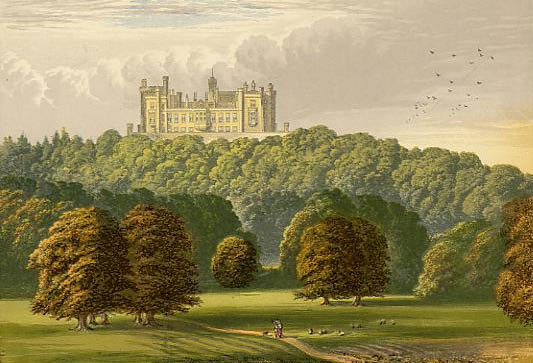
The fourth and present Belvoir Castle--the second notably the site of alleged witchcraft, and the death of the Duke's sons.

The fourth and present Belvoir Castle–the second notably the site of alleged witchcraft, and the death of the Duke’s sons.

Counsel for His Grace, the 5th Duke of Rutland, attacked her ladyship’s claim by arguing the de Ros honor was not inheritable by females. Although considered to have fallen into abeyance, the 4th Duke having only female heirs, he argued that Barony de Ros should go the way of Belvoir Castle, to the next male heir. (More on abeyance in a later post.)

Barony de Ros was, the Duke’s lawyers contested, a barony by tenure–a title that must pass in the manner of the estate to which it is attached. Therefore:

“..where the estates were entailed on the heirs male, the dignity descended to such heirs.”

— “A Treatise on the Origin and Nature of Dignities, or Titles of Honor: Containing All the Cases of Peerage, Together with the Mode of Proceeding in Claims of this Kind” by William Cruise (1823)

More ancient of the two, barony by tenure involves administrative and legal responsibilities to fulfill on land granted to the baron.  The title in this regard meant that the holder owed service under the feudal system to the Crown, in terms of money and manpower. Perhaps more of a headache than anything else, baronies by tenure scarcely exist today, apart from the ones sold on the internet (!) The baronies of Westmorland and Kendal have managed to hang on, but only in the sense of geographical boundaries.

Still, in the case of Robert de Ros, he certainly looked like a baron of tenure, already in possession of several estates.

Thus, the issue at hand–a barony by writ, or by tenure?

Stay tuned.

*the Manners family still holds the dukedom, and they appear regularly in British media. Belvoir Castle, (pronounced beever) emerged as a Regency-era showplace under the stewardship of the 5th Duke, one of the litigants in this series of posts.



A Regency Title: introduction

In 1790, Lady Henry Fitzgerald (1769 – 1831) claimed the title of the ancient barony de Ros (pronounced roos) by petition to George III. She was opposed in this endeavor by His Grace, the Duke of Rutland, and the matter was referred to the House of Lords.

The Lady versus the Duke. Sounds like a Regency romance in the making.

“I, sir, am Baroness Fairbourne in my own right.”

I always liked these covers. Sophisticated and subtle.

I always liked these covers. Sophisticated and subtle.

….Warming to her topic, she continued, “Papa’s lawyer told me that the de Ros barony, which is thought to be the oldest peerage in England, has gone through eight or nine family names.  It’s dreadfully complicated. If I had sisters, we would be coheirs to the title, and none of us would be called Lady Fairbourne. The title would be in abeyance, and it would stay that way until all of the claims were concentrated in one person again—for example, if one sister had a child, and the other sisters didn’t. Some baronies by writ have been in abeyance for centuries.”

Seeing Adam’s bemused expression, she said kindly, “It’s all right if you don’t understand. It took the lawyer ages to explain to me.”

“I can understand why,” Adam said dryly. “So, which are you, Lady Antonia or Lady Fairbourne?”

— Carousel of Hearts, by Mary Jo Putney (1989)

I don’t often venture into matters of peerage law, but when I do, I consult William Cruise, who correctly reminds us that:

“…all the degrees of nobility are derived from the king, as the fountain of honor.”

— — “A Treatise on the Origin and Nature of Dignities, or Titles of Honor: Containing All the Cases of Peerage, Together with the Mode of Proceeding in Claims of this Kind” by William Cruise (1823)

Cruise’s Treatise is an excellent source of the law of peerages as it was understood during the Regency period, particularly with regard to the king’s power to make or break titles. Not only does it contain a comprehensive table of cases, it also provides the mode of procedure for acquiring a title–especially helpful when a character in one’s book desires one.

The following blog posts will be concerned with baronies in particular, and how the lady got hers.


Regency Fashion: The Gentleman’s Fancy Dress

“Not only was he wearing the frilled shirt, the longtailed coat, the knee-breeches, and the silk stockings which constituted the fashionable attire of a gentleman bound for Almack’s; he carried a chapeau-bras  under one arm, and one of his snuff boxes in his pocket.”

— False Colours by Georgette Heyer (1963)

Kit Fancot, the hero of False Colours, impersonates his older brother, Evelyn, Lord Denville, as a favor to his mama. He arrives at a fancy dress party held by the relatives of Denville’s betrothed. Unfortunately, he has no clear idea of what Miss Stavely looks like.

However, everyone at the party believes him to be Evelyn, particularly since he is dressed in his brother’s fashionable dress rig, starting with the frilled shirt. No, not the pirate shirt sported by a well-known comedian in the 1990s, but similar, I daresay:

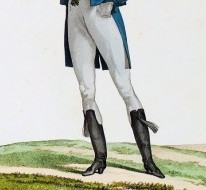
From Le Beau Monde, 1807

From Le Beau Monde, 1807

The longtailed coat was designed to set a fine figure to advantage. The tails in the back were almost an afterthought, forgotten in the evolution of the formal coat from its original function–to separate when riding a horse . What was important was the fit over the shoulders, perhaps enhanced by padding discretely inserted in strategic areas. In the same way, the cutaway design revealed the upper thighs and slim (corseted, if necessary) waist of the gentleman.

Knee breeches were de rigueur if one expects to be admitted to Almack’s, and thus the standard for all fancy dress parties. They were critical for Kit to pass himself off as his brother, all while meeting the approval of the venerable Dowager Lady Stavely, (grandmama to Miss Stavely). Therefore, pantaloons worn on the street would be right out in such company.

Besides, the advantage of wearing knee breeches becomes immediately apparent when a well-formed man pairs them with white silk stockings. The little ties just below the knee, combined with the clinging material of the stockings, draw the eye to his shapely leg, the black slippers just the thing to command admiring attention when among one’s peers (and cross old ladies).

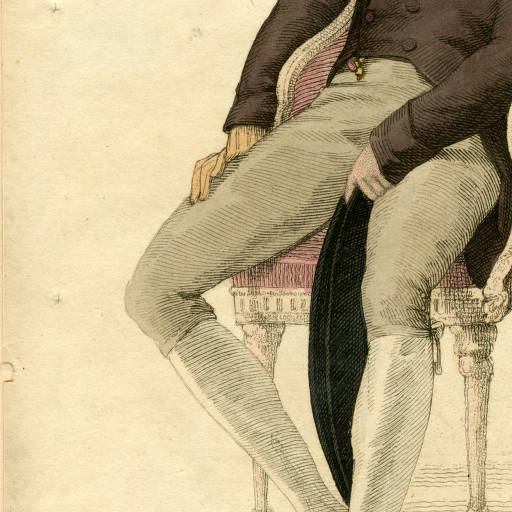
from the Claremont Colleges Digital collection, featuring selective plates of Regency dress

from the Claremont Colleges Digital collection, featuring selective plates of Regency dress

Kit carries a hat, a three-cornered affair called the chapeau-bras. The fellow pictured above has a two-cornered (bicorn) hat. Both collapse and can easily be kept in good order by the butler or other man-servant while the wearer enjoys the party.

Snuff-boxes are very personal items in the Regency. Snuff itself can come in a variety of flavors (I’m thinking of Miss Taverner’s Sort in Heyer’s Regency Buck). Heyer completes Kit’s disguise as his brother by having him take along, in his pocket, a recognized trinket of Lord Denville’s. Indeed, a snuff box conveys much about a man’s identity in the Regency–witness a Cyprian’s attempts to engage the affections of a dour, northern Scotsman through two years of ‘tedious’ courtship, her stamina continuously as she:

‘anticipated the grandeur of which his massy snuff-box and mode of living distinctly conveyed.’

— “Clarissa, A Tale,” The Ladies’ Monthly Museum, Vol. 16 (1822)


snuff box

This silver and mosaic snuff box sold for almost $3000 recently. It was made in London, 1815.


Regency Fashion: the Gentleman’s Town Dress

False Colours“His coat of dark blue superfine was the very latest made by Evelyn for Weston..his stockinette pantaloons were knitted in the newest and most delicate dove-colour: his cambric shirt was modestly austere, with no ruffle, but three plain buttons…his hat, set at an angle on his glowing locks, had a tall and tapering crown, smoothly brushed, and very different from the low, shaggy beaver to which Fimber had taken instant exception.”

This is the town dress of the Regency gentleman as described by author Georgette Heyer in  False Colours (1963).

The superfine fabric is exactly as it sounds–wool that is smooth, almost silky to the touch. The more narrow the fibers of the wool, the more “super” its grade. Today, superfine wool suits of the highest grade sell well into the thousands of dollars.

Tom Ford: James Bond collection, Fall 2015

From designer Tom Ford’s James   Bond collection, Fall 2015

Stockinette is “an elastic knitted fabric used especially in making undergarments, bandages, and babies’ clothes–a fine-knit, soft, elastic weave.” Heyer’s hero, the handsome, blond Kit Fancot, wore pantaloons made of this material as he strolled through London, impersonating his fashionable elder brother, Lord Denville, the stockinette fabric clinging to his shapely legs in ways that I shall leave to your imagination.

stockinette pantaloons

          skin-tight, “a la hussarde”

Cambric is also known as batiste, a soft, airy cotton that makes marvelous baby sheets and blankets. Whenever I hear cambric mentioned, I think of the Little House books. You knew Ma or the girls were sewing something very special if it was made of cambric:

“They made four new petticoats….around the bottom of the fine cambric one, Laura had sewed with careful, tiny stitches the six yards of knitted lace that she had given Mary for Christmas.”

Little Town on the Prairie by Laura Ingalls Wilder (1941)

If Fimber, or any other Regency-era valet, turns his nose up at an article of a gentleman’s dress, you can be sure it must be very unfashionable indeed. Kit’s hat was discarded for his brother’s not because it was made of beaver, but that was shaggy, with a low crown. Acceptable for a diplomat, which Kit was, but not at all the thing for his noble brother.

close-up of a beaver hat--the crown shaggy in texture

close-up of a beaver hat–the crown shaggy in texture

Next post: what Kit wore to a fancy evening party, when he:

“..realized that he had been imperfectly coached: he had no idea which of them was the lady to whom he was supposed to have offered his hand.”

Regency Chit-Chat

From La Belle Assemblée or, Bell’s Court and Fashionable Magazine Addressed Particularly to the Ladies – January, 1817, these amusing excerpts from correspondence concerning a county ball and feast:

The dress:

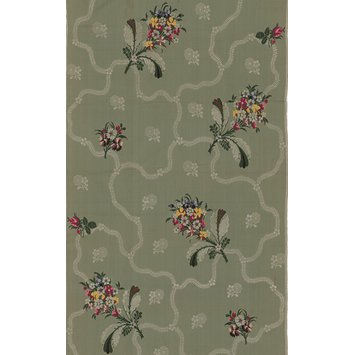
I am dressed in the flowered lustring you say becomes me so well– it really is a genteel thing–I like French nightcaps prodigiously–don’t you?  They set off a long lank yellow physiognomy wonderfully well.

Lustring fabric in the Victoria and Albert Museum collection, allegedly from a gown worn by Queen Charlotte

Lustring fabric from a gown allegedly worn by Queen Charlotte — Victoria and Albert Museum

The escort:

Mama and I are to go in the chaise and Mr. O’Flanagan escorts us–  rap, rap, rap, here he comes–no, he is not come–’twas a false alarm–  Don’t take it into your head that I am in love with the man–

Romantic rivals:

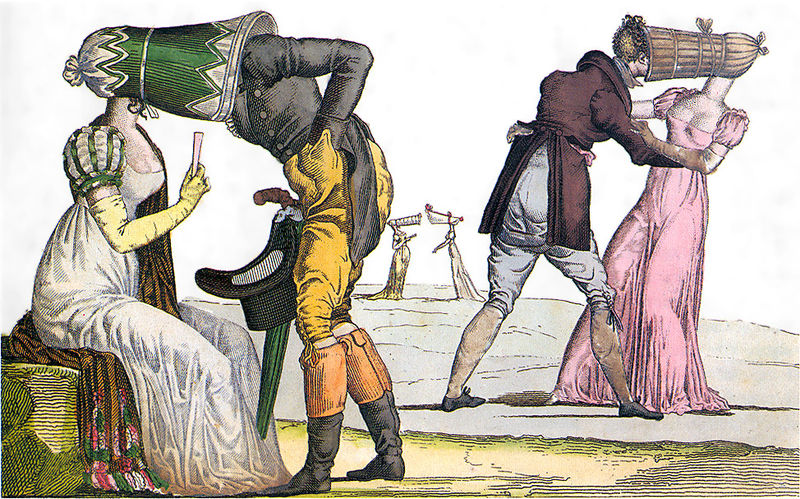
Miss Twist..–she pretends to wit but ’tis only pertness…  Miss Williams–conceited thing–she thinks she’s handsome– in her old-fashioned coal scuttle bonnet and brown silk petticoat with green flounces and furbelows–what a fright.


Chit-chat made difficile -- Les Invisibles Tete a Tete (a la le "coal scuttle bonnet")

Chit-chat made difficile pour le “coal scuttle bonnet”  —–Les Invisibles Tete a Tete 

Dining partners:

Sir Thomas is a very sensible man–he made me several compliments…  made Squire O’Flanagan quite jealous and he was so much out of temper he snuffed and snubbed everybody and was particularly snappish and surly to Mr. McGregor an exciseman who sat opposite him–

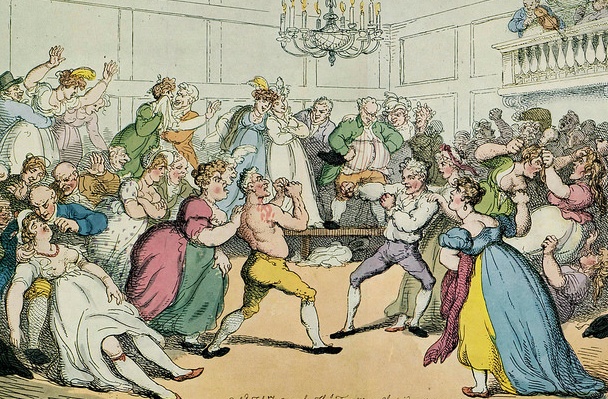
By Rowlandson - no further explanation required

By Rowlandson – no further explanation required

A fight:

..we heard high words and prodigious noises in the next room–  we all went to see what was the matter–when–horrid sight– poor Mr. O’Flanagan had one of his eyes beaten out of his head and Mr. McGregor lay stretched out on the floor just for all the world like a corpse.

–from Miss Harriet Wilkinson’s correspondence to her friend, “my dear girl,” Miss Louisa Thompson.

Regency Domesticity: the Reformed Rake

“It is a maxim, not uncommonly supported in female society, that ‘a reformed rake makes the best husband.’ ” —  Ackermann’s Repository, December 1, 1816, Vol. II No. XII

In a singular letter to the Tattler, the writer offers a disdainful explanation for such a phenomenon. One has either fallen violently in love with a rake and is blinded by passion to his many disastrous characteristics, or she’s such an innocent as to be wholly unacquainted with what a genuine rake is.

“I could manage him,’ she sighed. ‘Oh, but I could!”

“ ‘I could manage him,’ she sighed. ‘Oh, but I could!’ ”

Far better to seek a man of great intellect and maturity, more concerned with the affairs of the world than the high life. One that only a bluestocking could love.

"He was lewd, lascivious, mocking..." And yet a bluestocking fell in love with him.

Balogh’s rake was “lewd, lascivious, mocking..”  And yet a bluestocking fell in love with him.

Of course, marriage to a prosing fool or some worthy devoted to his rural estate would be very dull. It is proposed, therefore, that a little dash, some elegance and the ease that characterizes the rake can be had as long as the intended spouse is endowed with a quantity of good nature.

Beware of unrestrained good nature, however. Profligate generosity has led many (see John Mytton) to throw good fortune to the four winds. Cannot marriage to such a man be made wretched when good nature:

“..induces him to sacrifice his own health to promote the jovial pleasures of his friends and acquaintance? Is it not his good-nature, that, to gratify the vanity of his wife in all the figure and fashion of high life, brings on the impoverishment of his estate? “

"...her only chance to find the true man behind the wicked facade."

“…dissolute, reckless and extravagant–and lost to the world.”

As this letter is in the vein of a good many Regency epistles, the true aim of its discourse is to praise that prized quality of the time–the quality of good character.

Good nature that is both amiable and tempered by sense can only be discerned by observation of the prospective husband.

“Do his dependents approach him with cheerful respect?  Does he disdain to be merry at the expense of another? Does he mention the absent with candour, and behave to those who are present with manly complacency?”

Regency preoccupation with character is the reason why Ms. Austen forces darling Lizzie to quiz poor Mr. Darcy. She searches for amiability despite his forbidding manner, readily admitting that she is quite determined to discover the nature of his character.

How wonderful when she does, and that it took her some time to discern it!

Regency Domesticity: Living the High Life

The Tattler, as she(?) readily admits, has been applied to for advice not only in the arts and sciences, but in matters of astrology (“I have had money offered to me in an attempt to bribe me into a fit of supernatural occasion) and medicine (no less than three letters requesting receipts to cure corns and another for the mode to cure chilblains).

But on matters of marital discord, we find her squarely on the side of Pope, whose famous Epistle to the saintly Anne Blount is prefaced with the well-known eighteenth century notion that ‘most women have no characters at all.’

For example, in Ackermann’s Repository of Arts, etc., March 1, 1818, Vol. V, the Tattler addresses two letters from harassed husbands of the Regency.

The first from a husband who has:

“..a clever, managing kind of wife, and, though I say it, rather pretty in her person; but then she has a tongue that never lies still for a moment..”

He has heard of some rubbish that cutting the hand in a certain area will cause lock-jaw. His wife likes to cut her own bread and butter (for the servants are usually wasteful if they do it) and might he be served in his complaint if he were to help said knife along during one of her economizing endeavors?

The Tattler replies, much offended:

…if he can possibly be serious in his request, then he is a fool; and if he thinks it is a good joke to attempt to impose upon and laugh at me, I have a different word to apply to his character, which it does not become me to name.”

To another request for advice on marital discord, she is rather more encouraging. The applicant is possessed of a handsome fortune and seeks remedy for “a serious and vexatious experience,” being married to a female:

“..afflicted with the mania of always being in the height, even to the minutest circumstance, of what is the prevailing fashion of the day.”

All winter they go to fashionable parties, ball, routs, etc., their plans dependent on  his wife’s consultations of card racks and porters’ books to determine their itinerary for conquering the ton.

In summer, she must drag the family to various watering-places, for their fine country estate is:

“..a scene of dullness and stupidity, where she sees and is seen by no one(!)”

Remonstrations by the husband are routinely met with a fit of the vapors by the wife. Her much-harassed physician, when called into consultation, takes the spouse aside and castigates him for causing his poor lady so much upset. Her constitution is too delicate to bear any correction, the good doctor warns, even as he ignores the signs of his patient’s dissipation from staying out late night after night.

What, the husband asks, is

“the least painful mode of convincing the lady in question, that real happiness is not to be found in the riot and rout of what is called the high life?”

The Tattler answers by relating a sanctimonious confessional of a similarly situated female, who was finally recalled to her senses by the most persistent and patient of all husbands.

“..a little reflection, and his kind attentions, not only altered her conduct, but brought her to think so contemptibly of it, that among her friends she will sometimes allude to her folly…”

My advice? Keep living the High Life.

The Ottomann couch, as it appears in the Magazine of July, 1814, volume XII showing "great diversity of form and arrangement, and an unbounded variety of decoration." For living the High Life

The Ottomane couch, as it appears in the Magazine of July, 1814, volume XII showing “great diversity of form and arrangement, and an unbounded variety of decoration.” Perfect for living…the High Life.