Tremont – The Elizabethan Prodigy

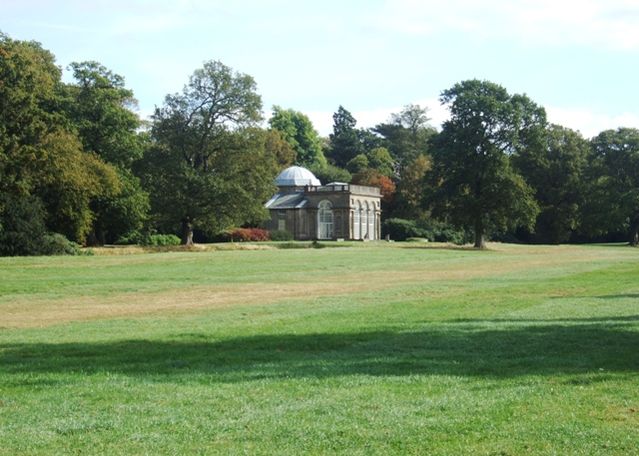
Montacute House - licensed under the Creative Commons Attribution 2.0 by Mark Robinson

Before the events told in Notorious Match, Lord Griffin Montgomery was forced to sell his Welsh estate that had been bestowed on his family by the Conqueror.  William I rewarded Roger de Montgomerie, Griffin’s Norman ancestor, with the marcher earldom of Shrewsbury along with Tremont and other estates throughout western England and Wales.

Earl Roger’s sons spent a good deal of time fighting the Welsh.  One had succumbed to an attack of Viking pirates on the shore not far from Tremont.  In my story, an estate was established there by a cadet branch of the Montgomery family.  The nearest town is Machynlleth, a real place referred to locally as “Mach” and where one can view fighter jets careening through the Welsh hills as they perform the Mach Loop here.

Griffin’s grandfather, Baron Montgomery, was the last of the family to reside at the estate when he died in 1814.

A year later, Diana, the Countess of Northam, proposed buying it back.

Griffin pivoted to face her.  “Buy Tremont?  Why the devil would you do that?”

Diana raised her eyebrows, clearly puzzled.  “If it’s your pride at issue, I won’t give you the money.  I’ll have the lawyers get it back.  There’s probably some contingency they can find, some forgotten entail or other legal condition that defeats the conveyance.  Most estates have them, to prevent such a sale in the first place.”

The enormity of what she proposed, that any resource be spent on the very place he associated with his iniquity, stunned and upset him.  He tried to restrain those feelings only for them to manifest in his jaw, which ached from being clenched.

“You’ll do no such thing,” he retorted, his voice harsh.

Diana visibly recoiled, the hurt he had dealt her impossible to take back.

Griffin’s Tremont is an Elizabethan prodigy house. Its exterior reminds me of Hardwick Hall, which has an abundance of windows characteristic of the prodigy’s so-called Lantern style. At night, with candles and torches blazing, the great wall of windows would be lit up like lanterns, hence the name. Another house featuring this extravagant style is my favorite, Montacute House, pictured above. You may remember it from 1995 movie adaptation of Jane Austen’s Sense and Sensibility, the house where Marianne fell ill.

Tremont’s interior, however, is based upon the remarkable Cassiobury Park, ancient seat of the Earls of Essex.  It was extensively rebuilt by the first Earl of Essex in the seventeenth century in honor of the restoration of Charles II.  He hired Hugh May, one of the commissioners for the rebuilding of London after the Great Fire, to extend the house and fit it up on the inside for an expected visit by His Majesty.  The visit never came, but the expectation was glorious, nevertheless.

May hired the master carver Grinling Gibbons, a Dutch Quaker who was executing the Baroque style in intricate wood carvings that can be seen in Hampton Court, Blenheim and St. Paul’s Cathedral.  He carved many of the fittings at Cassiobury, such as overmantels, cornices, moldings.  It was thought that the main staircase was also his work, and like Cassiobury, Tremont has a magnificent central staircase that is a great, rolling thing of exceptional beauty containing intricate scrollwork that defies modern craftsmanship.

detail - Cassiobury Park staircase

Cassiobury Park was doomed as the twentieth century began.  The 7th Earl of Essex died after being run over by a taxi.  The 8th Earl put the house up for sale since the nearby manufacturing center of Watford was expanding and the parkland of Cassiobury was needed for the “natural” expansion of the town.  All of the fittings, including the carvings, were stripped from the house and sold at auction.  Cassiobury Park was demolished in 1927.

The carved staircase was purchased by the Metropolitan Museum of Art and on display today in gallery 518.  There it was discovered the carvings were more likely attributed to Edward Pearce, an English carver with a name rather less dramatic than Grinling Gibbons, but just as talented.  Additional images of this masterpiece are available at the museum’s website here.

Oddly, the present heir-presumptive to the earldom of Essex is a retired grocery clerk in Yuba City, California.
Regency nudes

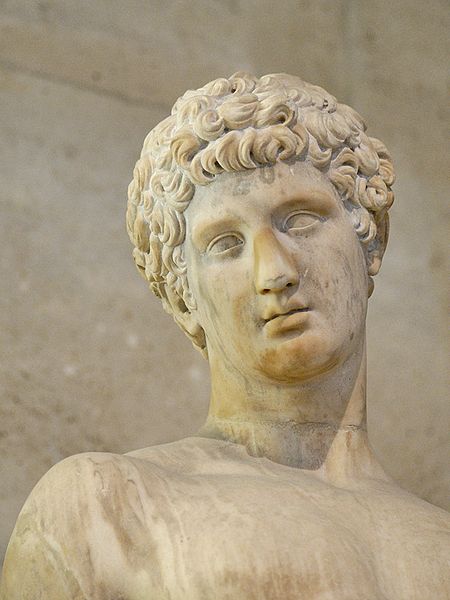
the Mazarin Adonis

Presently, Diana and Griffin came to the conservatory that served as a transition from the house to its parkland.

Lord Montgomery seemed to find something wanting.  “Where is the statuary?  Most great country houses have a room full of the stuff.”

“Are you a coinnosseur?” Diana asked.

Griffin opened the door for her to step through.  “It depends on the subject.”

He followed her to the railing of the flagstoned veranda overlooking an ornamental lake.  “I believe the dowager countess had an affinity for statues.  Northam Park would not be complete without a nude of your namesake, the goddess of the hunt.”

Griffin’s teasing was not without basis.  They had seen the virgin huntress executed in every conceivable media throughout their inspection of the estate.  Moreover, he was quite correct that her grandmother had been a patroness of the arts.   Lady Nellie, as she was affectionately called, once supported the noted painter and bluestocking Angelica Kauffman.

But her grand passion was for the unadorned figure, sculpted in the manner of classical antiquity.

Lord Montgomery would not be so bold if he knew what her grandmother’s collection consisted of.

Diana raised her eyebrows in pretended severity.  “We keep all the nudes in London.”

“A pity.”

Diana looked away from his interested stare as if embarrassed, her finger artlessly tracing an invisible line along the railing.

“Yes, it is,” she eventually replied.  “You see, Grandmama was in the habit of commissioning likenesses of young men she admired.  There are at least two male nudes that bear a striking resemblance to yourself.”

“Good God,” he exclaimed.  “You must be joking.”

“Really, my lord.  It was only your face Grandmama used, I’m persuaded.”

“You minx.”

This file is licensed under the Creative Commons Attribution-Share Alike 3.0 Unported license

Who can forget that marvelous scene in the 2005 movie adaptation of Jane Austen’s Pride and Prejudice featuring Pemberley’s sculpture gallery?  The gallery (pictured above) was filmed at Chatsworth, a real location Austen notes in her novel.  The scene is infused with the strong contemporary feel of the Regency and its desire for beauty.

The sculpture collection was assembled in large part by the sixth Duke of Devonshire, the Bachelor Duke.  He shared a passion for art with the Prince Regent.

Venus and Adonis – Antonio Canova (circa 1820)

In my book, Northam Park is in every way comparable to Chatsworth, except it does not have a sculpture gallery.  His Grace makes a couple of appearanced in Notorious Match as he and Diana are about the same age.  At one time, before Griffin returned to England, it was thought the heiress to Northam and the duke might make a match of it.  But it became clear they would not suit.

Griffin is the exact opposite of His Grace.  He has lost his own estate, Tremont, and has no fortune.  Moreover, he is a mere lord.

Yet he has the face of a sculpted Adonis.

There can be only one Diana

Presently they came to Northam Park’s vaunted Tapestry Room.   Its walls were entirely covered by specially commissioned tapestries from the Gobelins tapestry weavers of Paris.  Griffin seemed quite taken with one in particular.

Drowning of Britomartis – wool and silk tapestry (circa 1547)

“Oh, that bloody thing,” Diana swore under her breath.

Griffin’s excessive scrutiny of the woven masterpiece made her uncomfortable.  Not because the goddess of the hunt wore a short tunic, baring her legs, striding toward the sea to save her fellow virgin from the amorous king of Crete.   It was the memories of it that she had held as a girl, childishly imagining herself to be just like the huntress.  Free, independent and disdainful of mortal men.  How naive she had been.

A mischievous light came into Griffin’s eyes.  “It must be gratifying to have so many, er, exquisite renderings made of one’s namesake.”

Diana huffed.  “I had nothing to do with the inspiration.  If you must know, my grandfather purchased it at auction in Paris.  It had been commissioned by Diane de Poitiers.”

Griffin’s smile deepened.  “The mistress of the French king?”

The devil.

“Precisely so.”

To have a Gobelins tapestry, let alone a room full of them, was a mark of distinction in Regency home decor.  Gobelins Manufactory began as a group of Flemish weavers established by the first Bourbon king of France, Henry IV.  They set up shop in Paris in the environs used by a family of dyers from an earlier century called the Gobelins.  The name stuck and the Gobelins enterprise became the royal factory supplying the French monarchy until it was shut down in the Revolution.  The restored Bourbon dynasty revived production and today it is operated by the French Ministry of Culture.

Newby Hall has a marvelous tapestry room that is well-presented in the 2007 movie adaptation of Jane Austen’s Mansfield Park.  See this link for an excerpt from the movie.  The room is featured at 8:15.

Croome Court tapestry room

There is another tapestry room that used to reside in Croome Court, Worcestershire.  It was removed from the neo-Palladian country house by the owner, the ninth Earl of Coventry, and sold.  Note the lovely neoclassical ceiling designed by Robert Adam, executed in 1763 for the sixth Earl.  It has been reconstituted for display at the Metropolitan Museum of Art.

Today, Croome Court is most noted for its grounds, designed by Lancelot ‘Capability’ Brown.  The house itself had been owned by a succession of groups including a school and Hare Krishnas before it was finally acquired by the National Trust from the Hare Krishnas,  After extensive restoration work, it too became open to the public for the first time in 2009.

Will She or Won’t She?

“Good God,” Griffin breathed.

Homage to Diana - Annibale Carracci (circa 1597)

Diana paused as he stopped in his tracks.  Swallowing her impatience, and her hunger, she looked about her as Griffin did, trying to see Northam Park through his eyes.  She supposed he was right to be astonished.  The first-time visitor to the mansion had little warning of its riotous interior.  Not when its exterior was executed in forbidding Palladian style, with its straight lines and rigid symmetry.

Here in the great saloon, and throughout the house’s state apartments, Rococo reigned.

To look at it will put your eyes out, her grandmother, the dowager countess, would say.

Griffin craned his neck to take in the lighthearted, delicate playfulness of intricate, flowing lines, shells, leaves and trees carved in plasterwork that seemed to float through the saloon.  The elegant carvings cascaded across the high ceiling and down pale yellow walls in intricate white traceries.  He went to the carved stone chimney piece with its life-size nude wood nymphs supporting the mantelpiece.

Griffin gestured to the large bas-relief above the mantle of a beautifully sculpted scene from Greek mythology.  In it, the hunting moon goddess considers a gift of white fleece held aloft by the nature god .

“I never noticed Diana and Pan were so popular.”

Diana rolled her eyes.  “Try being named Diana.  Then you notice it every time.”

“Well?” Griffin asked.

“Well, what?”

Griffin’s smile was half-sided.  “Does she accept the gift or not?”

Diana straightened her skirt and looked toward the door.  “It depends on what Pan wants in return, I suppose.”

Northam Park’s interior plays an important part in Notorious Match.  There is a lot of symbolism, both intentional and otherwise, that the characters encounter during their sojourn at the country estate, beginning with the aforementioned saloon.

The saloon is derived from the French Grand Salon — a room of state for receiving visitors.  It was a style set during the Restoration in England and initially attached to the more medieval great hall before replacing it almost entirely by the time of the Regency.  Northam Park’s saloon looks very much like the one at Hagley Hall in Worcestershire, the subject of last week’s post.

Ruin of Sutton Scarsdale

The Rococo interior is marvelous.  It can put your eyes out.

The picture to the right is from the ruin of Sutton Scarsdale, discussed in an earlier post.
You can see the remains of the Rococo plasterwork that still clings to the shell of what remains from this once monumental country estate.

A Viscount and his Pyjamas

“The first reports from Hagley Hall were grim.  At 3:15 a.m. on Christmas Eve in 1925, a servant girl’s screaming alerted the household that the imposing mid-eighteenth-century house, with its elaborate Rococo interiors, was on fire.  The blaze, which had been caused by a defective flue, spread so quickly that Viscount Cobham was forced to escape in pyjamas, gumboots and an overcoat.  Fortunately, the rest of the family, guests and servants all escaped unharmed, but the fire raged on.”

–Giles Worsley, England’s Lost Houses – from the Archives of Country Life (2002) page 39

Hagley Hall - photographed by Richard Rogerson, licensed for reuse

I modelled most of Northam Park’s interior after that of Hagley Hall in Worcestershire.  Both houses have Palladian exteriors in disciplined, classical straight lines.  Hardly a hint of what lies on the inside, never failing to surprise the first-time visitor to these country houses.

More on Northam Park, Diana and her guest next week.  The story of Hagley Hall’s destruction warrants its own post today.

Hagley Hall’s mansard roof had caught fire from a defective chimney flue, pouring molten lead into the house.  Amazingly, guests and neighbors mounted a spectacular salvage effort, going into the burning structure to save priceless treasures.  By the time it was over, the state apartments, including the library, hall and dining room, had been ravaged, their interiors open to the sky.

Lord Cobham went ’round the neighborhood, taking inventory of what had been saved and was stored temporarily.  These included two thousand books, over one hundred paintings, including four famous Van Dyck portraits and four rare Shakespeare collections that had survived in the basement.  Even the tapestries had been saved, cut from their mountings as the fire raged on.

Fortunately for my project, Lord Cobham vowed to restore the mansion.  Click on the link to go to the website for this beautifully preserved English country estate.  Today Hagley is a masterpiece of meticulous restoration, still the glorious country estate of the viscountcy, but under a threat of a different kind and equally destructive.

For a recent report on the condition of Hagley Hall, including a lovely photo of the restored library and the present viscount, click here.

Taking the Plunge

Prior to, and on into the Regency, the idea of bathing was connected to its medicinal value.  It was particularly valued for the salutary effect it had on one’s health, and not for the sensibilities of one’s neighbors.  By the eighteenth century, cold bathing had become quite the vogue.

The Regency Cold Bath

“Mr. Porter, who is an apothecary, was talking of the cold bath and the service it had done him by making him of a more strong firm constitution than before.  He says it is extremely good against the headache, strengthens and enlivens the body, is good against the vapours and impotence, and that the pain is little.  I have almost determined to go in them myself.”

–Dudley Ryder, London attorney, 1715

And much cheaper than Viagra!

A large country house like my character’s estate would not have been complete without an open air cold bath.  I modelled the cold bath at Northam Park after the one at Wynnstay in Denbighshire, pictured above.  A extended discussion of this building’s historical value is here.

Capability Brown included one in his landscape design for the Earl of Northam, commissioning the architect James Wyatt (1746 – 1813).  Wyatt was already a rival to Robert Adam by this time and had not yet entered his Gothic period.  He designed a classical pavilion for Northam Park’s gardens, distinguishing it with a portico echoing that of the great house itself, and supported by ornate Corinthian columns.  It overlooked a rectangular pit lined with stone.  The cold bath was large enough for swimming, nevertheless the temperature discouraged extended sojourns in its icy waters.  Afterwards, one could retire to the pavilion and change.  To enhance one’s feeling of accomplishment, refreshments would be served.  Just the thing for warming up.

The Countess of Northam, the main character in Notorious Match, would entertain guests to her estate with at least one trip to the bath house.  It was something of an outing.  Both sexes would bathe together, appropriately attired of course.

Wimpole Hall, Cambridgeshire plunge bath – prior to restoration

More examples of cold baths built and used during the Georgian and Regency periods are to be found here along with some very pretty photos of examples made out of grottos and gothic pavilions.

The various baths pictured in Jane Austen’s World are instructional, saving the naughty bits.

Temple of Diana

The principal house featured in my manuscript Notorious Match, Northam Park, boasts a large parkland reaching upwards of one thousand acres.  Much of it was laid out by the eminent landscape architect Capability Brown (1716 – 1783).

A prophet is not without honour, save in his own country. Lancelot Brown is commended throughout the world as the master of the English landscape garden, but at home, he is frequently dismissed as a vandal who destroyed large numbers of illustrious formal gardens. 

–“Great British Garden-Makers:  Lancelot “Capability” Brown,” Country Life, Feb. 20, 2010

Brown’s new style of gardening design eschewed carefully trimmed hedges and formal flower gardens (think Hampton Court) for a more natural environment with grass-covered undulations leading down to carefully installed lakes and trees.  The effect was beautiful, providing a panoramic view from the great Palladian houses being built as country residences for the wealthy.

One of the charactertistics of this new landscaping style was the garden temple, an outdoor feature normally given a classical design although many favored a more Gothic bent with the rise of Romanticism.  These would be placed not far from the main house, but within the natural setting of these “gardenless” gardens.  From them, you could look across the estate through a long-viewer while keeping your eye on the children as they bowl on the manicured lawn nearby.
Many times these beautifully designed structures were simple rotundas, like the one pictured above from Beachborough House in Kent in a painting attributed to Edward Haytley, circa 1745.
Several, like the one at Northam Park, were much more grand and served a variety of functions–greenhouses, etc.
I particularly adore the lovely one used for the shooting party lunch in Robert Altman’s mystery Gosford Park (2001) at 1:40.  Clive Owen, anyone?  Yes, please.
Northam Park’s landscape feature is called Diana’s Temple.  It is very similar to the one of the same name at Weston Park, pictured below.  For a wonderful view of the restored interior, with its remarkable plasterwork, see this exquisite photo from Country Life.  It looks just like a piece from someone’s blue Wedgewood collection.  This temple was designed by James Paine (1717-1789) who also designed the stables at Chatsworth House.

photo copyrighted and licensed by Simon Huguet

Regency stable

“This particular dress, Mr. Carson, is of the first stare,” Mugger insisted with clenched teeth.  “It has a rather daring stand-up collar along the back of the bodice and is the very latest design from France.  It requires her ladyship’s fitting immediately.”

“Stand-up collars are rubbish in my book, Mrs. Mugger,” Carson retorted.  “I’ve got the management of an estate.  Without Northam Park, you and your fripperies can go to perdition.”

Diana winced.  Her estate manager had sacrificed much for Northam Park in her absence.  She had yet to visit it since Vivien had married  but the thought of going there to stay alone in its brooding presence was insupportable.

Mister Carson,” Mugger replied, “you’ve been hounding my lady over that stable for nigh on six months.  Surely it can wait another day.”

“It could.  But you may be surprised to know that even my lord Montgomery agrees with my judgment.  It ought to be pulled down.”

Diana jerked her head up.   “What did you say?”

“Lord Montgomery agrees, my lady,” Carson explained eagerly.  “I spoke with his lordship about the matter the other morning, before you went for your ride.”

“You did?”

Carson visibly quailed.  “I beg your pardon, my lady, but it seemed only natural that I apply to him for an opinion on the matter, given his experience with horses and uh, estates.”

“May I remind you his experience with estates encompasses the loss of his own just this past year?”

“Yes, my lady.  It was merely a trifle—only—only in passing, I assure you.  My lord was kind enough to enquire—always solicitous my lord is,” Carson replied, his voice trailing off in misery.

Diana’s country estate, Northam Park, has a large stable that was the centerpiece of her family’s horse racing enterprise.  The red brick Jacobean-style complex has since fallen into disuse.

Now the steeple that crowns its breeding barn has tumbled to the ground, frightening the gardeners and posing a continued hazard to Diana’s retainers who live and work on the estate.  Diana is reluctant to pull down this last reminder of her earldom’s former glory, but she must do something before anyone is hurt.

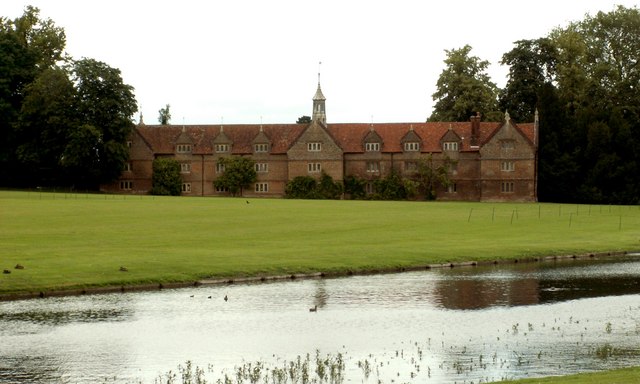
Audley End stable gives a fairly good picture of what Diana’s stable looks like.  It’s as fine as many lesser country houses.

Audley End Stables - © Copyright Robert Edwards and licensed for reuse under this Creative Commons Licence

Unlike Audley End’s stable, Northam’s is scheduled for demolition.  The horses for which it was built have died out, the last descendant having been stolen.  Thor was eventually recovered, but only after he had been gelded, an act as final as it was inexplicable.
The thieves would not have succeeded but for the terrible shock and distraction the estate had fallen under that night.  The night when its earl, Diana’s father, was found dead along a lane he must have driven over a hundred times before without incident.

Another Royal Wedding: House of Hohenzollern

Prince Georg Friedrich, Prince of Prussia and head of the House of Hohenzollern in Germany, celebrates his wedding today with Princess Sophie of Isenberg.

Georg and Sophie
The ceremony will take place in the Church of Peace.  This is near the Palace of Sansoucci just outside of Berlin.  They married privately in a civil service back in April but this will be a semi-public affair.  After a sleepy couple of decades for German royalty, this is a big deal.  Perhaps a nod to the extravaganza that was the nuptials of the Prince’s better-known relative in England earlier this summer.

Who cares?

Not many folks, I’ll wager.  Yet to some extent, this event is a link to the past which affected a whole lot of folks in the twentieth century.  Besides, on the whole, the history of Germany during its Imperial phase is mighty interesting stuff.

Kaiser Wilhelm II

We all are familiar with the Kaiser.  The prince looks just like him.

Fritz and Vicky

Bismark detested the Kaiser’s parents, Fritz and Vicky.  Vicky looks a lot like her mum, Queen Victoria. Fritz, Kaiser for 99 days, looks like no one in the family.  Which was a good thing—what a looker.

The church where Georg will marry contains a beautiful mausoleum that houses Fritz and Vicky’s crypt.

Uh, oh.  Got off topic.

Neues Palace, Potsdam

It’s hard not to draw links to the past.  Go to the Imperial complex in Potsdam and you’ll know what I mean.

Like any other lover of history who delights in finding traces of the past in the present, I think the House of Hohenzollern remains a powerful conduit of German heritage and not just because of its 900+ years of existence.  A legacy has been left to the current prince and the children he will hopefully have.  Not by the ancestor who he is famous for having, but the one who died before he could complete his destiny.

The Kaiser who tried to confer on Germany a liberality that might have averted her from a tragic course–Friedrich III – Fritz.

“He would have bridged a gap in the development of the Reich, which, as things turned out, proved a crucial one and has made itself felt right up to the present day.” – Erich Eyck, 1944

The Ha-Ha Revisited

Diana’s country estate of Northam Park has a ha-ha.  Somewhat like the dower house at Lavenham Court, in Georgette Heyer’s marvelous Talisman Ring:

I mentioned this landscape feature in an earlier post because it figures largely in the book preceding Diana’s story entitled Notorious Vow.You cannot jump one in a side-saddle.  Trust me on this.  If you have, please comment and share your experience.In Diana’s story, this barrier that separates the immediate grounds of the mansion from the outlying agricultural fields is not immediately apparent from the house.  The architect of the estate’s landscape features tried to incorporate the beauty that is Leicestershire into a working farm so that its master, the earl of Northam, could enjoy the glory of his property without being reminded that it was the rents collected from labor and cultivation that made it all possible.