The Real Regency Hoyden: What does she look like?

“I have been in love a great many times,” said Byron, “but I always had a low opinion of women.”

Raphael's Portrait of a Young Woman

Raphael’s Portrait of a Young Woman

This remark from such a man as Byron startled me, and I could not avoid expressing my surprise, adding, “that such a declaration would not be believed by his fair readers.”

But he persisted in the assertion and asked me if I thought Raphael had a very exalted notion of the sex, because he painted so many graceful and engaging female figures.

“As proof of his actual taste and discernment in female matters,” added Byron, “look at his Fornarina, the idol of his affections, a strapping country hoyden–as fat. coarse and unsentimental in looks as one could desire.”

Conversations of an American with Lord Byron, Museum of Foreign Literature, Science and Art, Vol. 27 (1835)

Raphael’s “Young Woman” is, according to tradition, the Roman Margherita Luti, the painter’s mistress and a bakeress. I’ll grant you the headdress does not typically call to mind such an occupation but a hoyden?

It is revealing that it is not her nakedness or apparent lack of modesty Byron finds objectionable. He disdains her size (strapping) and rustic attributes. She is unrefined and even running to fat.

Curious that he leaves the term “unsentimental” for the last of his condemnation. This is the worst of anything he can say about her. She is obviously a hoyden and therefore lacking in sentiment. Or is it that she looks unsentimental and is therefore a hoyden?

Byron was a romantic. His literary works held sway during the Regency and influenced taste toward “intuition and emotion.” This was partly a reaction against the past which valued the rational and the objective (the boring).

In a glance, Byron could perceive in the rustic a hoyden nature which had no appreciation for the fine arts and social graces. Recall his low opinion of women. Perhaps none of them could achieve his artist’s exquisite perception of what is good. He compares himself to Raphael in this instance.

Byron wasn’t personally acquainted with La Fornarina. For all he knew, she might have been able to translate Latin to her native Italian. But since she was a hoyden, in either appearance or sentiment, she was worthy of low opinion.

Never mind that she could bake a cake.

Raphael's sarcophagus: they say he died from excessive sex with Luti

Raphael’s sarcophagus: they say he died from excessive sex with Luti

Tiara Time! the Spanish Wedding Gift Tiara

Tiara Time! the Spanish Wedding Gift Tiara.

The Real Regency Hoyden: the Sexed Mind

During the Regency, the rising middle class added to the ever increasing demand for more daughters to be accomplished. Voluminous writings pondered the wisdom of educating so many females.

“The shoemaker, the publican, the barber, the tailor, the butcher, the journeyman weaver, send their daughters to boarding schools, and no sooner do they enter those seminaries then they are all at once transformed into young ladies,..” — An Inquiry into the Best System of Female Education, J. L. Chirol (1809)

The italics are the author’s–as is the scorn.

"And what is hell, can you tell me that? A pit full of fire. ..What must you do to avoid it? ..I must keep in good health and not die." --Jane Eyre

“And what is hell, can you tell me that?
A pit full of fire.
..What must you do to avoid it?
..I must keep in good health and not die.” –Jane Eyre

Despite this disdain, it was generally conceded that female education was not a bad thing, as long as it did not seek to blur the differences between the minds of male and female:

 “The mind of each sex has some kind of natural bias…Women have generally quicker perceptions, men have juster sentiments. Women consider how things may be prettily laid. Men how they may be properly laid.” — Hannah More, Strictures on the Modern System of Female Education  (1811).

Table-setting was always the province of men in great houses.

The sexed mind refers to that ruling theory of education in the Regency which demands curriculum be tailored to the sex of the pupil. The character of a hoyden figures largely in these musings, although she does not cut as attractive a figure as she did during the Restoration. She exists to illustrate what educators must endeavor to thwart–the boldness and vivacity that threatens to allow a girl to cross over into the province of men.

Just possessing qualities of quickness, even in a young girl, is evidence of her lacking in mental capacity, according to the noted Reverend John Bennett in his Strictures on Female Education (1793). It was an argument that couldn’t be answered, and therefore became more cemented as the nineteenth century wore on.

Even the feminists who should have stood by the hoyden added their scorn to Mr. Chirol’s:

“I also object to many females being shut up together in nurseries, schools or convents. I cannot recollect, without indignation, the jokes and hoyden tricks which knots of young women indulged themselves in, when in my youth accident threw me, an awkward rustic, in their way.” — Mary Wollstonecraft, A Vindication of the Rights of Women (1792)

"Ye virgins fair; ye lovely flowers, the blooming pride of vernal hours! Chase while I speak, O chase away, what e're is frolic, lively and gay."

“Ye virgins fair; ye lovely flowers, the blooming pride of vernal hours! Chase while I speak, O chase away, what e’re is frolic, lively and gay.”

The Real Regency Hoyden: Down a Primrose Path

ScarlettIt was the same conflicting emotion that made her desire to appear a delicate and high-bred lady with boys, and to be, as well, a hoyden who was not above a few kisses….

“Oh, Honey, no. Don’t be unkind. She’s just high-spirited and vivacious.”

—- Gone With the Wind, Margaret Mitchell

Scarlett’s time came well after the Regency. However, the censure that fell upon her was from the same rain cloud which hovered over early nineteenth century England. Hoydens were not whores, per se, but any sign of vivacity, or high-spirits, might lead a young woman astray.

Hoydens generally appeared in early nineteenth century fiction as a foil to the modest, well-behaved heroine. Of course, modest, well-behaved heroines could be dead bores. Therefore, they were given mysterious secrets to keep or sent away to frightening places where all sorts of things might happen to them in their innocence. The hoydenish character was a tool to complicate matters.

In retrospect, it seems ironic that it is the hoyden who appears more in control of the tangled events which entrap her more strait-laced sister.

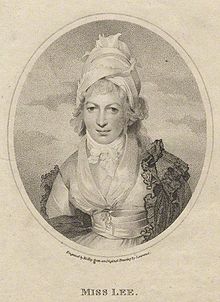
Sophia Lee was the daughter of an actor and became a well-known mistress of a girls’ school in Bath. It was perhaps prudent that she waited to publish her Gothic novels until after retiring from her headmistress vocation. In 1804 she published The Life of a Lover, a Series of Letters, in which the estimable heroine had the profound misfortune of bearing the same name as the natural daughter of the “dissolute Lady Leybourne” with “a levity which a cloisterSophia Lee, "The Life of a Lover" cannot abate, and a face pretty enough to make the seclusion necessary.”

They both find themselves boarders at a French nunnery and at once the hoyden sets about making mischief, when she’s not casting lures at a disreputable marquis. Before she departs from the story, “to fly to the arms of my lover,” she and another whom the heroine had reason to trust betray her.

The hoyden intercepts the heroine’s letters to the man she loves and through clever guile works a misconception that thwarts the heroine and her beloved. In a black moment, the heroine considers why virtue has served her so ill. The hoyden has no such recriminations. She is, if anything, very sure of herself:

“Two heads are better than one at a plot; and mine, they tell me, equal to most of my sex!”

The Real Regency Hoyden

“A wild, boisterous girl. A tomboy.”

Originally the term hoyden referred to a boy–a rude, boorish youth noted in sixteenth century school records. Later the word becomes a symbol of a rude, boorish girl in Vanbrugh’s The Relapse, a parody on an earlier play extolling the reformation of the rake. For more on rakes, please see the previous posts on this blog.

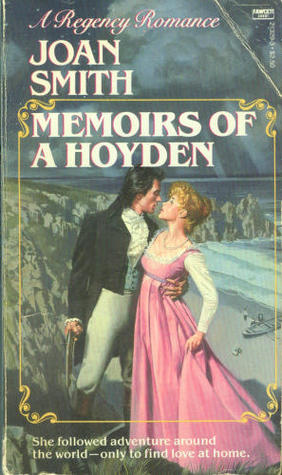
An oldie but a goodie. Joan Smith. Joan Wilder. Great romance--Juanita!

Joan Wilder? THE Joan Wilder? No, but someone even better in the 80s.

In The Relapse, the character Hoyden is a country heiress whose romping ways make her impatient for a life in the city. There she imagines wild indulgence in excitement and intrigue. She manages to marry two men on the same day to achieve this ambition.

“…her language is too lewd to be quoted. Here is a compound of ill manners and contradiction! Is this a good resemblance of quality, the description of a great heiress and the effect of a cautious education? By her coarseness you would think her bred upon a common, and by her confidence, in the nursery of a play-house.” –Jeremy Collier, A Short View of the Immorality and Profaneness of the English Stage (1698)

Not at all flattering.

The distinction of being a hoyden was scarcely more flattering by the nineteenth century. Indeed, its precise meaning remained more or less the same. It was not her occupation, her sins, nor her flamboyance that was censured—but the fact she cared not a whit what others thought.

Well-known examples of hoydenish behavior during the Regency will be examined in future posts. A new series, if you will, of the real Regency hoyden.

“Good gracious, what fun this has been! Who knew I would return home married?” Lydia laughed.

Her insensitivity upset Jane, Elizabeth and their father.

Pride and Prejudice, Jane Austen

Love and the Real Regency Rake

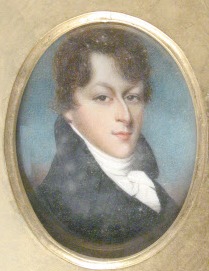
Miniature of John Mytton by Samuel John Stump

Miniature of John Mytton by Samuel John Stump

The rake is supposed to be an object of desire, a hero of modern Regency romance. There is nothing desirable nor heroic about John Mytton. Something is missing in his story.

The character of the rake first appeared in seventeenth century. He was a libertine, a prodigal bent on rebellion and frequently addicted to excessive appetites. During Charles II’s reign, Restoration comedies modeled this new kind of hero after certain aristocrats who indulged in such antics. They could be anything from Sir Charles Sedley, a man who simulated sex in public while drunkenly naked, to the more notorious (!) George Villiers, 2nd Duke of Buckingham who killed the Earl of Shrewsbury in a duel over the latter’s wife.

After a while, however, the tiresome rake began to weary the play-going public.

Enter the feisty heroine, employed to restore the libertine to his senses and thus allow the rake to remain a popular device in literature. She, too, was modeled after redeeming females. Even though Sedley couldn’t marry her, being unable to obtain a divorce from his insane wife, Ann Ayscough remained with him until the end of his life. Villiers’ wife took him back after the affair with the widowed Countess of Shrewsbury:

“The Duchess of Buckingham has merit and virtue; she is brown and lean, but had she been the most beautiful and charming of her sex, the being his wife would have been sufficient alone to have inspired him with a dislike. Notwithstanding she knew he was always intriguing, yet she never spoke of it, and had complaisance enough to entertain his mistresses, and even to lodge them in her house; all which she suffered because she loved him.” — Memoirs of the English Court by Madame Dunois (1699)

She loved him.

Without such love, poor John Mytton was doomed. Recall in an earlier post the warning that Mytton was not fit for marriage. Did that make him insensible to love?

After his second wife left him, John tried in vain to get her to return to him. He even went so far as to seek her out at Chillington Hall, her family’s home to which she had fled. Constables were summoned to handcuff him, for in his great strength he had knocked down eight strong manservants in the foyer, desperate to see the one he loved.

His friend Nimrod laments the self-destruction that not only robbed Mytton of his happiness, but the love of his life as well:

“He loved this woman to distraction; he would have given the apple of his eye for her at any time; he would have risked twenty lives to have gotten her back again, and obtained her forgiveness; he raved about her in his madness, and sent her his dying benediction!”

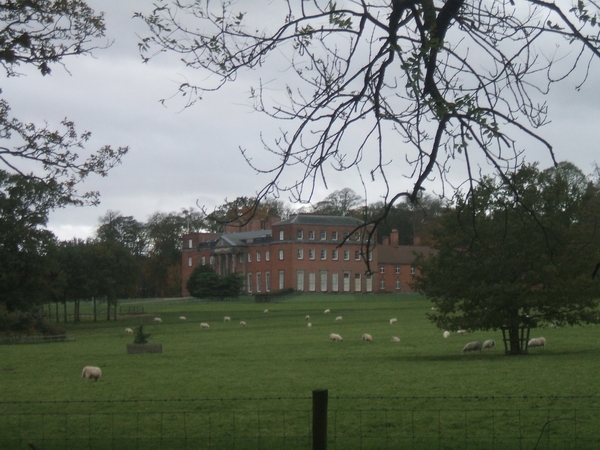
Chillington Hall, now a wedding venue. Photograph licensed by John M. per Creative Commons Attribution Share-alike license 2.0

Chillington Hall, now a wedding venue. Photograph licensed by John M. per Creative Commons Attribution Share-alike license 2.0

The Real Regency Rake: Mother’s Love

John Mytton was a rake only a mother could love.

“The excessive tenderness of a fond mother is no match for the wayward temper of a darling boy, and how often is his ruin to be traced to this source!” — Nimrod, John Mytton

That fond mother was Sarah-Harriet Owen, daughter of a neighboring squire. After five years of marriage to the elder John Mytton, she was left a widow with a daughter, Harriet-Rebecca, and her son, John to raise. The two-year-old boy’s nearest relation, apart from mother and sister, was his uncle, his mother’s brother. Mr. Owen lived near Shrewsbury in Woodhouse and tried to advise his young nephew (and perhaps remonstrate with his sister) but these attempts to moderate the scion’s reckless behavior were rebuffed. Later, in conversation with Nimrod, the uncle confides he might lament the ruin his nephew had wrought, but was thankful he had nothing to do with it.

Don't stay out too late, dearest, and please refrain from harassing the neighbors.

“Don’t stay out too late, dearest, and please refrain from vexing the neighbors.”

A neighbor, Sir Richard Puleston, observed the raising of Master Mytton from closer quarters than Uncle Owen and called the little fellow “Mango, king of the pickles,” for “he was as finished a Pickle as the fondest mother and his own will could possibly have made him.”

By all accounts, Harriet-Rebecca was a dutiful girl and exhibited none of the deplorable qualities of her brother. She made a respectable  marriage to Sir John Heskith-Lethbridge. Although long-forgotten as her brother’s memory lives on, Harriet-Rebecca’s death was recorded by an admiring essay in the Gentleman’s Magazine of 1826.

That his sister was admirable and John was not is the foundation of Nimrod’s accusation–the woman who brought John forth was the author of his downfall:

Thus fell John Mytton–by nature, what God must have intended every man should be; by education, or rather, from the want of proper education, nearly at last what man should not be. The seed was good; but it fell among thorns and was choked.”

Lady Berwick's son, the 5th Baronet. Very good and very dull.

Lady Berwick’s son, the 5th Baronet. Very good and very dull.

John never blamed his mother and settled a handsome annuity upon her. Nor did she abandon him in his final desperation. After the sale of his unentailed properties and a failed attempt to woo his estranged wife, John escaped to France. He eventually landed in prison and not four days after being informed of this circumstance, his mother went to be with him. She managed to extricate him from this present coil, but continued heavy drinking and a propensity for insulting the French made it necessary to bring John back to England:

“where not only a prison, but the grave, yawned to receive him, and in prison he died.”

She survived John by several years, dying in Cheltenham. In her obituary, scant mention was made of the ruin that was her beloved son. This was passed over with hardly any comment, as if the author searched for some redeeming quality to mention. This was found in the lady’s connection with the nobility–her sister was the late Lady Berwick.

The Real Regency Rake: His Servants

We’ve already discussed Mytton’s agent, that long-suffering fellow from Oswestry, who tried in vain to stay his master’s impulsive spending. Wily merchants, like the pheasant dealer who stocked birds for Mytton’s heronry, learned to bypass Mr. Longueville and apply directly to the baronet for payment. Mytton had a reputation for honoring his debts on the spot, in their entirety. Unfortunately for his agent, he would send the applicant to Oswestry with his invoice in hand upon which was written simply: “Right” and signed “John Mytton.”

John Mytton had several grooms with designated occupations. One had the unlikely name of Tinkler–his “home stud” groom. Tinkler’s job was to oversee his master’s race horse breeding operations. Nimrod reports this employee was of the “old sort,” a “careful nurser of young racing stock.” Mytton was quite in charity with this thinking, not wanting his young stock to be raced too soon. Unfortunately, when other horsemen pushed their young colts and fillies to the track early, Mytton’s stock hadn’t a chance.  “Too fond of green meat,” they said of the groom, and the master.

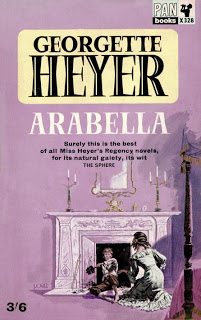
Valets, as you might have guessed, must needs have their work judged by the turnout of their employer. In Arabella , Heyer gives us an unforgettable image of the posh hero’s body-servant Mr. Painswick (and that name is rather glorious in its setting, you can be sure):

Thank heavens for that little grocery in Staines!

Thank heavens for that little grocery in Staines!

“Your boots, Sir! You will never use a jack!”

“Certainly not,” said Mr. Beaumaris. “Some menial shall pull them off for me.”

Mr. Painswick gave a groan. “With greasy hands, Sir!  And only I know what it means to get a thumb-mark off your Hessians!”

Mytton, in contrast to the elegant Mr. Beaumaris, is a rake. He cares not what society thinks of the state of his Hessians. Which is why he elevated a stable-boy to the rank of valet. It was perhaps an unlucky thing for the boy, who was with Mytton when his four-in-hand, by mistake, turned down a closed road and crashed into a barrier. The valet, riding in the coach with his master, suffered serious injuries. Mytton, as was usually case, came out without a scratch.

In the midst of so much carelessness in Mytton’s service, some fraud was bound to occur. Nimrod was astonished to see a favored servant of Mytton’s roaming aimlessly in Shrewsbury.

“I have left Mr. Mytton’s service,” said the man.

“How so?” observed I, with surprise, knowing him to have been a favourite servant.

Apparently said employee had been induced to change the veterinarian’s bill (is that so wrong?) to pocket the extra change from Mytton’s ever-ready and generous hand. And so he might have gotten away with it but for our man Longueville who discovered the discrepancy. It was Nimrod who interceded for the servant, having always demonstrated good character during his service with a Shrewsbury clergyman. Mytton, in typical fashion, forgave his servant and kicked him back in the servants’ hall with an order to put on his livery.

crash

The Real Regency Rake: His Nag

In The Great Lady Tony, Lucien St. Clare “was the most disgraceful lord in London. He had unforgivably broken a gentleman’s code of honor, unthinkingly broken a legion of ladies’ hearts, and unrepentingly broken every rule of decent behavior.”

In short, a rake. The Great Lady Tony - Lindsey

The heroine, Lady Antonia, only child of the elegant Duke of Mountjoy, rides a magnificent bay that any gentleman would covet. Lord St. Clare, however, is not impressed:

She was a little stung, despite herself. “If so, I will still contrive to give you the lead on this circus animal, as you call him. Had I known you meant to mount a draft animal, I would have reconsidered myself.”

He merely laughed and patted the neck of his ugly gray. “Dorcas? What she lacks in beauty she more than makes up in stamina, and a comfortable ride. I can travel on her back day after day, and frequently have. But if you end up with an aching back and wrenched arms, it’s nothing to do with me, after all, and I daresay it’s a small-enough price to pay for looking magnificent.”

The Great Lady Tony (Signet Regency romance), by Dawn Lindsey

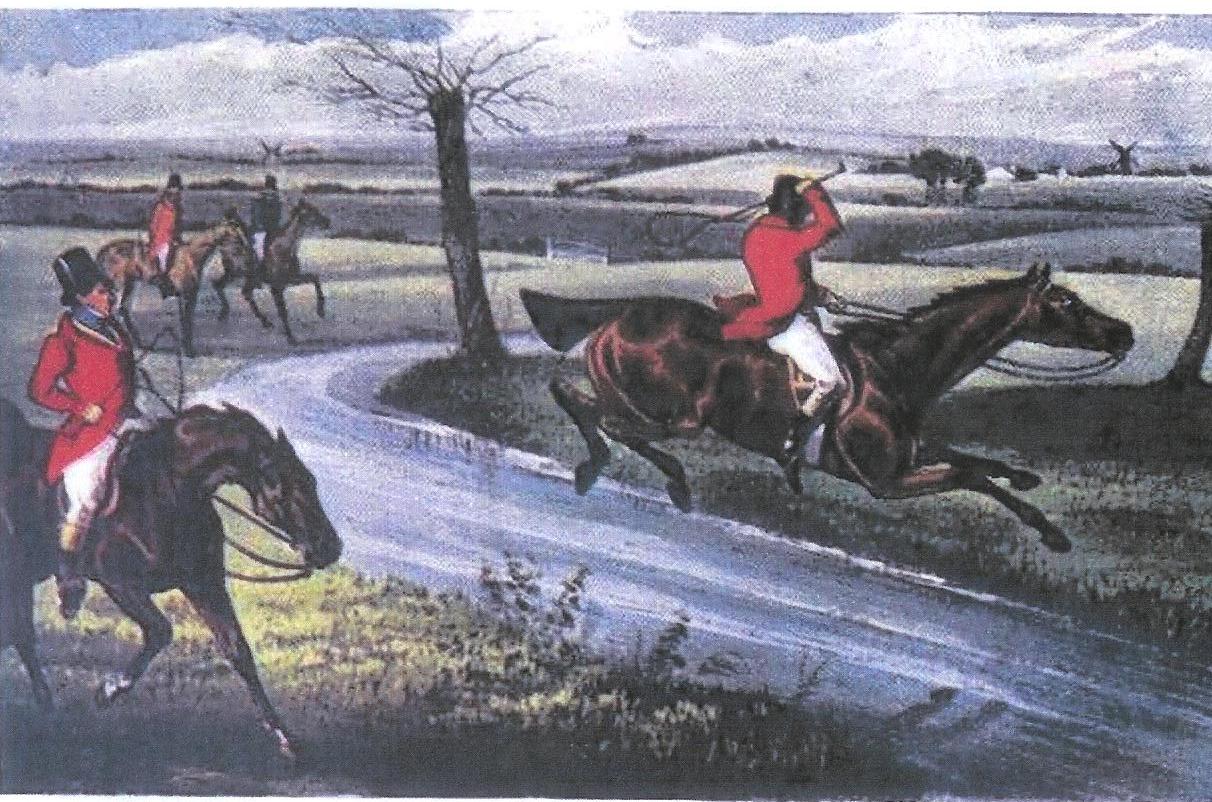
John Mytton had a favorite horse–Baronet. After a day of hunting, Mytton rode home and his pack of hounds was dismissed to the kennel. By this time, his mount, not a stupid animal, must have believed his labor was over, after a hard day in the field. Baronet was by now, as they said in those days, “in cool blood.”

However, his master and others accompanying him found their attention drawn to a nearby brook, measuring seven yards in width.

“Facing a brook” while hunting is the most difficult part of riding to hounds, according to Nimrod. I am quite in charity with this assessment. Horses do not like rushing water. Moreover, the banks are likely to be soft, making a fall at such an obstacle highly likely, affording no small amusement to those observing, to one’s eternal embarrassment.

Mytton’s “brute” was put to the obstacle. He cleared it–a leap measuring nine and a quarter yards in all–to the astonishment of all.

Was Baronet a magnificent steed, with flowing mane and tail? Hardly. He was “a mean-looking horse, with only one eye.”

The mount of a rake is chosen for function only, in complete disregard of convention. In short, the rake rides a nag:

“(Baronet) may be said to be stout as steel; and if there was rank among brutes, this Baronet would have been raised to the peerage.” — Nimrod’s Hunting Tours

Baronet clears a stream

Baronet clears a stream

The Real Regency Rake: A Man’s Dress

Even in modern times, the rake still manages a “caddish blend of rebellion and classicism” in men’s fashion. Clive Derby’s label RAKE has opened an elegant store in Mayfair where men may shop for luxury bespoke and enjoy an evening with the Whiskey Society. There is even a magazine called  The Rake, which many say is the successor to Men’s Vogue.

Not quite the thing in Regency times. Indeed, a rake could positively put one in a pucker with his manner of dress.

Beau Brummell

Beau Brummell

Take the hero of Heyer’s Cotillion, the Honorable Frederick Standen. He is a little intimidated by his cousin, an acknowledged rake. Jack Westruther flirts with his sister, the married Lady Buckhaven, and seems to enjoy the affections of his fiancée, Miss Kitty Charing. Freddy’s only defense, at the moment, is to decry Jack’s waistcoat:

“Jack,” said Lady Buckhaven, tilting her chin, “said he had never seen me look more becoming.”

“Sort of thing he would say,” responded Freddy, unimpressed. “Daresay you think he looks becoming in that devilish waistcoat he has on. Well, he don’t, that’s all! Take my word for it!”

Affronted, she exclaimed, “I never knew you to be so disagreeable! I have a very good mind not to invite Kitty to visit me!”

A rake wears a devilish waistcoat because he is careless about his dress, at least in the eyes of an Exquisite, like the elegant Mr. Standen.

John Mytton was also careless about his clothes. He had an abundance of them, as a rake must, and a peculiar disregard for their care and use:

“I once counted a hundred and fifty-two pairs of breeches and trousers, with an appropriate apportionment of coats, waistcoats, etc…. The clothes he would put on his person, just as they came to his hand, or as his wild fancy prompted him, and I have seen him nearly destroy a new coat at once wearing. His shoes and boots, all London make, and very light, were also destroyed in an equally summary manner, in his long walks over the country, through or over everything that came in his way.” — Nimrod, Memoirs of the Life of the Late John Mytton

Mytton shooting in a fine lawn nightshirt

Mytton shooting in a fine lawn nightshirt

What a man wears is a matter of character.

Recall Lizzie Bennet’s attempts to discern the character of Mr. Darcy in Austen’s Pride and Prejudice. The hero  is a cold, reserved fellow–and his dress gives no clue as to resolve the varying accounts she has had of him.

We can only guess what Miss Bennet might have to say about Mytton’s character. Look at what the man is wearing.