
Fanny, who was sitting on the other side of Edmund, exactly opposite Miss Crawford, and who had been attentively listening, now looked at him and said in a low voice–
“Cut down an avenue? What a pity! Does that not make you think of Cowper? ‘Ye fallen avenues, once more I mourn your fate unmerited.’ ”
— Mansfield Park, Jane Austen

Fanny Price, like Austen, was very fond of William Cowper, a poet of the eighteenth century. He was not a Romantic poet, but his brooding, melancholy, emotional writing had great influence over poets of the Regency, such as Wordsworth and Coleridge. Cowper suffered bouts of insanity and deep depression–he wrote various hymns preserved today in the Sacred Harp (think O Brother, Where Art Thou?) but it was his poetry, encouraged by various women in his life, that gave him a much-needed outlet for his despair.
In Nature he sought solace:
Who loves a garden loves a greenhouse too.
Unconscious of a less propitious clime,
There blooms exotic beauty, warm and snug,
While the winds whistle and the snows descend.
The spiry myrtle with unwithering leaf
Shines there, and flourishes.— The Task, Book III, The Garden
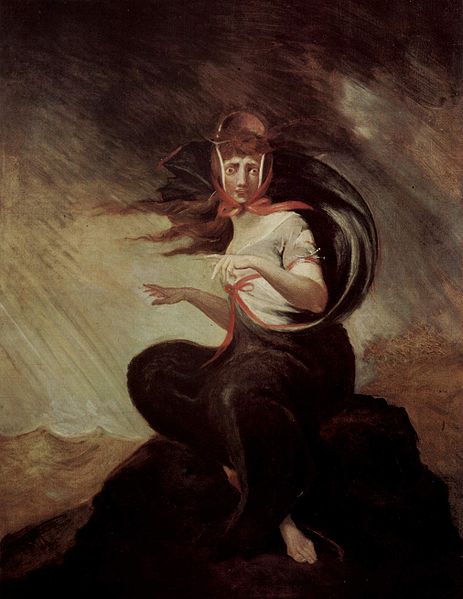
But humanity, like nature, eventually dies:
I was a stricken deer, that left the herd
Long since: with many an arrow deep infix’d
My panting side was charged, when I withdrew,
To seek a tranquil death in distant shades.
What does it mean to have a Regency-era character who adores Cowper? He might be depressed and perhaps thinking of his own death. She might look upon the trees in the park, and find comfort from the stress of every day living, as Fanny does in Mansfield Park:
“Here’s harmony! Here’s repose! Here’s what may leave all painting and all music behind, and what poetry only can attempt to describe. Here’s what may tranquilize every care, and lift the heart to rapture!”

 Angelyn's Blog