Christmas with a “K”

“For Christmas that year Princess Augusta, known to Victoria and Albert’s children as ‘Aunt Prussia,’ sent Vicky four miniature fruit and vegetable shops just like those in Berlin, and to brother Bertie, five cartons of Prussian toy soldiers in wood and lead.”

— An Uncommon Woman, by Hannah Pakula (1997)

In exchange, the Princess Royal’s mother, Queen Victoria, sent a Scottish kilt to Germany, as a present to Fritz, the fifteen-year-old prince.

Aunt Prussia  forced the poor lad to wear it for a State dinner.

Set of World War I toy German soldiers.

I love vintage German ornaments. The reproductions are quite nice, too. They remind me that a lot of Christmas as we know it came from Germany.

German “putz” houses
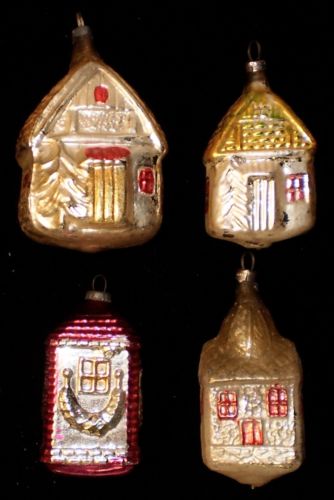
glass tree ornaments


German Christmas customs have become so embedded it’s easy to forget their origin. The Advent wreath, for instance, marks the Sundays of Advent. On each one I pray that the combination of so much greenery adjacent to an open flame does not burn the church down.  Weihnachtsmarkte, the Christmas market, makes a great fundraiser for any group, be it a historical society or a soccer booster club. Der Adventskalender, or Advent calendar, is meant to provide order to the wild anticipation children experience with the coming of Christmas.

This is entirely theoretical, of course.

A 1970s Advent Calendar — from Cold War West Germany


They even say der Weihnachtsmann, or Christmas man,  resembles Santa Claus. Scholars would have us believe this mythical figure is derived from Thor.

A Santa worth waiting up for.

Merry Christmas!
The Regency Christmas Table

“At [the tables of the rich] the refinements of foreign invention are for once superseded by the simpler products of old English cookery…”

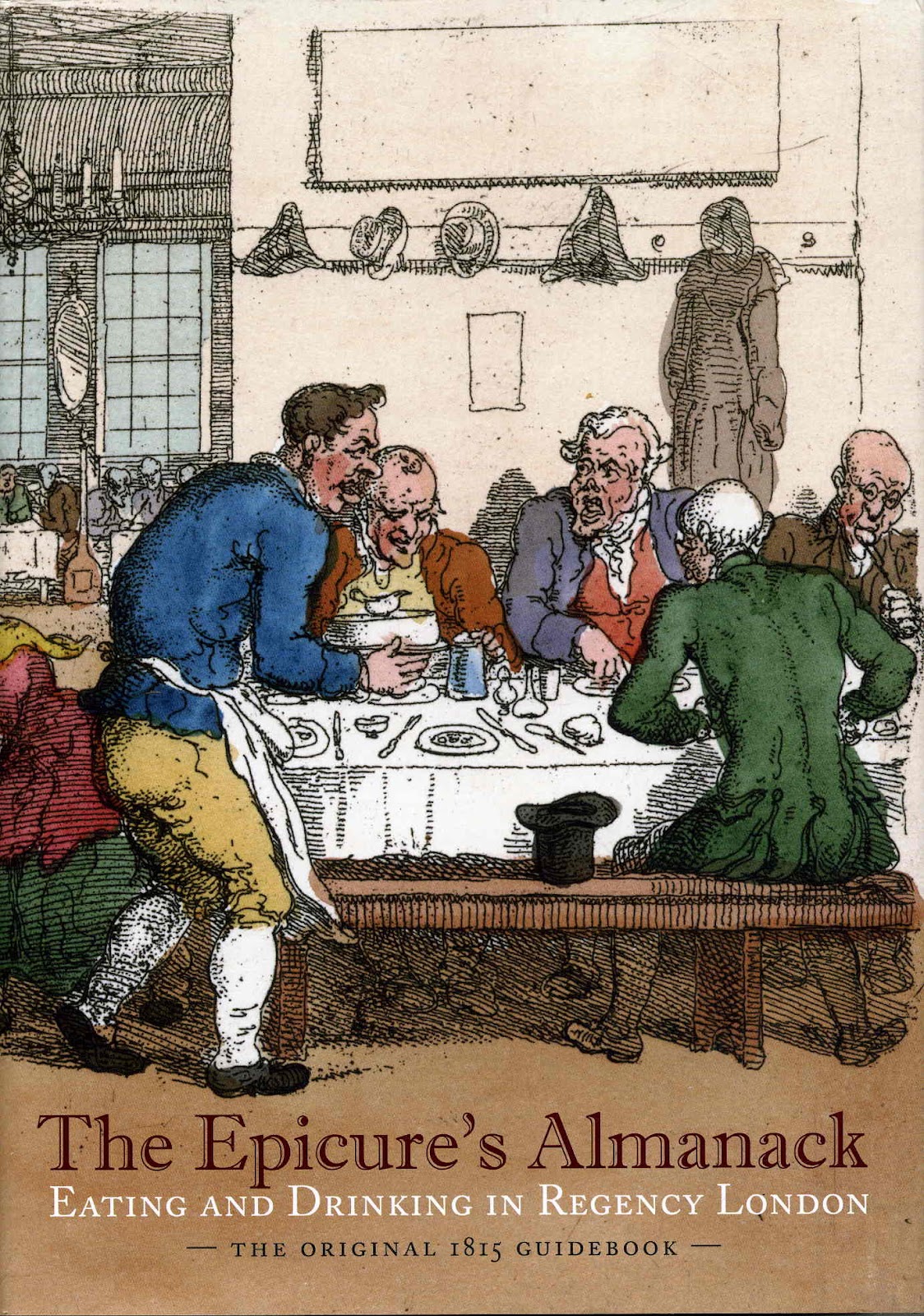
the Epicure’s Almanack by Ralph Rylance, edited by Janet Freeman (2013)

The foregoing is found in the conclusion of this remarkable historical document, the “first London good food guide.” It is a description of the Regency Christmas table, and is contained in the December appendix.  Rylance noted in his 1815 guidebook that various meats and specialties, including “mince-pye,” are presented on fashionable tables during the holiday. They were also distributed to those who were dependents, like servants and tenants, and to the poor.

The result was that nearly everyone shared the same “established national dishes” at Christmas. Many might not have been accustomed to such rich fare, and thus the author noted that particular care had to be taken to aid the digestion. Rylance refers to ripe port and mellow October–thanks to the editor for defining the latter as a “strong ale typically brewed in October.”

At the end of the year, in anticipation of the Season, larger shipments than normal of bulk food would be sent to the London markets. Rylance makes special reference to brawn from Canterbury and parts around Oxford, and he did not mean good-looking, muscular men:

“..manufactured from the flesh of large boars, which are suffered to live in a half wild state, and when put up to fatten, are strapped and belted tight round the principal parts of the case, in order that their flesh may become dense and brawny.”

Good God!

Today’s Christmas brawn served in the UK–with pig’s head, trotters, herbs and spices. From http://ow.ly/1cXT30he5AU

By the time of the Regency, horticulturists had developed facilities, called forcing-houses, to supply the metropolis with fresh vegetables in mid-winter. Fresh spring vegetables were grown under frames and transported to the markets stands of Covent Garden, where they would join potatoes, turnips, carrots and onions  brought out of storage.

Thus, the Regency Christmas table was able to enjoy “forced small sallads,” asparagus and green-peas, the latter:

“welcomed with more general satisfaction than any other vegetable that comes to the table. “

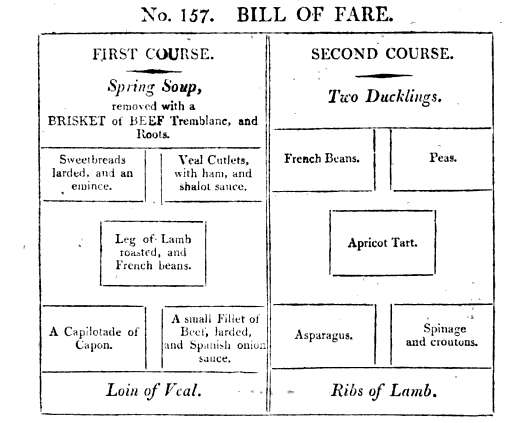
One could enjoy them cold, as in a salad.* Or, as noted in “A Complete System of Cookery,” they make a fine addition to the second course of dinner. The recipe is simple–cook in boiling water with a little salt and sugar. The peas can be served separately or poured over the top of stewed meat, such as duckling.

From: A Complete System of Cookery: On a Plan Entirely New; Consisting of Every Thing Requisite for Cooks to Know in Their Departments … by John Simpson (1813)

*note: the author’s father detested that dish generally contributed by little old ladies to Christmas pot-luck suppers–the pea salad.