Nun danket alle Gott

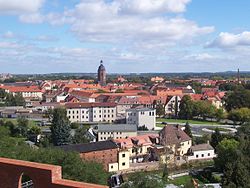
“Now Thank We All Our God” has made its appearance once before in this blog.Eilenburg, Germany

Eilenburg was known as a center for German Reformation, prosperous and even boasting a walled exterior by the late sixteenth century. It was greatly favored by its Duke, George of Saxony.

Martin Luther called it a blessed lard pit.

Then came the Thirty Years’ War. By that time, Martin Rinkart (1586 – 1649) had become one of four pastors serving the town. Hundreds of refugees fleeing the fighting had taken shelter in Eilenburg and soon disease spread, culminating in the Great Pestilence. Afterwards came famine and it was not uncommon to see wretches in the street fighting over dead animals to eat.

One of the pastors fled the town and refused to return. The other two died, leaving Rinkart to officiate at their funerals in addition to many, many more, almost 4,500 in all. Not even his wife was spared.

Nevertheless, Rinkart still found time to compose prayer. The following offer of thanksgiving is his most famous, written to comfort his children:

Happy ThanksgivingNow thank we all our God

With hearts and hands and voices;

Who wondrous things hath done,

In whom this world rejoices.

Who, from our mother’s arms,

Hath led us on our way,

With countless gifts of love,

And still is ours today.

Regency Love: My Little Comet

It  has recently come to light that Sir John Lethbridge of Sandhill Park fathered an illegitimate daughter with Mary Jane Vial, who married her neighbor, the gothic novelist and anarchist (!), William Godwin. He was the widower of Mary Wollenstonecraft. Most of Godwin’s friends despised his new wife.

Charles Lamb called her a bitch.

Mary Jane’s daughter was then known as Jane. She was a hurly-burly, forward sort of girl who somehow managed to form a close relationship with her new stepsister, the reserved Mary Godwin.  No sort of adventure was beyond Jane. They say she promoted her stepsister’s elopement with the poet Percy Bysshe Shelley, if only to get away from home. Those six weeks they trekked across Europe are summed up in Jane’s observation of her prim stepsister:
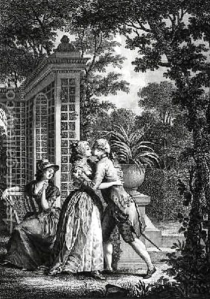
From Rousseau's Confessions

From Rousseau’s Confessions

..we came to a clear running shallow stream, and Shelley entreated the Driver to stop while he from under a bank could bathe himself – and he wanted Mary to do the same as the Bank sheltered one from every eye – but Mary would not – first, she said it would be most indecent, and then also she had no towel and could not dry herself – He said he would gather leaves from the trees and she could dry herself with those but she refused and said how could he think of such a thing?

— from “Claire Clairmont and Mary Shelley: identification and rivalry within the ‘tribe of the Otaheite philosopher’s’ ” by Deidre Coleman

They were all reading entirely too much Rousseau, who liked to explore alternative domestic arrangements, particularly in his Confessions: La Nouvelle Heloise.  The female characters of Confessions seemed very like the two stepsisters. Julie was prim like Mary and naturally Jane saw herself as vivacious Clara. She began to call herself Claire, longing to act out Rousseau’s drama with her stepsister and husband, as a “household for three.”

But there was conflict, and instead it was a love triangle.

Shelley rather saw himself and his wife as a tranquil constellation upset by the importunities of his fair sister-in-law, disruptive as a comet:

“Comet beautiful and fierce/Who drew the heart of this frail Universe/ Towards thine own; till/ wrecked in that convulsion/Alternating attraction and repulsion/ Thine went astray and that was rent in twain.” — Epipsychidion

Their eventual destination, the Villa Diodati in Switzerland, was decided upon by Claire. She’d had an affair with Lord Byron and was now pregnant by him. Byron,protested to his disapproving half-sister:

“What could I do? — a foolish girl — in spite of all I could say or do — would come after me — or rather went before me — for I found her here … I could not exactly play the Stoic with a woman — who had scrambled eight hundred miles to unphilosophize me.”

Again, a triangular relationship reemerges at Claire’s instigation. Shelley absolutely worshipped Byron. Yet it was not he Claire brought to the Great One’s notice–it was her half-sister she would draw into his orbit, writing:

“[Y]ou will I dare say fall in love with her; she is very handsome & very amiable & you will no doubt be blest in your attachment.”

The trio eventually returned to England ignominiously and without funds. Much had been made of their relationship. Shelley’s friend, Thomas Jefferson Hogg, chortled that Shelley had two wives. Coleman offers another theory: that the love triangle was not seen by Claire with the male “on top.” Her position in the triangle was, predictably, at the apex point.
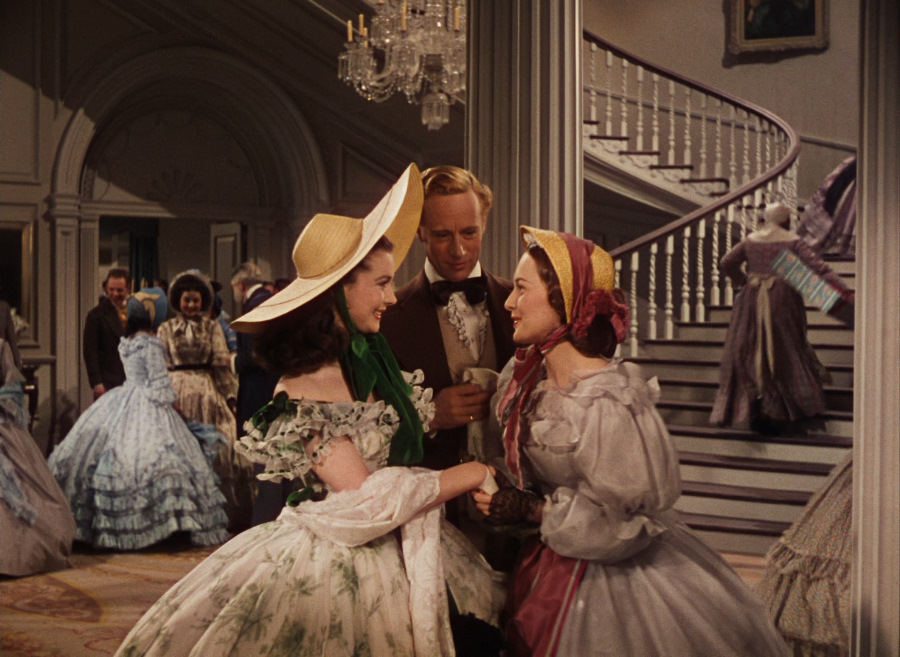
Scarlett - a comet, too

Scarlett – a comet, too

But what men may indulge, women may not dream of. Byron called her a “little fiend” and her unconventional ways served to isolate her from others. Her predilection for the love triangle may have faded by the time became a governess in Russia, for she spurned two men at once, joking:

“I must really take great care of my poor heart lest I should not only fall in love with one but perhaps with both at once.”

Regency Love: Infatuation

“Dear Sir–I have just returned (without reading it) a letter of Ly. F(alkland) & a parcel containing I know not what–…she is certainly mad or worse–I think you must really take some step or she will commit herself in some greater absurdity–I heard from her once before but did not like to trouble you again and soon–but really this is too bad–Believe me”

— 1813 Letter from Lord Byron to William Corbett, kinsman of Christina, Lady Falkland

Lady Falkland’s husband had been one of Byron’s good friends. In 1808, Lord Falkland and one Mr. Powell had parted friends after a night of drunkenness. The next evening, Falkland hailed Powell with a good-natured sally: “What? Drunk again tonight, Poggy?”

Chalk Farm, London, the site of Lord Falkland's duel, as it appears today. Photograph licensed under the Creative Commons Attribution-Share Alike 3.0 Unported license.

Chalk Farm, London, the site of Lord Falkland’s duel, as it appears today. Photograph licensed under the Creative Commons Attribution-Share Alike 3.0 Unported license.

“Mr. Powell did not relish the mode in which he had been accosted and, after a retort, Lord Falkland snatched a cane from a gentleman’s hand, and used it about his head.” — The Lady’s Magazine: Or Entertaining Companion for the Fair Sex (1809)

The parties were unable to resolve their differences, with the result that Lord Falkland was fatally wounded in a duel with Powell. His widow, Christina, was left destitute.

Byron felt sorry for her and left a significant sum of cash for her to find in a teacup where she resided in Manchester Square’s “Durant’s Hotel.” He did so discreetly, to avoid drawing attention to her insolvent state. Thus he set in motion an infatuation fueled by her imagination, and his poetry.

It was not the money, mind you. It was the act itself–a furtive, secret offering, that no one was meant to see but her alone. That act was like a seed planted in her mind made fertile by the Thyrza stanzas in Byron’s wildly popular Childe Harold:

“Ours too the glance none saw beside / The smile none else might understand.”

Christina convinced herself of an intimacy with Byron that did not exist, yet seemed very real to her. The hero of the poetry was, like Byron, “world-weary and isolated” and she identified with him. Adding to that appeal was the notion he dared not publicly announce his love for her, nor would he dare ask she do the same.

Durrants Hotel, still in operation today.

Durrants Hotel, still in operation today.

She dashed off a letter to him:

“Tell me my Byronif those mournful, tender effusions of your Heart & mind, to that Thyrza, who you lamented as no morewere not intended for myself […] now my Byron if you really believe I could add to or constitute your happiness, I will most joyfully receive your handbut remember I must be loved exclusively.”

They say infatuation is a form of madness. Who knows if Christina had recovered from it by the time she died in Vauxhall in 1822.

But that was where they had moved Bedlam Hospital in 1815.